
TechKnow

REVIT 2027 IS HERE

Revit 2027 is designed to empower your team with cutting-edge tools and enhancements that drive innovation
and efficiency in your BIM projects. New features will improve your design and construction processes to meet
the demands of today’s dynamic industry.

REVIT 2027 Has Arrived!!

Connected, Data‑Led BIM


Rather than introducing disruptive interface change, this release focuses on maturity—improving performance, strengthening data workflows, and laying groundwork for more adaptive model interaction. For technical teams, the value of 2027 lies in productivity gains at scale and improved continuity across project phases.

AI‑Assisted Model Interaction (Tech Preview)

Revit 2027 introduces Autodesk Assistant for Revit, available as a tech preview. The Assistant operates directly within a project, allowing users to query elements, generate schedules, manage views, and retrieve task guidance using natural language.

While capability is currently limited, it provides insight into future possibilities in documentation assistance and model management.

Accelerated Graphics

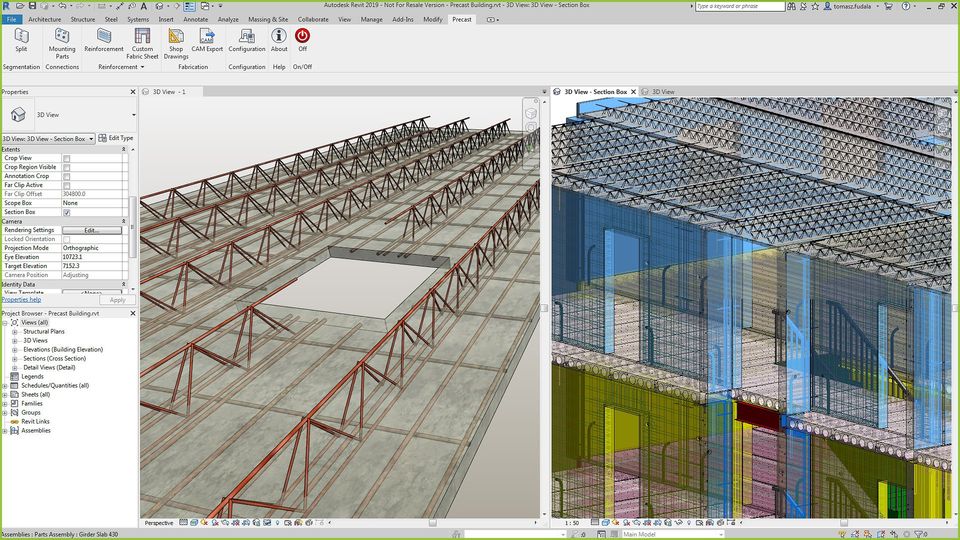
Promoted to a reliable production feature by making more effective use of GPU resources, Revit delivers smoother model navigation, more responsive view regeneration, and improved handling of large or heavily linked models.

This translates to project teams working on complex infrastructure, healthcare, and high‑density developments, seeing reduced friction in coordination and review workflows without altering established modelling standards.

Closer Integration with Autodesk Forma

Revit 2027 extends its integration with Autodesk Forma, supporting more continuous workflows between early‑stage analysis and detailed design. As a Forma‑connected client (tech preview), Revit can reference geolocated site data and environmental insights generated during concept studies.

Relevant for sustainability‑driven projects, enabling earlier alignment between environmental analysis and BIM development.

Targeted Workflow Enhancements

Alongside platform‑level changes, Revit 2027 delivers practical improvements to address production challenges:

  • Wall‑on‑wall hosting – improves clunkiness by hosting a secondary wall such as a finish layer on an another wall so they move as one.
Targeted Workflow Enhancements

Alongside platform‑level changes, Revit 2027 delivers practical improvements to address production challenges:

  • Wall‑on‑wall hosting – improves clunkiness by hosting a secondary wall such as a finish layer on an another wall so they move as one.
  • Rule‑based numbering, allowing automated and consistent element identification driven by defined parameters
  • Multi-Category Tagging – is now available using the Tag All workflow.
  • Tag Leaders – Leaders can now be positioned manually with quick snapping.
  • IFC Parameter mapping – supporting greater interoperability
  • UI Dark Mode – Sub-menu’s now better support dark mode.
  • Integrated Issues Management – Issues created in Forma Design Collaboration are displayed directly within Revit in both 2D and 3D views

Individually, the updates are modest; collectively, they reduce manual rework and improve model reliability under change.

Targeted Workflow Enhancements

Alongside platform‑level changes, Revit 2027 delivers practical improvements to address production challenges:

  • Wall‑on‑wall hosting – improves clunkiness by hosting a secondary wall such as a finish layer on an another wall so they move as one.
  • Rule‑based numbering, allowing automated and consistent element identification driven by defined parameters
  • Multi-Category Tagging – is now available using the Tag All workflow.
  • Tag Leaders – Leaders can now be positioned manually with quick snapping.
  • IFC Parameter mapping – supporting greater interoperability
  • UI Dark Mode – Sub-menu’s now better support dark mode.
  • Integrated Issues Management – Issues created in Forma Design Collaboration are displayed directly within Revit in both 2D and 3D views

Individually, the updates are modest; collectively, they reduce manual rework and improve model reliability under change.

Structured Data and Carbon Awareness

Revit 2027 expands, enabling centrally managed data schemas to be embedded directly into model elements. This supports better data consistency across teams and improves downstream interoperability.

In parallel, the introduction of Forma Carbon Insights signals Autodesk’s ongoing investment in earlier‑stage carbon awareness, supporting more informed design decisions responding to growing sustainability requirements across the region.

Other Features:
  • Carbon Analysis
  • Energy Analysis
  • Stair Numbering Visibility
  • Linked Model Line weights
  • Property line properties accessible through API
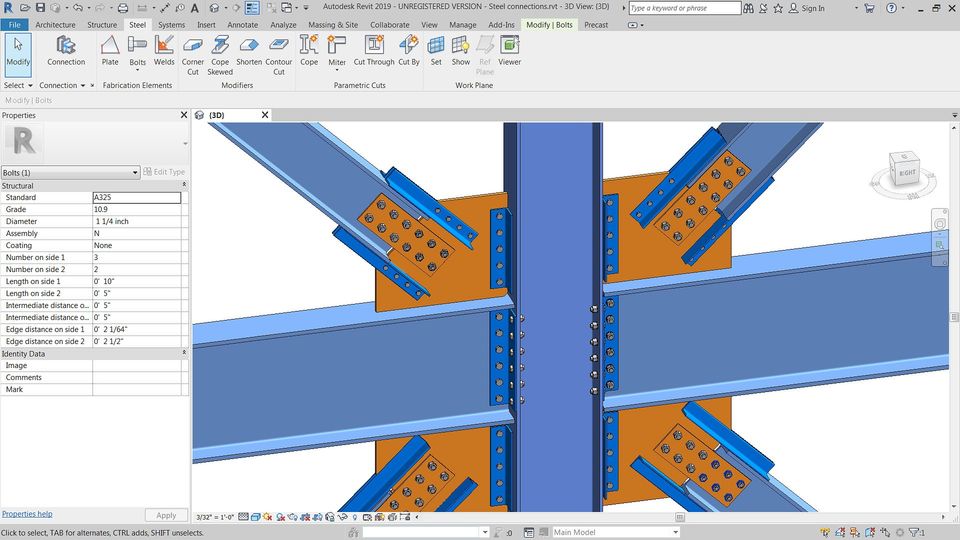
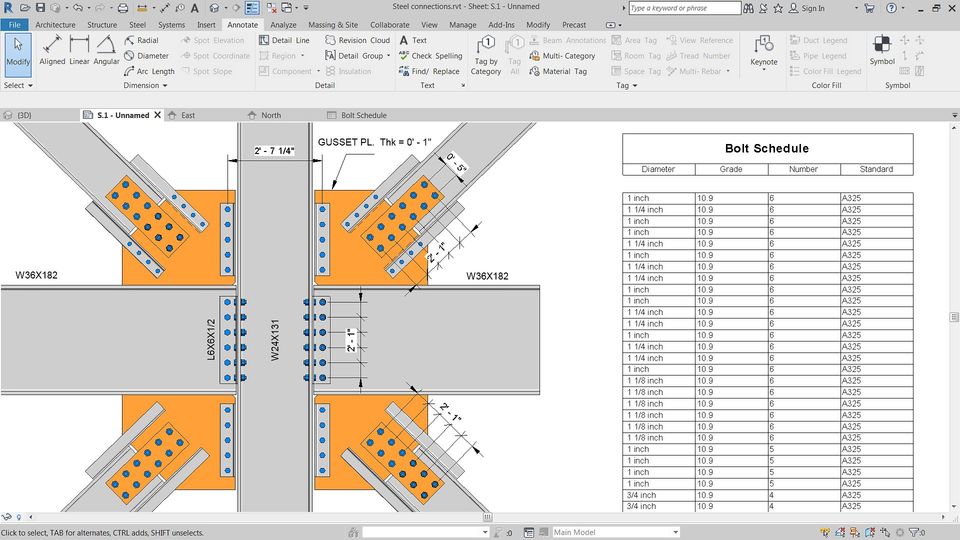
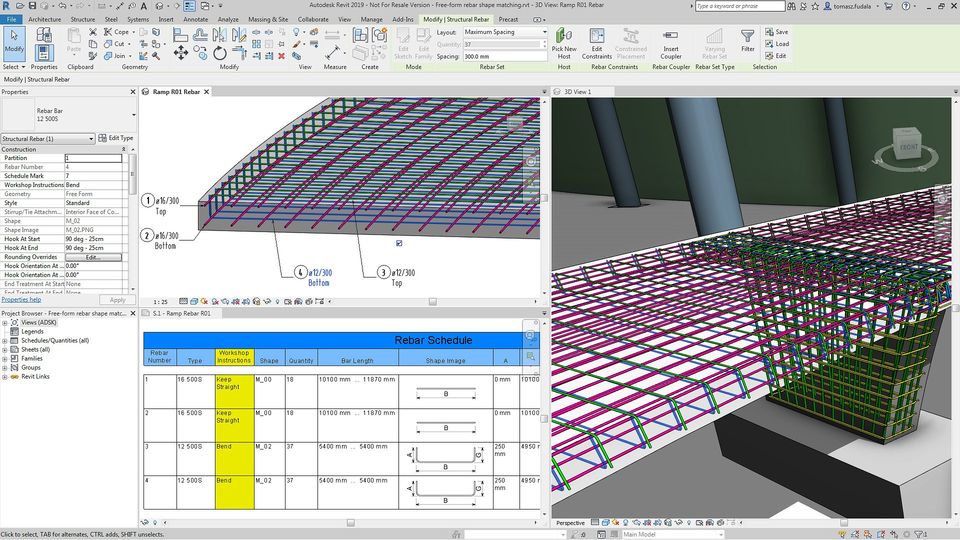
  • Structural steel, Concrete detailing and Analytical Panel enhancements
  • Dynamo Updates
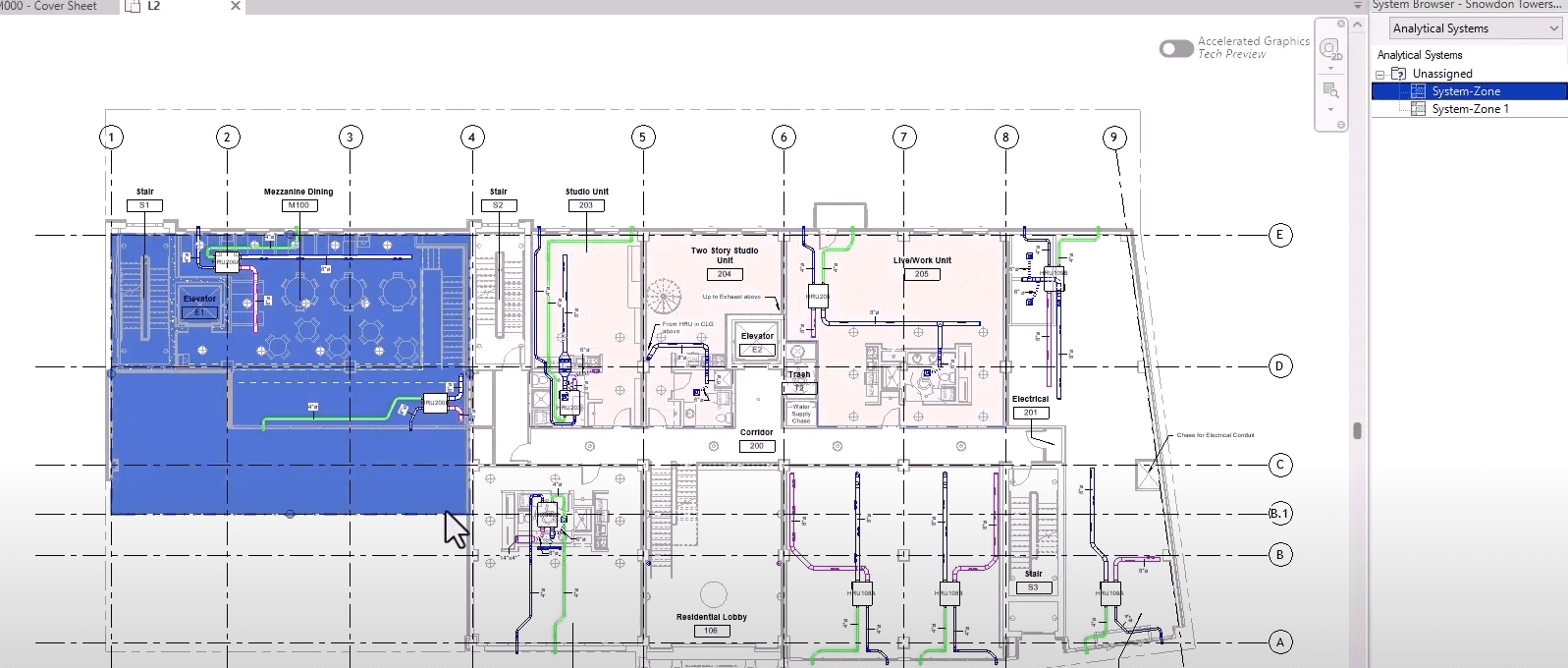
  • HVAC Zones renamed to System-Zones
  • Design option Enhancements

OUR TAKE

Revit 2027 is best viewed as a consolidation release, strengthening foundations rather than redefining workflows. A stepping stone along a much longer road to efficient collaboration and project delivery across all sectors, in a cohesive environment.

To see the full improvement list click here.
Autodesk Construction Cloud joins Forma

New Updates to Autodesk Products

ACC GETS A REBRAND

On March 24, Autodesk Construction Cloud (ACC) will be renamed Autodesk Forma as an extension into the Forma Industry Cloud; An AI-native platform that organizes currently fragmented workflows and data into a single, insight-driven environment.

Autodesk’s vision is to support more informed decision-making across planning, design, construction and operations. 

Autodesk Forma

WHATS CHANGING?

FORMA BRANDING

  • Docs will appear as Data Management in the product UI
  • Navigation to additional Forma solutions will surface in the UI
  • The logo in the top of the UI will change to Autodesk Forma
  • ACC Mobile App will be re-named to Forma, see FAQ
  • Account Admin in the product UI will change to Hub Admin


SAME PRODUCTS, NEW NAMES:

  • Autodesk Docs    Forma Data Management
  • Autodesk BIM Collaborate Pro    Forma Design Collaboration
  • Autodesk Build    Forma Build
  • Autodesk Takeoff    Forma Takeoff
  • Autodesk Estimate    Forma Estimate
  • Preconstruction Bundle    Forma for Preconstruction
  • Model Management Bundle    Forma for Model Management
  • Construction Operations Bundle    Forma for Construction Operations

WHATS NOT CHANGING?

Fret not, the change will not disrupt current projects and tasks:

  • No data migration. All projects, members, settings and data remains as is.
  • No changes to URLs, logins, APIs or integrations.
  • No changes to licensing or user provisioning.
  • No changes to workflows or automations setup in ACC.

WHAT DO I NEED TO DO?

To continue receiving product notifications, whitelist the new Forma email domains.

Otherwise, business as normal.

WANT TO KNOW MORE?

FORMA, A PROMISING STEP IN BUILDING DESIGN.

Exploring Autodesk Forma: A Promising Step in Building Design

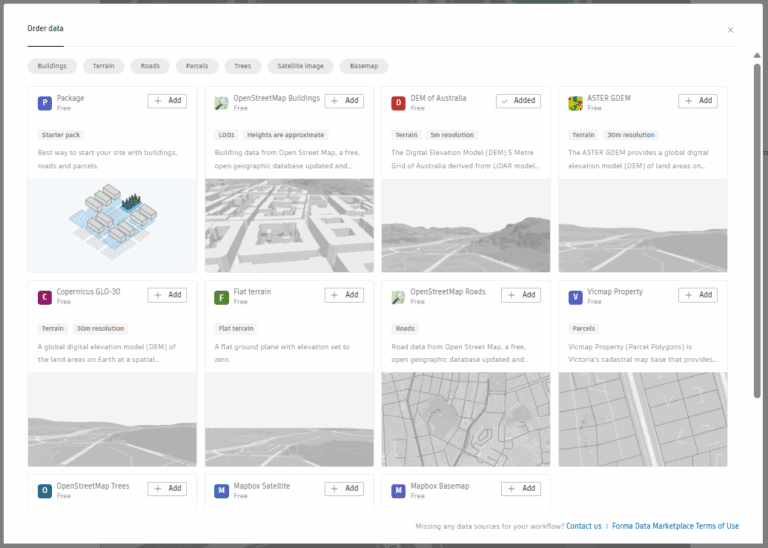
Autodesk Forma is quickly emerging as one of the most discussed tools in the design technology space, and for good reason. With an interface that’s easy to learn and a workflow designed for speed, Forma allows architects and designers to generate meaningful insights right at the start of a project. By delivering analysis results in minutes, it makes it easier to test ideas, present clear outcomes to clients, and transition into Revit modelling with confidence thanks to its seamless interoperability. On top of that, users can load in contextual or other data directly from the marketplace.

🔧 AREA ANALYSIS

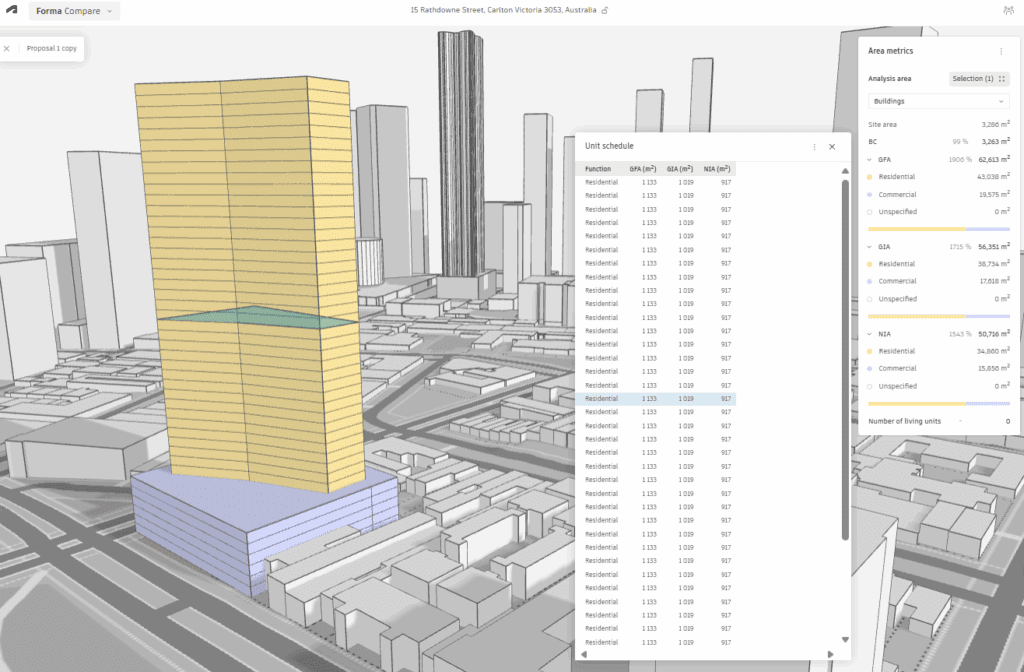
Drawing on site and contextual data from Australia’s Digital Elevation Model (DEM), Forma enables quick calculations of site and building areas. This brings early clarity to project potential, often without needing a section 32 or feature survey, giving feasibility and concept design an immediate head start.

WIND ANALYSIS

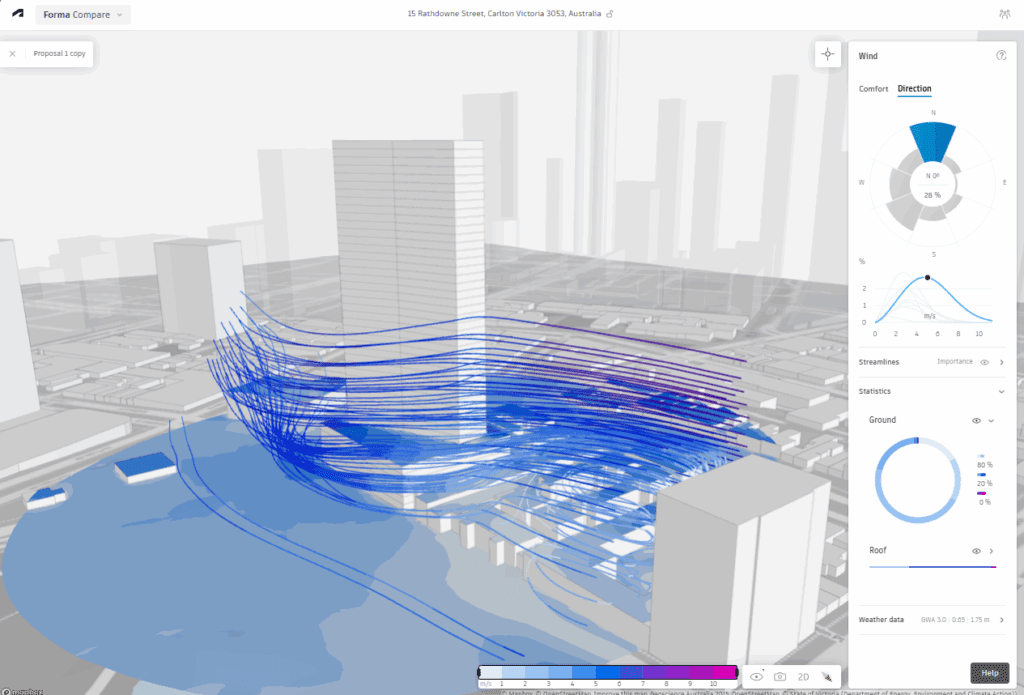
Forma integrates local climate datasets to simulate how wind moves through and around a site. Designers can test how early massing responds to airflow, informing decisions around comfort, orientation, and site layout long before detailed modelling begins.

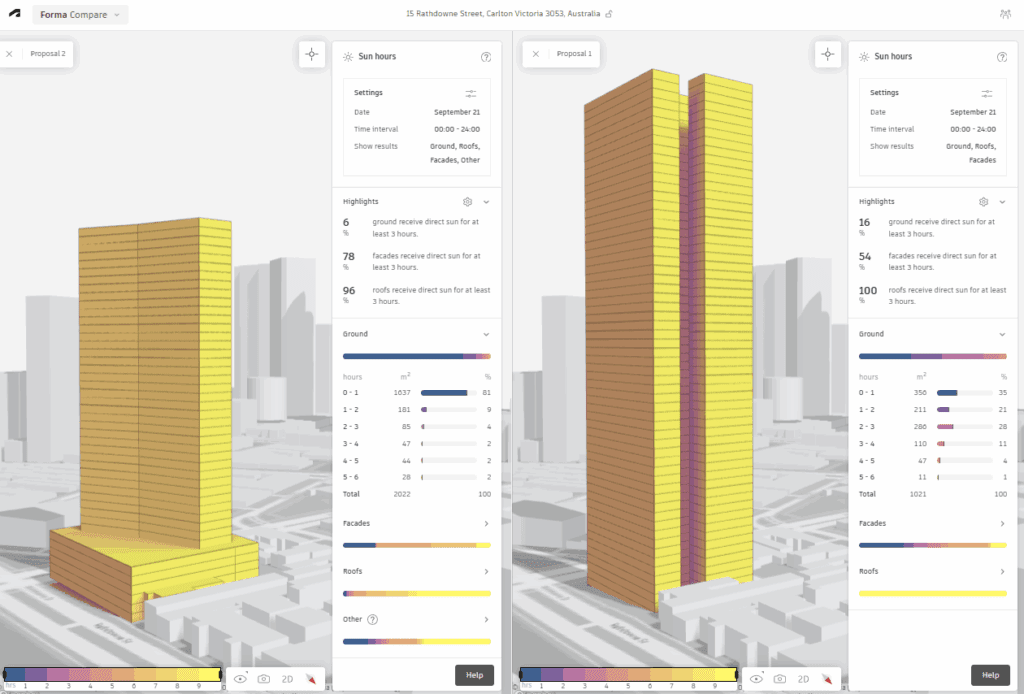
SUN HOURS ANALYSIS

Using geolocation and solar path data, Forma calculates the amount of sunlight different areas of a building or site receive across the day and year. These insights help guide discussions on energy performance, shading requirements, and overall comfort, providing clients with a clearer understanding of design impact at an early stage.

MORE THAN JUST ANALYSIS

Beyond its environmental studies, Forma offers a growing suite of tools designed to streamline early design decision-making. A built-in compare tool allows different options to be tested side by side, while a shared collaboration space gives stakeholders visibility and a platform for feedback from the earliest stages. And as projects progress, Forma’s interoperability shines: studies can connect not only to Revit but also to Autodesk Docs and ACC, keeping information flowing across the broader project ecosystem.


At its core, Forma is about making analysis more accessible and connected, giving teams the ability to bring data into design conversations right from day one. We’ve also seen some exciting updates announced at the recent Autodesk University, so sit tight for more details. If you’d like to explore how Forma could fit into your projects, get in touch for a demo or training session.

D5 Render NEW 2.11

Why D5 Just became a no-brainer!

TELL ME WHY?

If you’ve been using D5 Render for a while, you already know how much muscle it brings to real-time visualization. With version 2.11, the team hasn’t just added features-they’ve turbocharged the way we work. We’ve taken it for a spin, and here’s what’s worth knowing.

🔧 SMOOTHER WORKFLOWS, SMARTER TOOLS

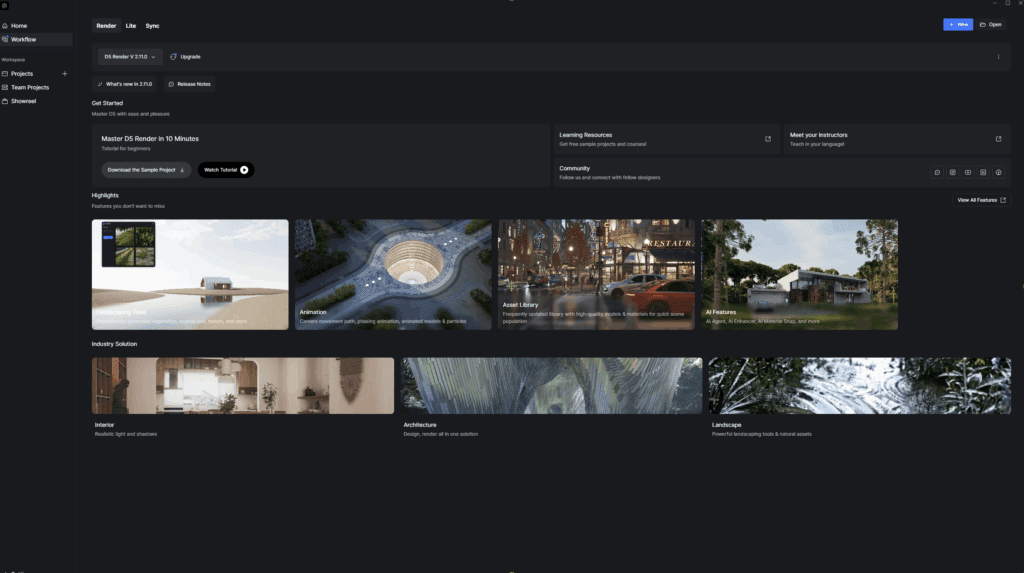
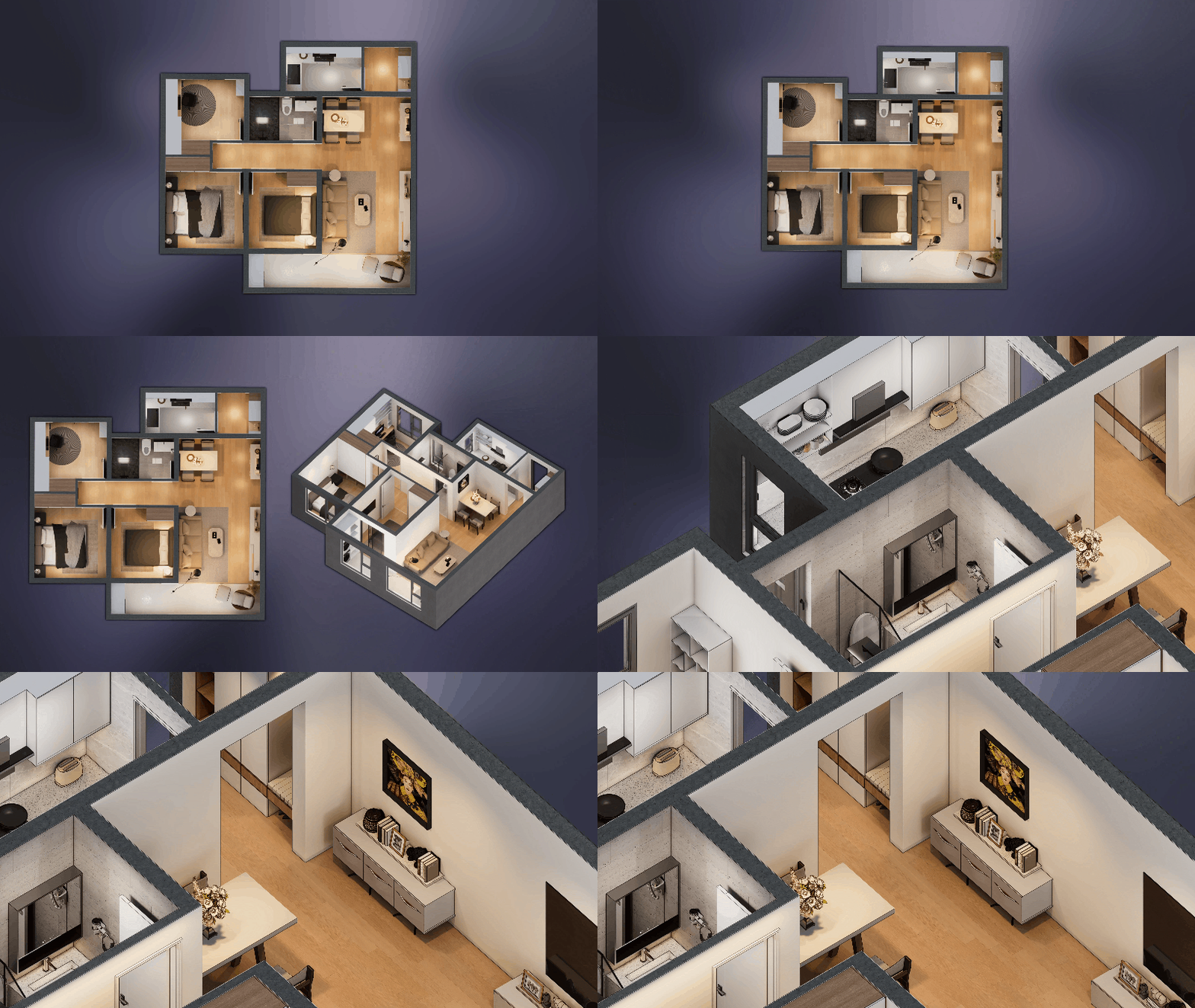
New D5 Launcher Replaces the pre-existing app. Everything feels less fragmented. No bouncing between websites, plugins or installs-just load up and get going.

D5 Bot is your built-in assistant, for any questions, workflow assistance or troubleshooting. 

🥬 VEGE-DELIGHT

Whether you’re looking for quick population of vegetation or improving your D5 aptitude, your time matters:

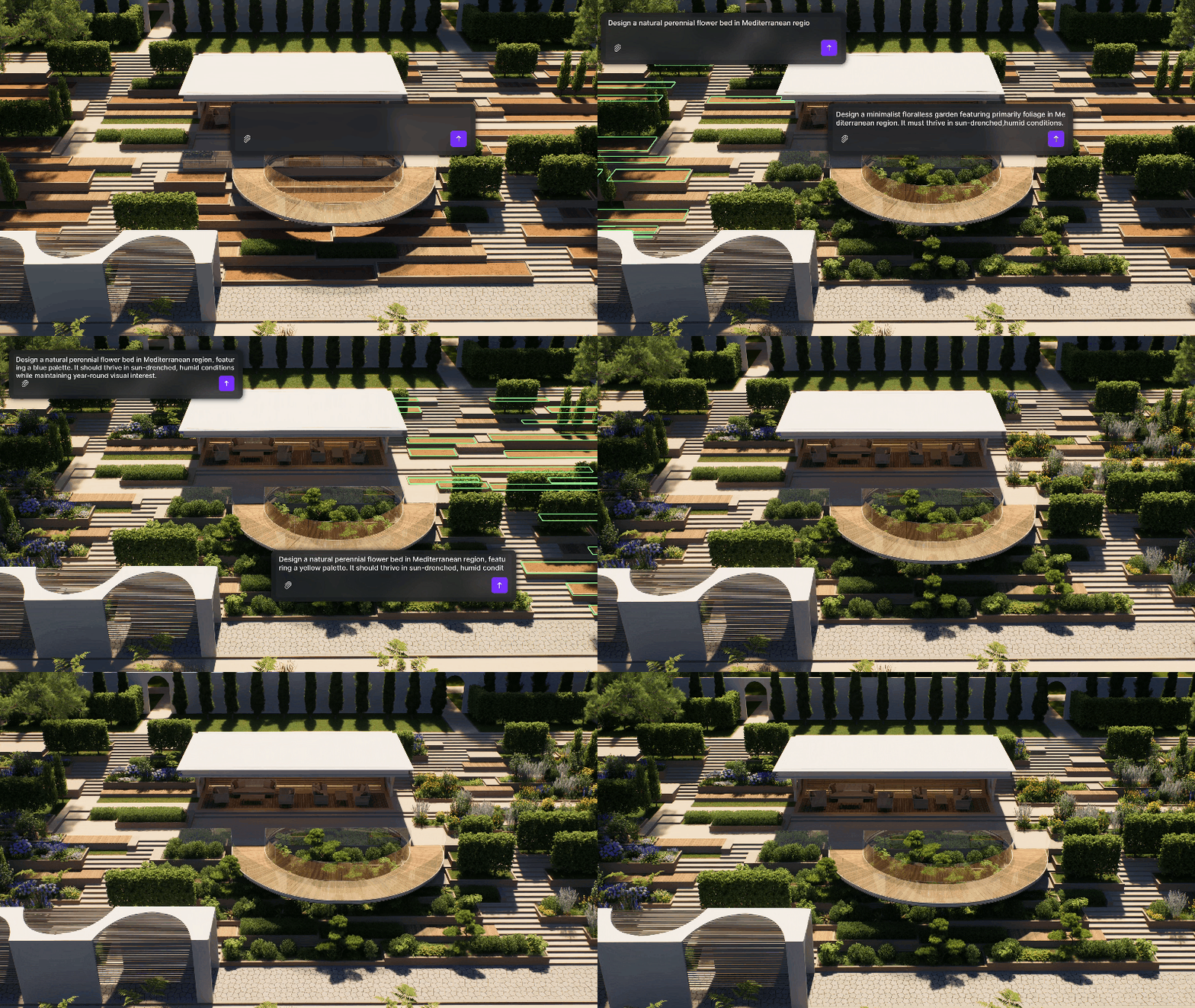
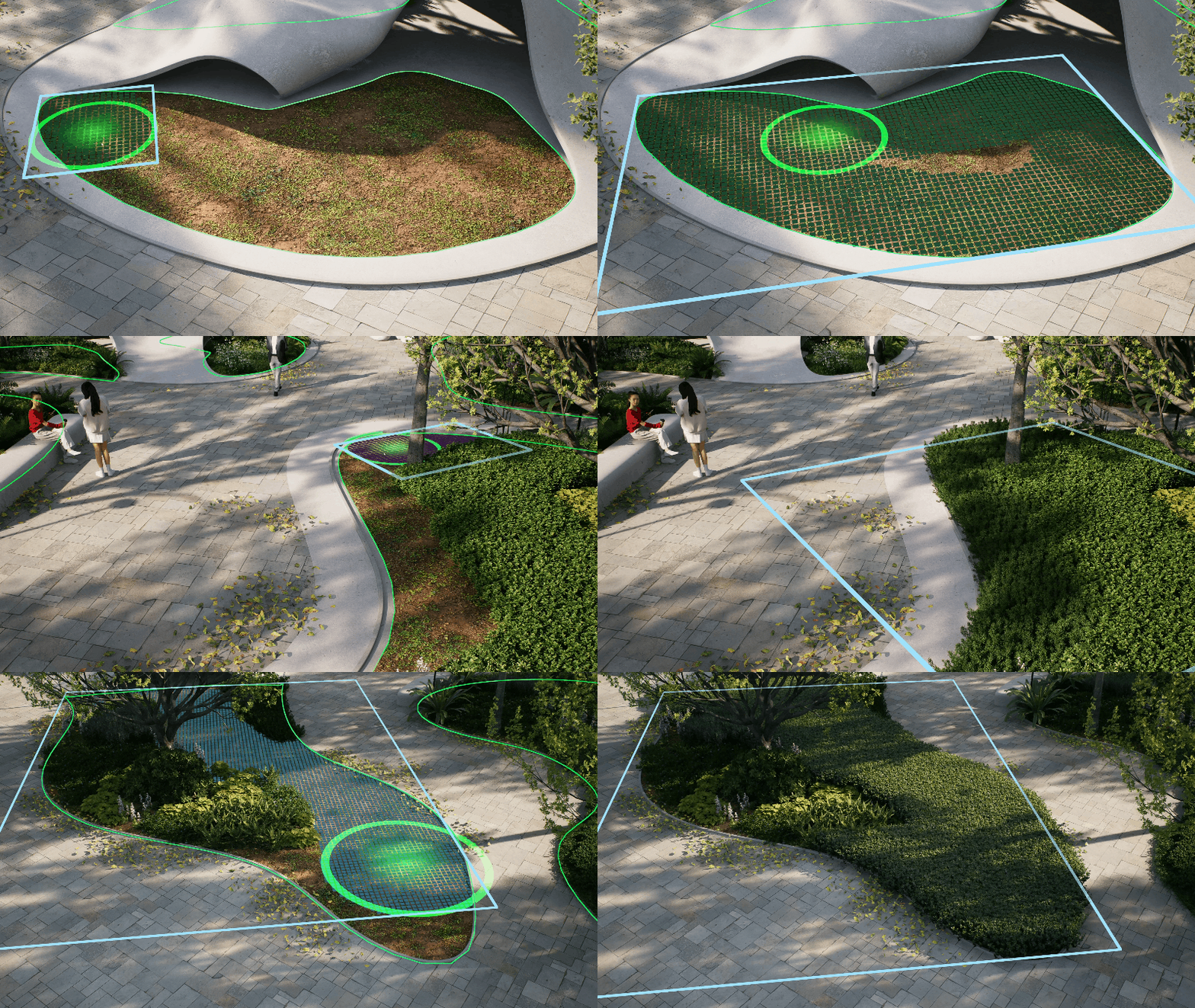
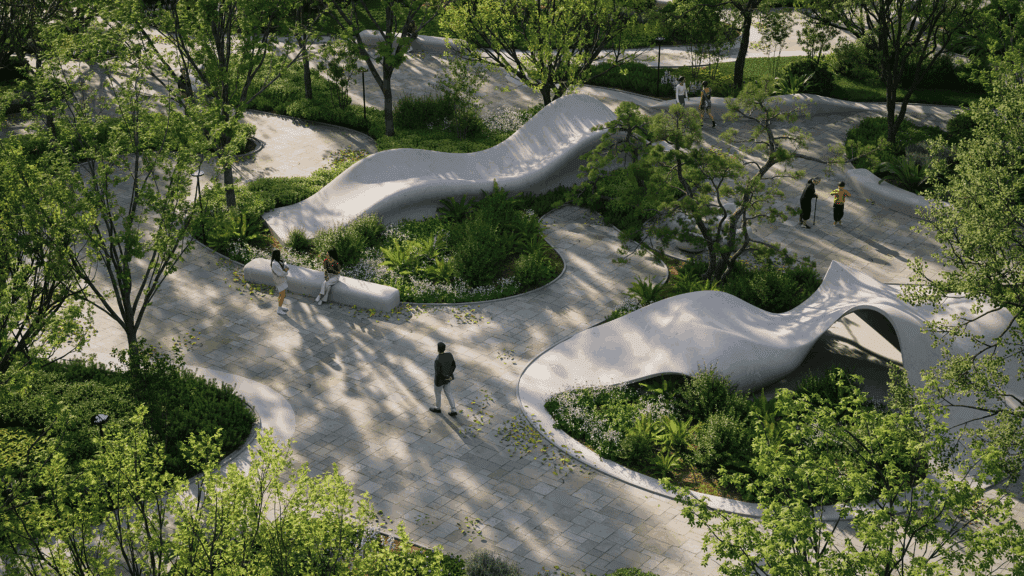
SmartPlanting allows automated design of climate-adaptive gardens, creating early stage designs quick and easy.

Advanced Scatter, Brush and Path Tools are an intelligent leap forward, taking painful arduous tasks and making them simple, quick and effective.

New Edge Divide allows precise division of scatter areas.

Custom Path Tool has improved with more flexibility and options to save presets for future use.

🖼️ DEVIL IN THE DETAIL

Materials make or break your 3D visuals. Sourcing the perfect ones is often an arduous and painstaking pursuit.

D5 Render offers some of the most advanced and reliable material solutions in the industry.

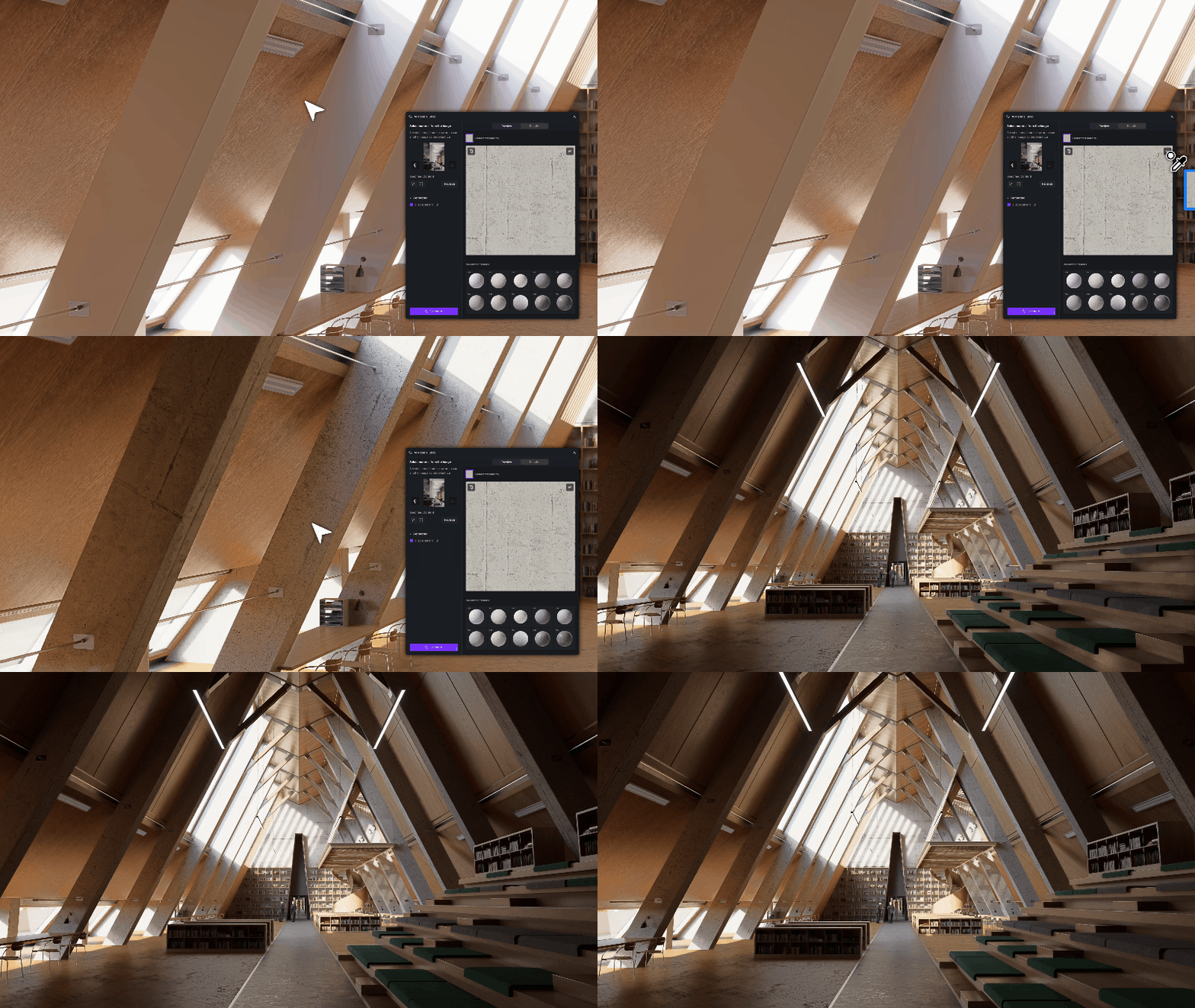
AI PBR Material Snap: Subjectively D5’s greatest tools, Make Seamless and Generate Texture have improved again. Drop in a reference image for immediate high-quality textures.

Material Match: Import your image into D5, select the resource list, right-click, and choose “AI material match.” D5 selects the closest match from the library. 

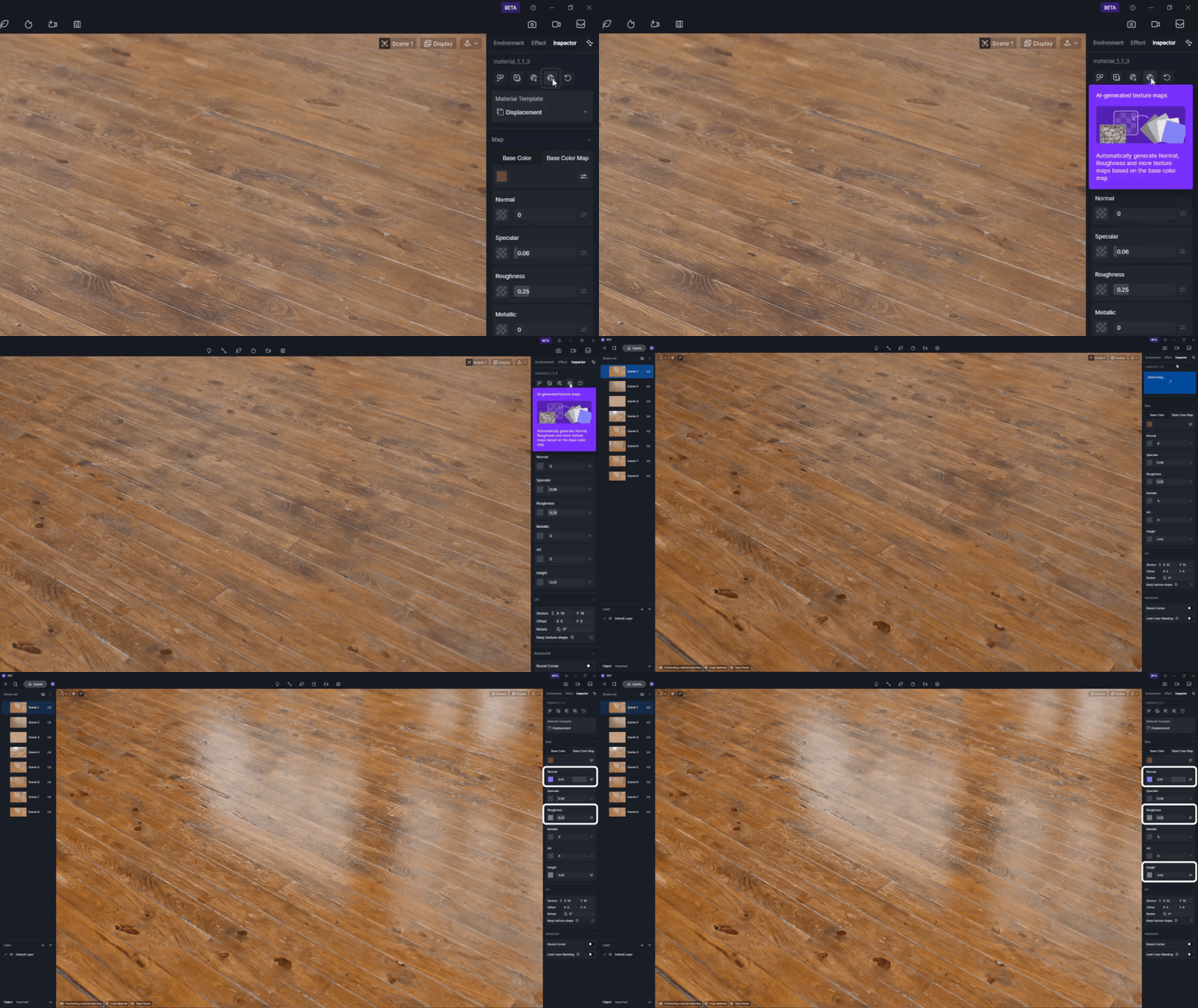
Texture Maps: Don’t like the D5 stock materials? Use any image, D5 generates texture maps (normal, roughness, height) to add depth and realism to the scene.

Make Seamless: No more spent hours hunting for or creating textures that don’t repeat horribly. Do it with D5 in a single click. 

💡 TURN ON THE LIGHTS

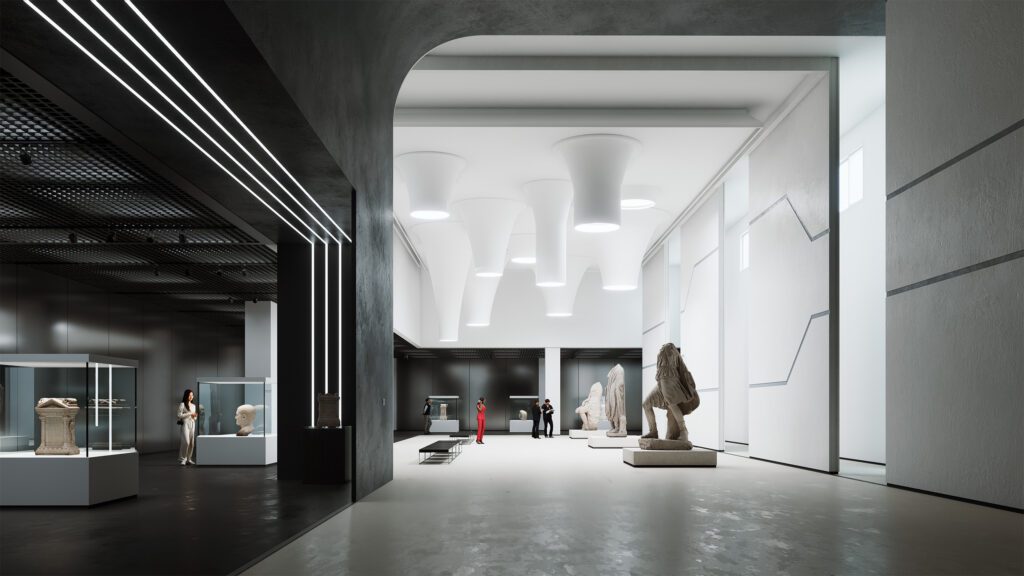
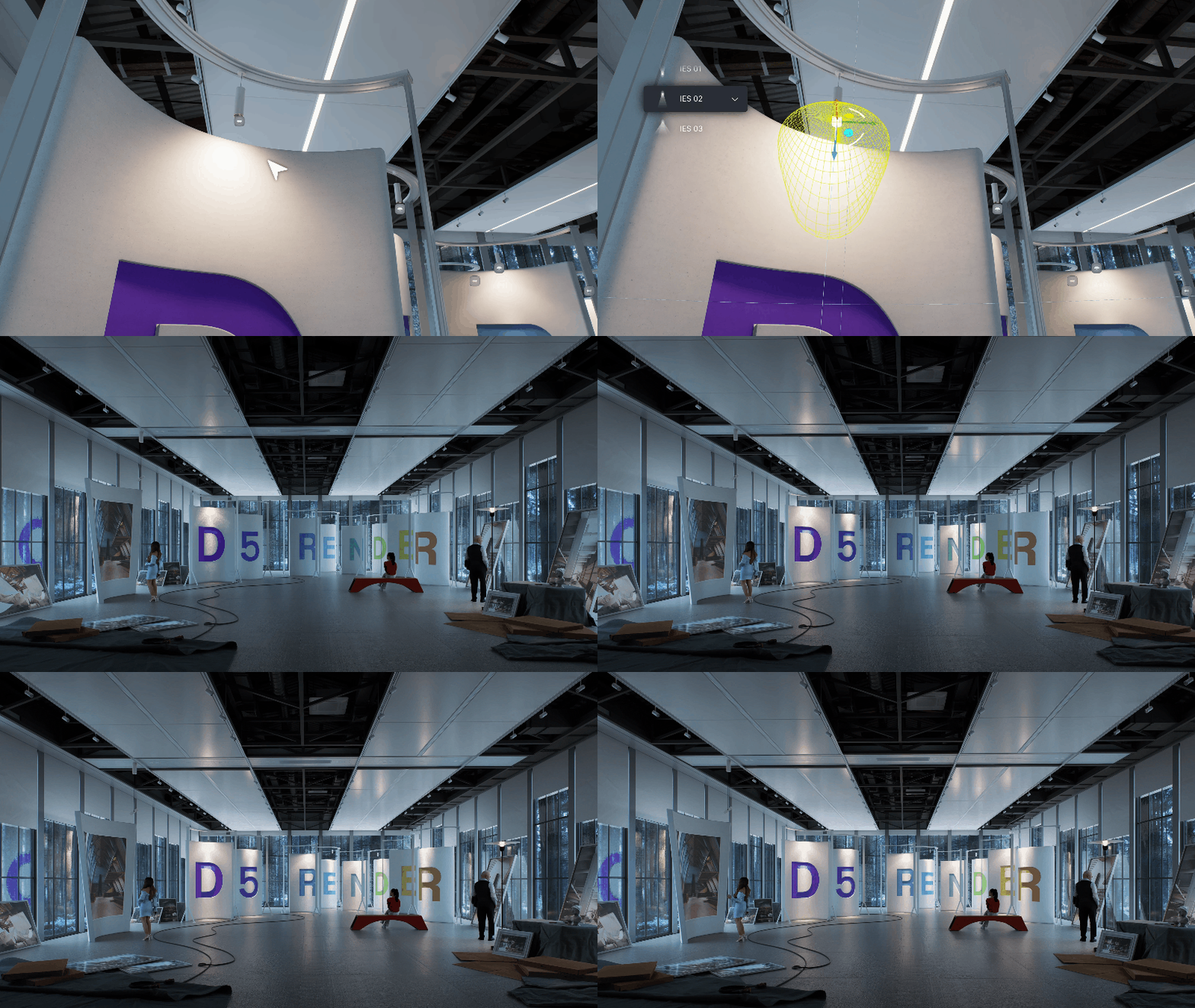
Disc Lights better simulate lights from circular panes.

Enhanced IES control allows for automated IES application in the viewport. 

🧑‍🤝‍🧑 SHARING IS CARING

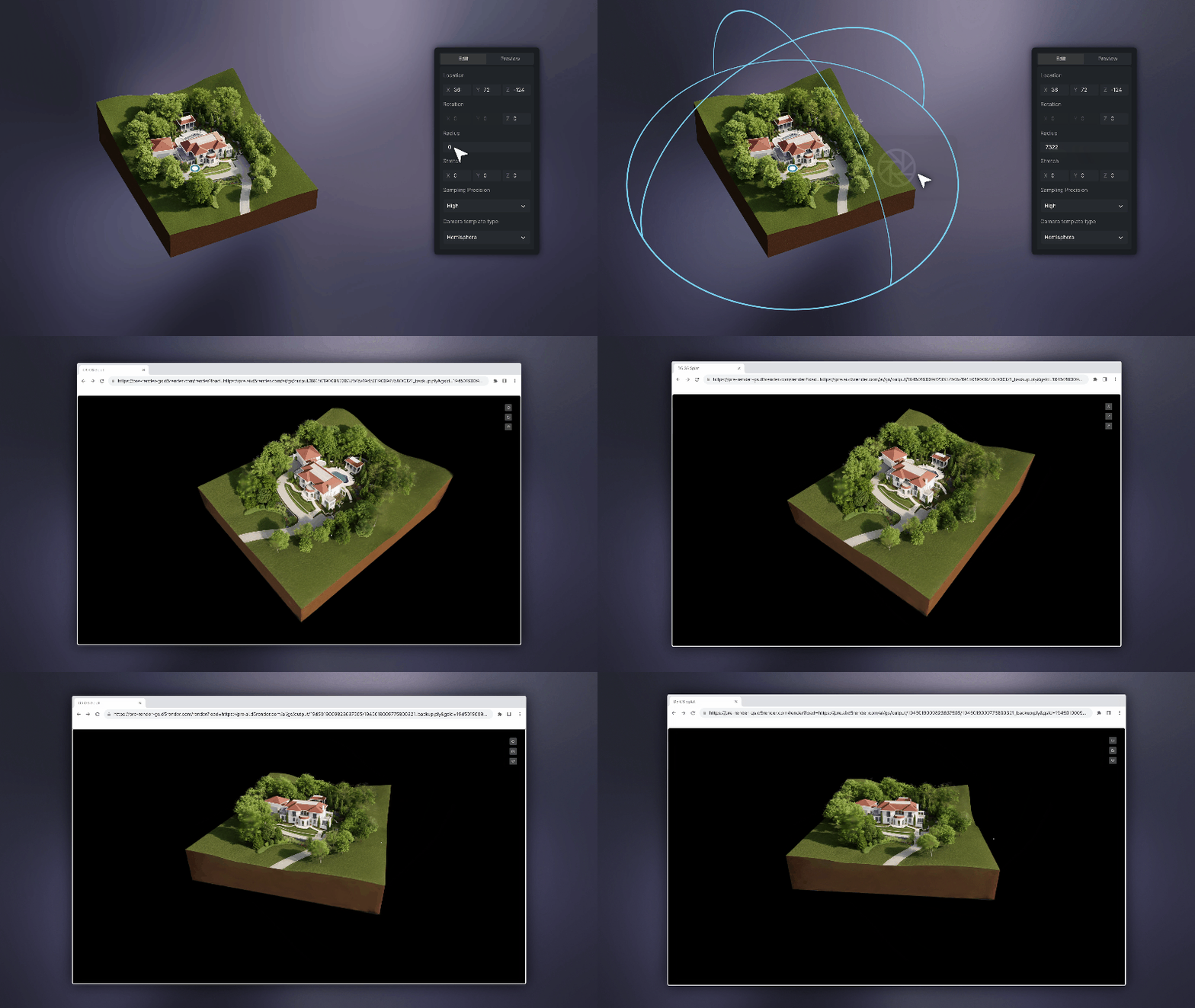
XR Tour generates an online sharable model. You may wonder how this is different to Virtual tour? We recommend XR for external and Virtual Tour for interiors.

📸 QUALITY THAT SPEAKS FOR ITSELF

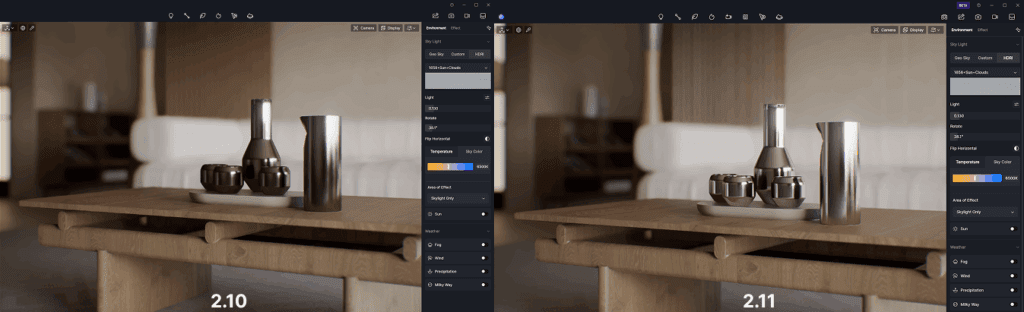
Real-time path tracing (RTPT) is now officially here – not a beta – not a demo. It gives your renders reflections, shadows, and atmosphere that rival traditional offline engines.

It’s perfect for early client previews where quality and speed both matter.

🤳 ALL THE ANGLES

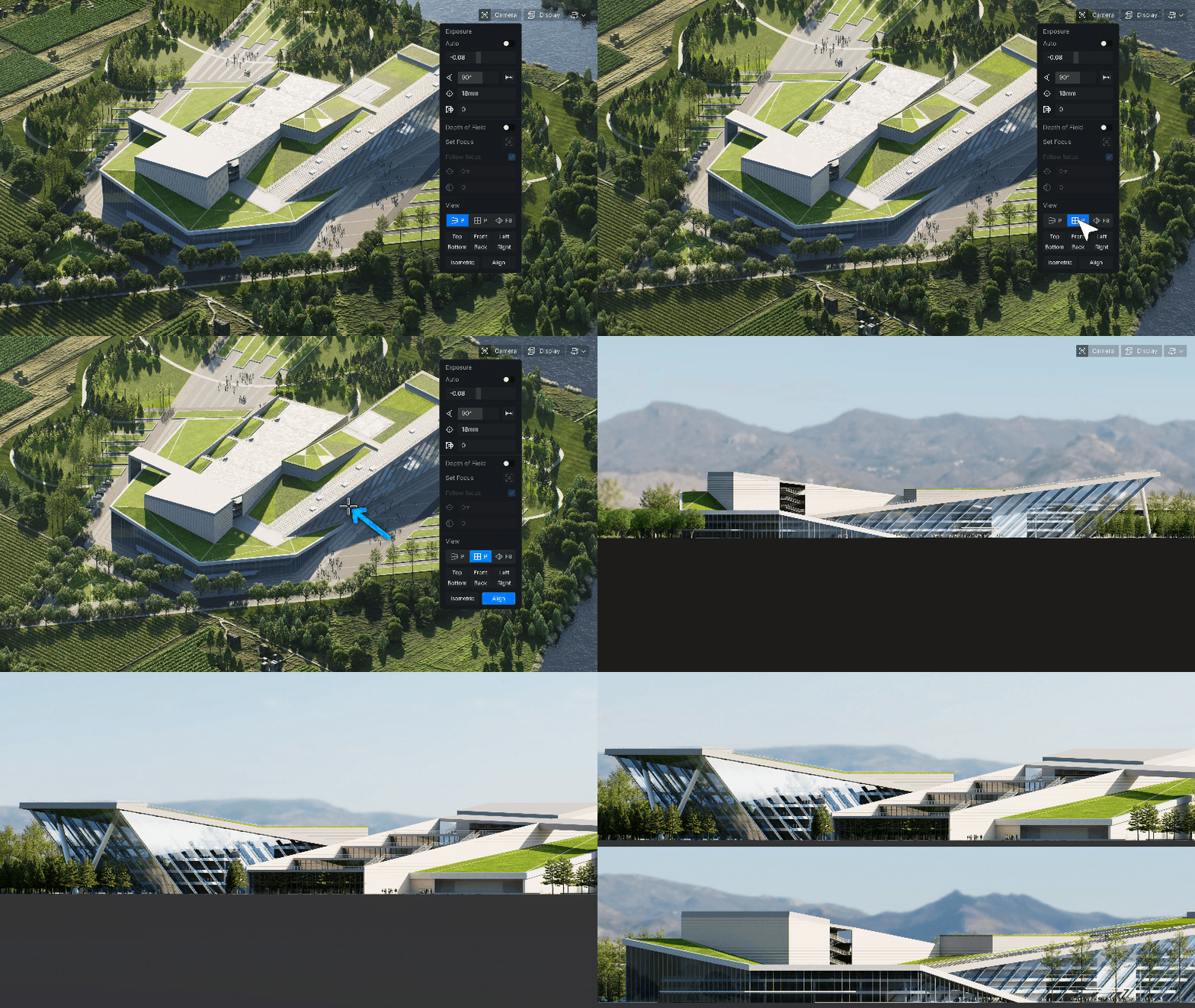
Parallel Projection: Orthographic views are now crystal-clear-ideal for technical presentations or construction visuals.

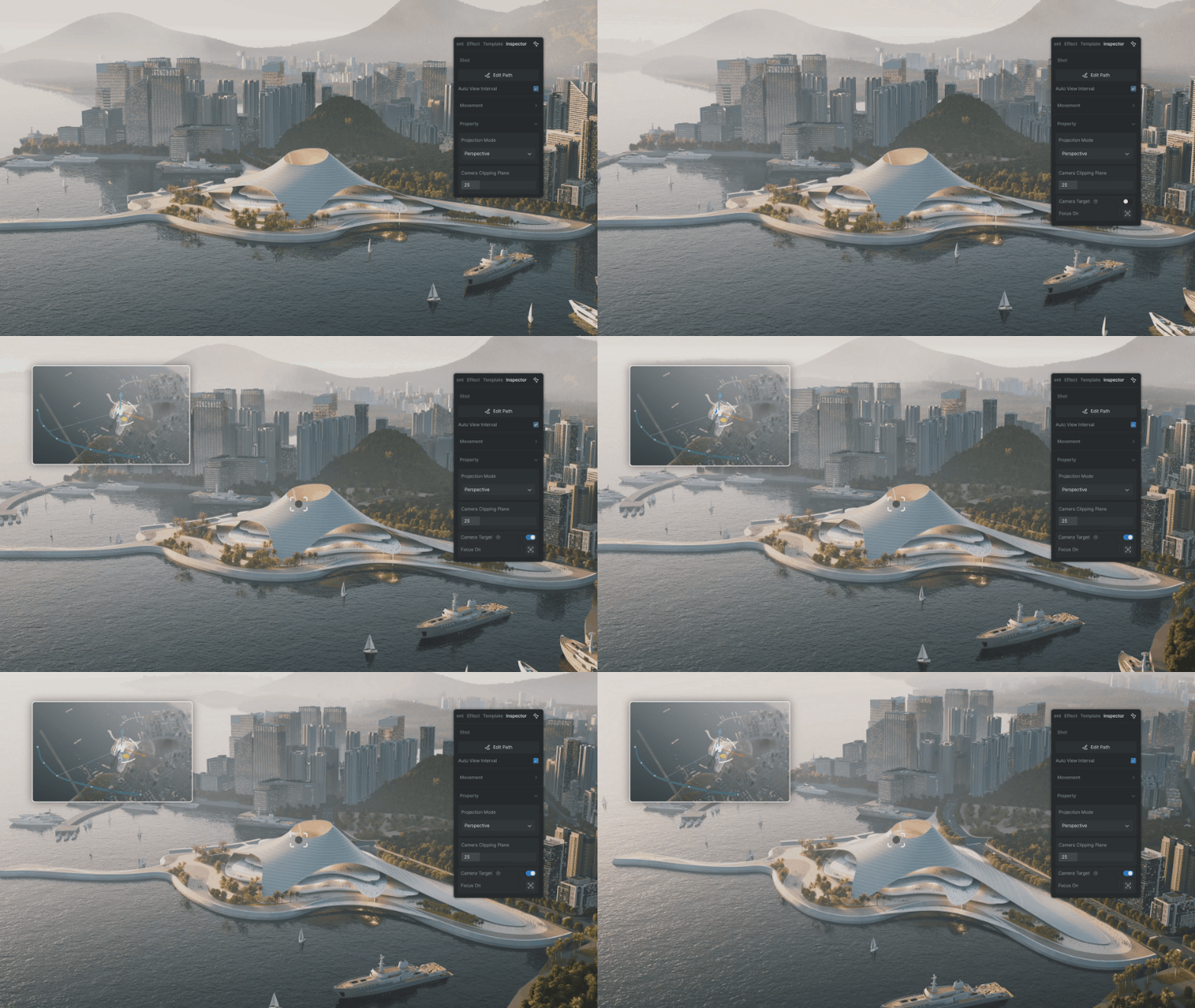
Camera Target Lock is a new, refined process for smooth animation by locking on an object.

💭 GREAT APPS THINK ALIKE

With many stakeholders at play, collaboration is a moving target for those navigating multiple software solutions. D5 is ever-evolving, allowing for greater interoperability across CAD platforms and supported file types.  

🌏 THE WORLD IN YOUR HANDS

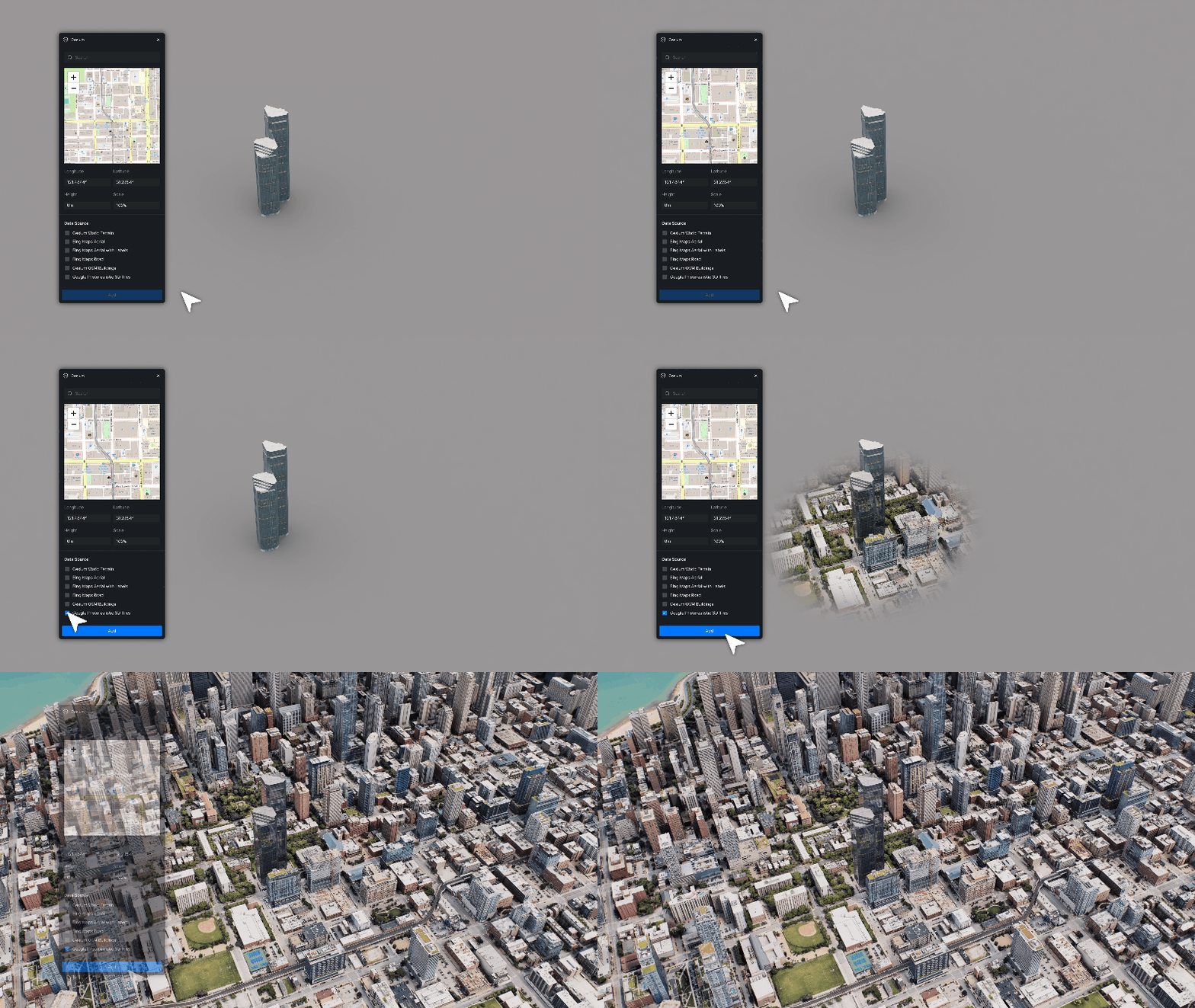
Cessium Integration is a HUGE improvement, allowing for real-world context that works anywhere (almost).

*NOTE* Only available with D5 Teams

⌛ WHY WAIT?

If you’ve been putting off trying the AI features or sticking to old workflows, now’s a good moment to explore. These tools don’t replace your skill, they amplify it.

Still not convinced? We get it, there are many great solutions.

To help make an informed decision head to D5 Render’s Youtube Channel, they have a range of informative feature videos and tutorials or see our D5 Render 2.10 release blog for additional features.

We’re also here to answer any questions or provide a live demo, please reach out to us at Support Viewlistic !

New Features in D5 Render 2.10

D5 Render 2.10 brings another leap forward, taking visualizations to the next level.

New features in D5 2.10

D5 2.10 brings a bunch of innovations that make rendering better, with smoother workflows and greater efficiency.

Real-Time Path Tracing

Path tracing is widely regarded as the gold standard for photorealistic rendering. Unlike traditional GI techniques that rely on approximations, path tracing simulates the physical behavior of light by tracing its interactions across multiple surfaces. Results are delivered without long rendering times, bringing a new level of quality to real-time visualization!

D5 for Teams

An organisational solution. Enhanced Collaboration and Cloud Integration

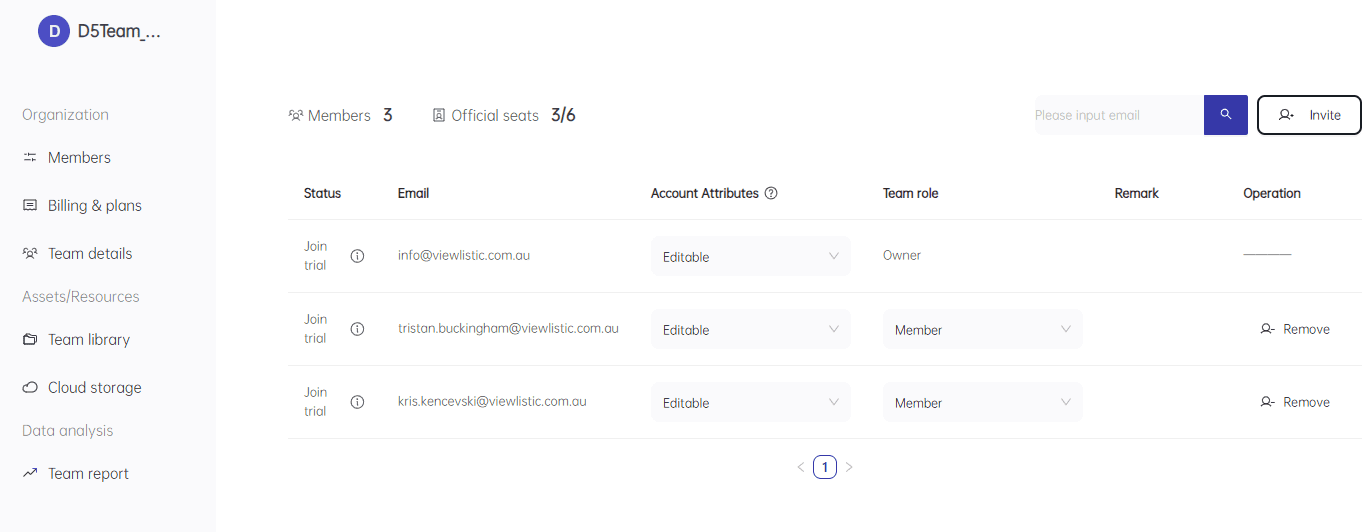
  • Management portal for onboarding and offboarding staff.
  • Team usage data analysis.
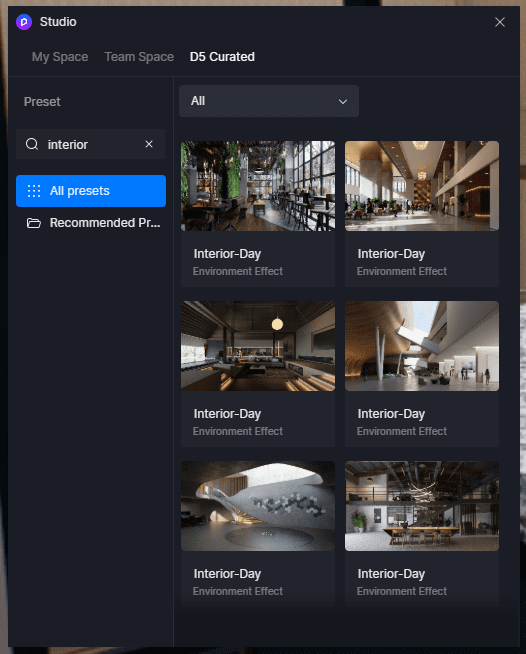
  • Use studio for sharing libraries and settings or use D5 curated presets for one-click lighting and enviro settings.
  • ‍New OneDrive & SharePoint Integration for seamless project file storage and sharing.
  • ‍Custom Brand Watermarks to add company logos to renders.
  • ‍Virtual Tour (online model hosting) improvements.
An overview of the Teams portal for D5
Studio Presets

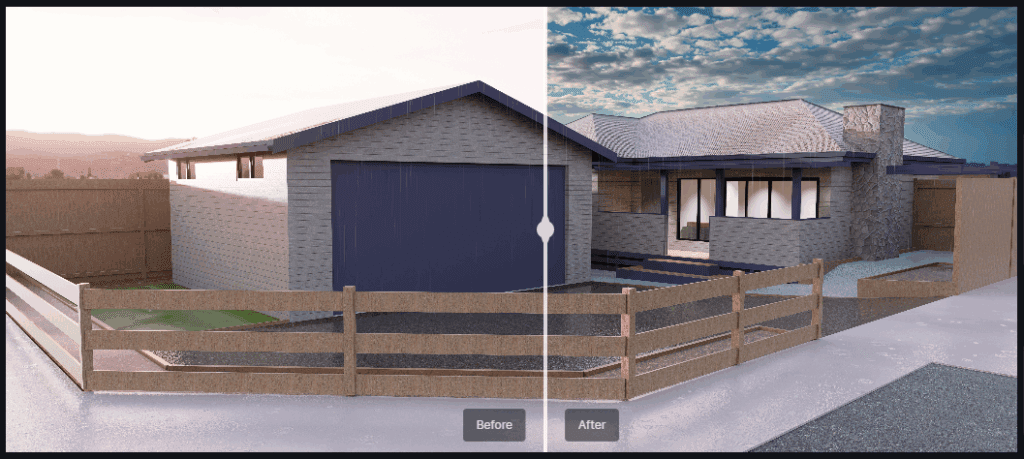
AI Post-Processing

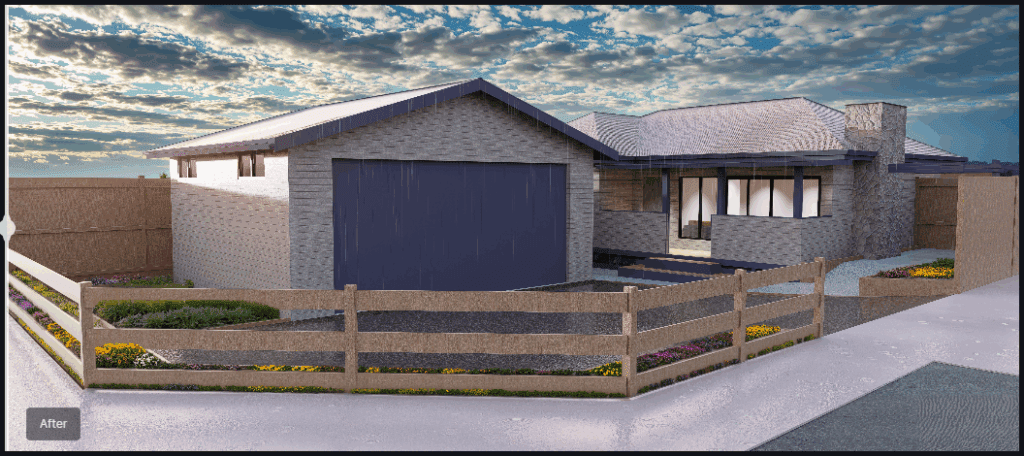
Rendered Image with AI Enhancement

Manual post-processing can be time-consuming and repetitive. D5 Render 2.10 introduces AI-powered tools to automate and refine renders.

AI Inpainting: 

  • In one-click, fill missing elements like sky, vegetation, or water automatically, reducing the need for manual asset placement, enviro refinement and post-render touch ups.

AI Enhancer:

Optimized image improvements.

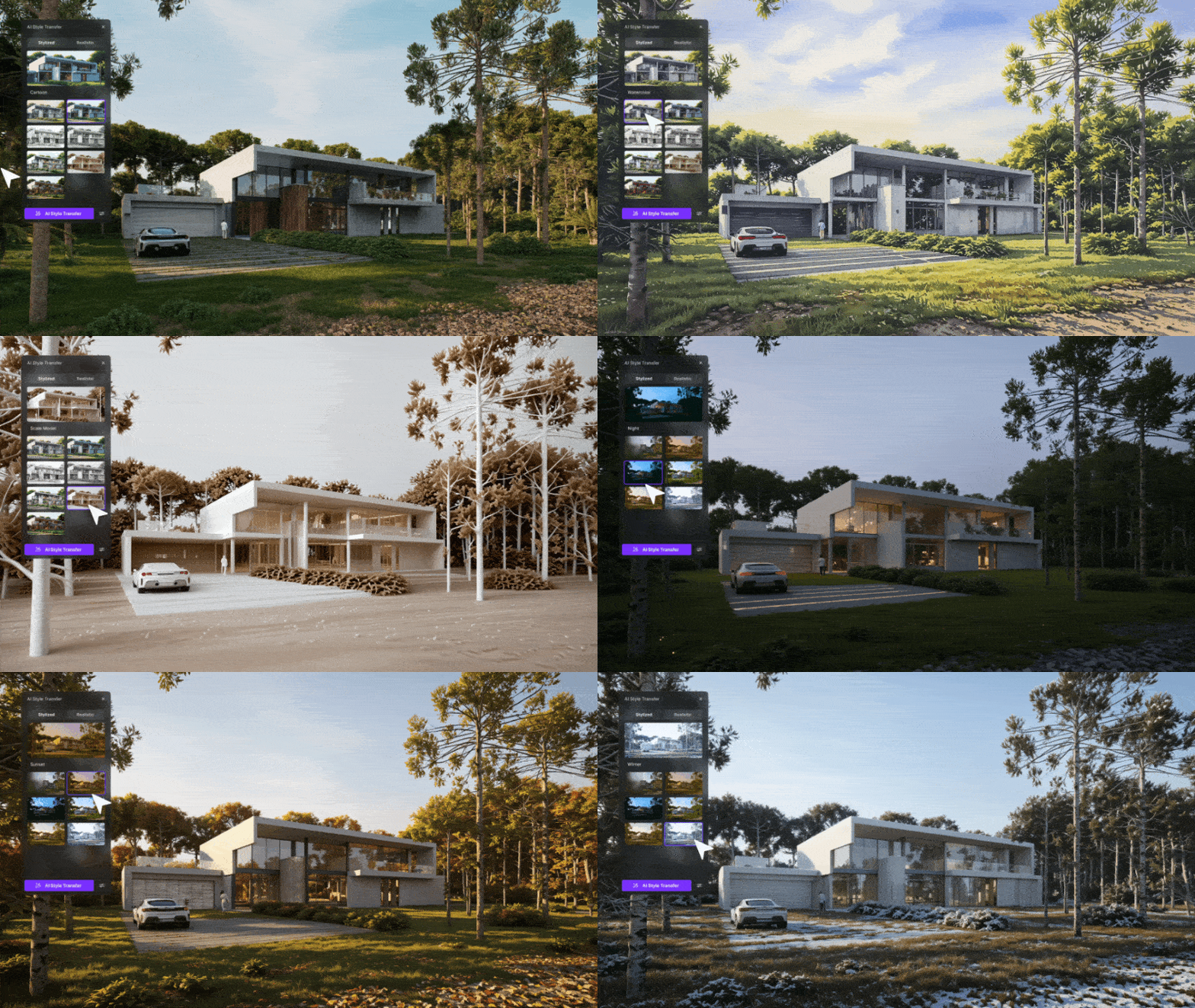
AI Style Transfer:

Add artistic styles or realistic effects to your image.

Night Sky Simulation

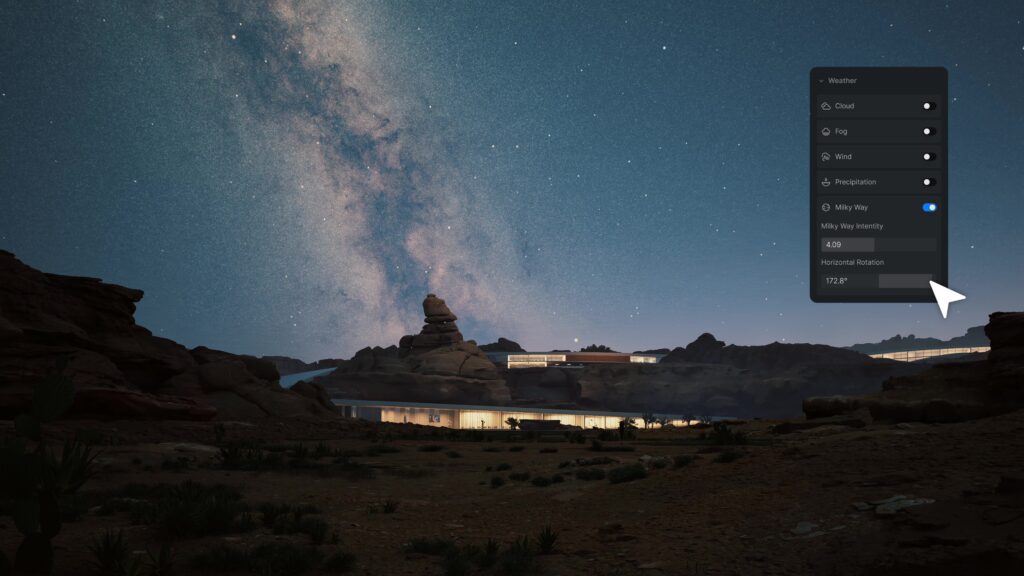
This update enhances outdoor night renders with a Day-Night Cycle in Geo Sky, allowing lighting transitions that mimic real-world conditions.

With customizable Moon & Star Intensity, users can control celestial brightness and positioning, while the Milky Way Simulation adds depth for a cinematic-quality night environment.

Optimized Rain & Snow Effects

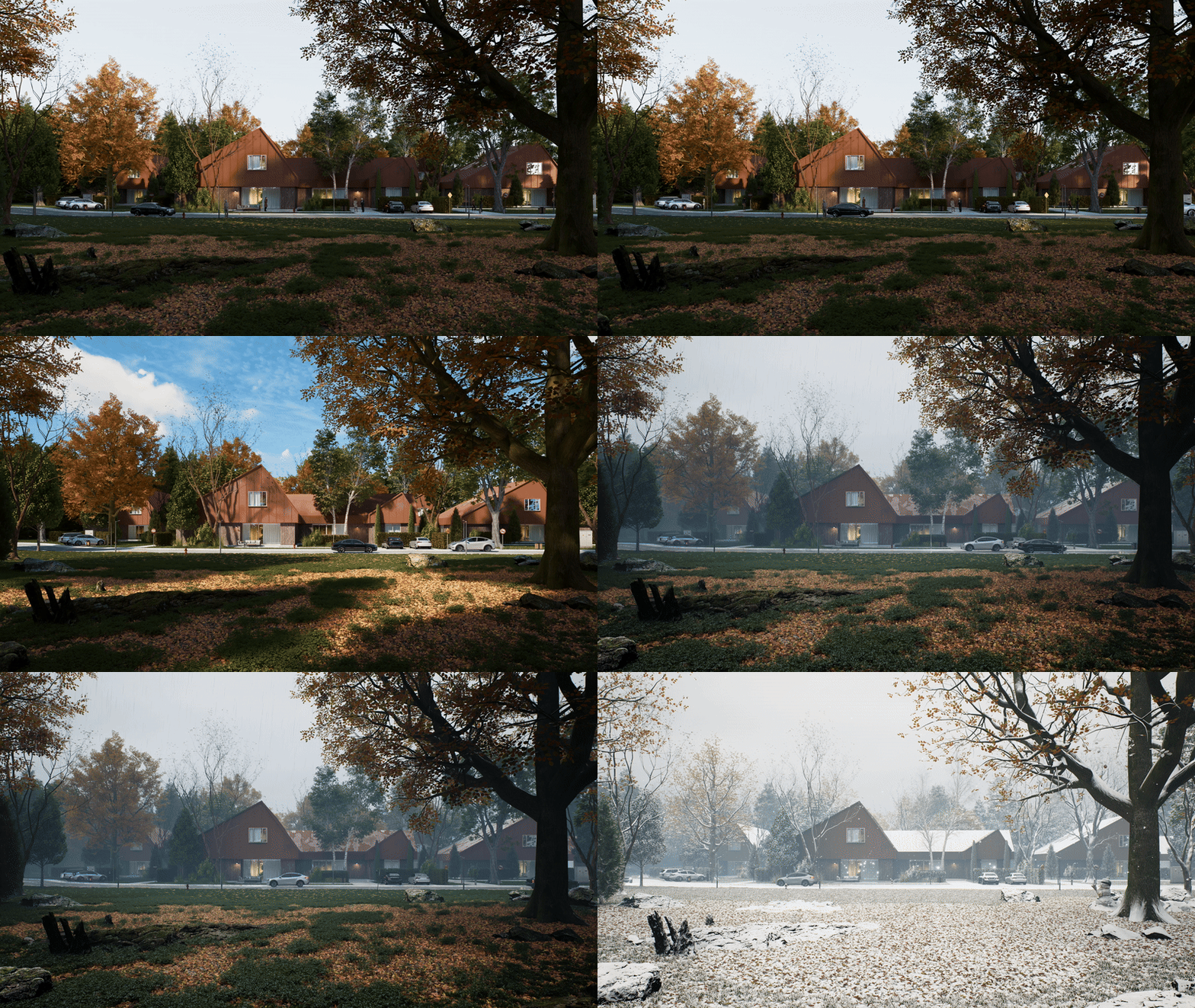
Weather effects have been refined to improve realism, making rain and snow more dynamic and natural. Enhancements include more detailed raindrop and snowflake particles, improved puddle and ripple effects, and a new Water Mist simulation that adds a humid atmosphere to rainy scenes. These updates ensure that weather-sensitive renders look more immersive and lifelike.

City Generator

Creating city models manually can be time-consuming and prone to inaccuracies. New Openstreetmap integration automates urban environment creation using real-world data, allowing users to generate detailed city layouts quickly. With customizable building heights, materials, and transparency, users can tailor cityscapes to their design needs. Additionally, Shapefile (.shp) Import supports GIS-based urban planning, ensuring accurate geographic data integration.

City modeling has been further enhanced with City Model Management Tools, allowing users to show/hide elements, modify road widths, and adjust individual building heights with ease.

Scatter Templates

New Scatter Templates to speed up vegetation and object placement.

Animation Enhancements

2.10 enhances animation workflows with an optimized Direction Controller for Fly-in/Out Animation Templates, addressing the need for greater precision and control in motion sequences. The original XYZ direction controller has been replaced with new horizontal and vertical rotation degree settings, allowing users to fine-tune movement paths with more accuracy and ease. 

Aside from the above, D5 Render has many great tools, more and more Archviz wizards are choosing it as their preferred solution!

Like what you see?

Chaos Suites – NEW CHANGES FOR YOU

Archviz experts release a new way to bundle suites of design tools. CHAOS ensues.

One Subscription, all the tools

[Insert your favorite Chaos product here] – there are many great options, with new and emerging technology ever-evolving. Don’t you wish there is a way to neatly package them all up in the same subscription? Now there is. 

New and Shiny

Before jumping to pricing, we’d be doing a great disservice not mentioning the latest and greatest reasons to use Chaos products as your choice of visualization software. 

Veras is a next-gen AI visualization tool built for architects and designers who want to turn early-stage ideas into compelling visuals—fast. Developed by EvolveLAB (now part of Chaos), Veras uses your 3D model as a base to generate multiple design options with just a few prompts. Whether you’re exploring bold new forms or refining material palettes, Veras gives you creative control through intuitive sliders, selective rendering, and natural language input. It’s like having a concept artist on call, inspiring in real time.

Evolve labs have other great solutions such as Helix for converting SketchUp or AutoCAD files to native Revit families and Glyph for automated documentation.

Envision

Chaos Envision is a new real-time 3D visualization and animation tool. It’s designed specifically for visualizers and design professionals who need to create high-quality, photorealistic animations quickly, without the heavy prep work.

Chaos Envision

🔍 What Does Chaos Envision Do?


  • Real-Time Ray-Traced Rendering: Delivers cinematic-quality visuals with real-time feedback.
  • Scene Assembly & Chaos Unified Ecosystem: Import and assemble large, complex scenes. Working with Enscape, V-Ray, Corona, Chaos Cosmos, and Chaos Scatter.
  • Massive Scene Support: Handles large files and complex environments without lag.
  • Animation Tools: Create smooth camera paths, object animations, and even crowd simulations using integrated tools like Anima.
  • Design Variations: Easily explore and present multiple design options without re-exporting or re-rendering.

New Buying Guide

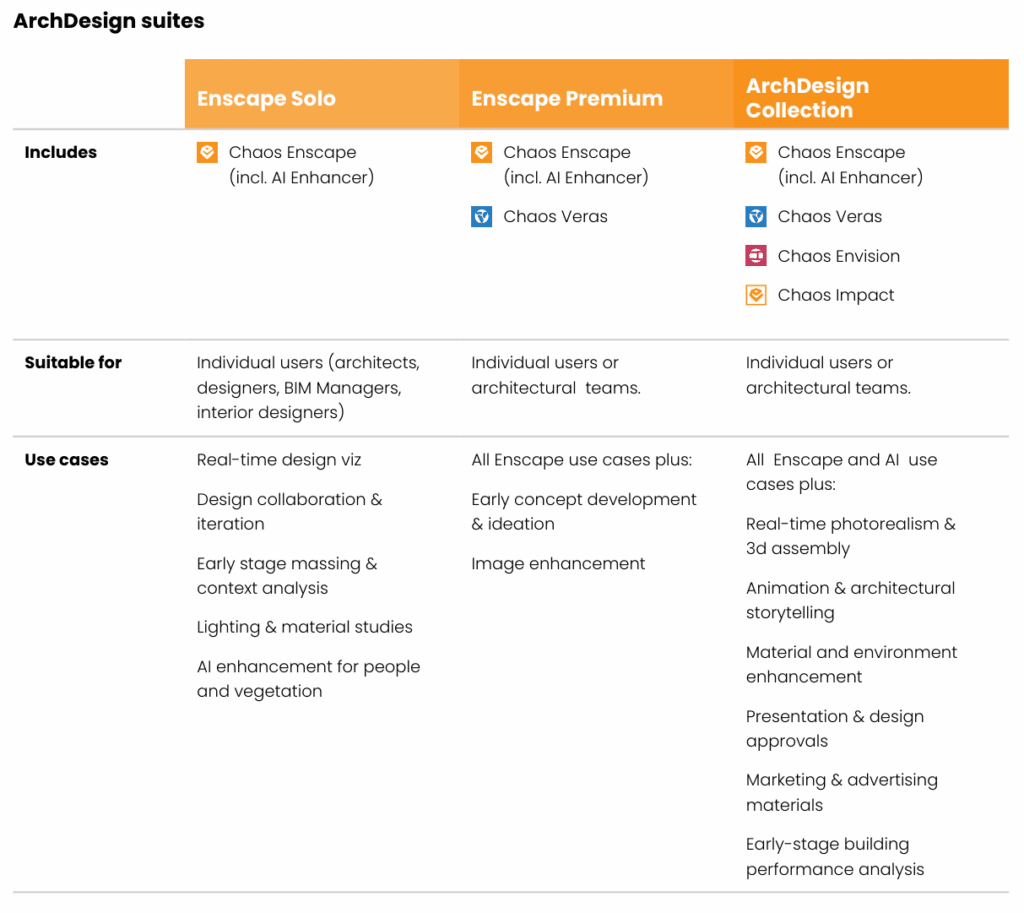
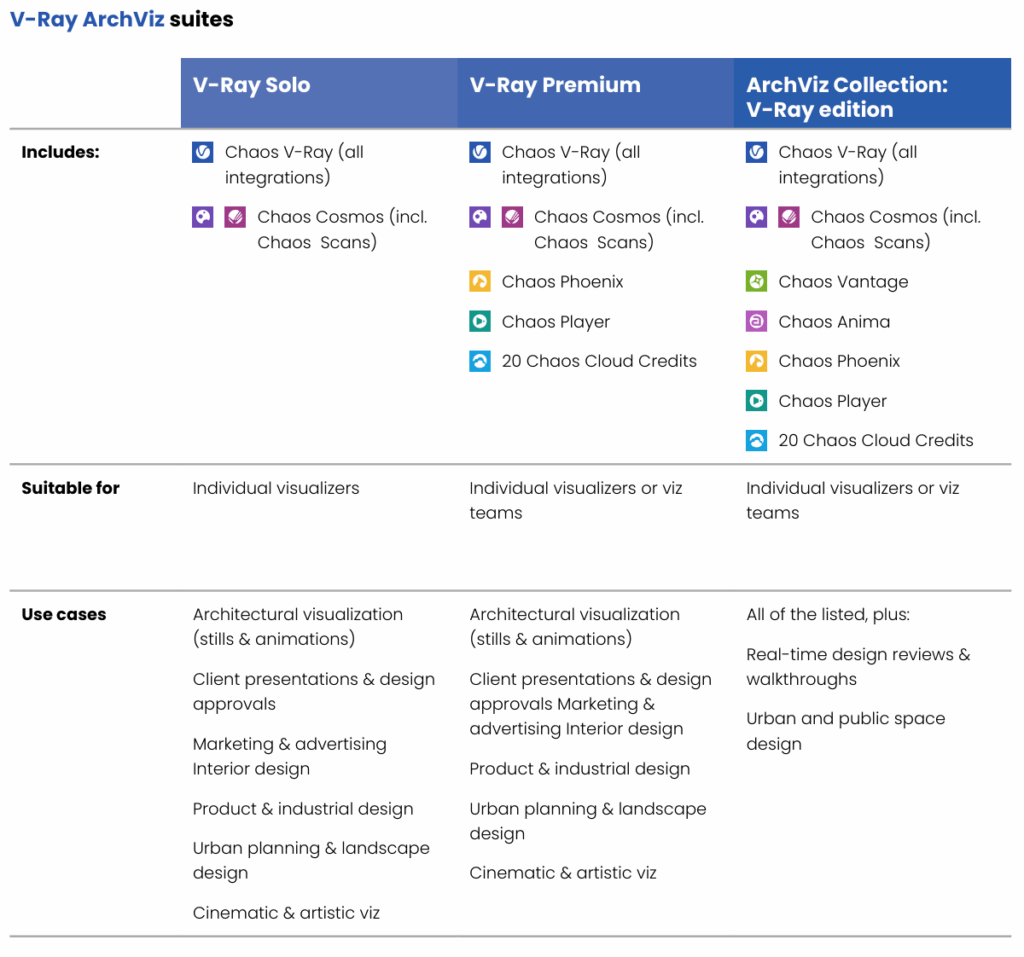
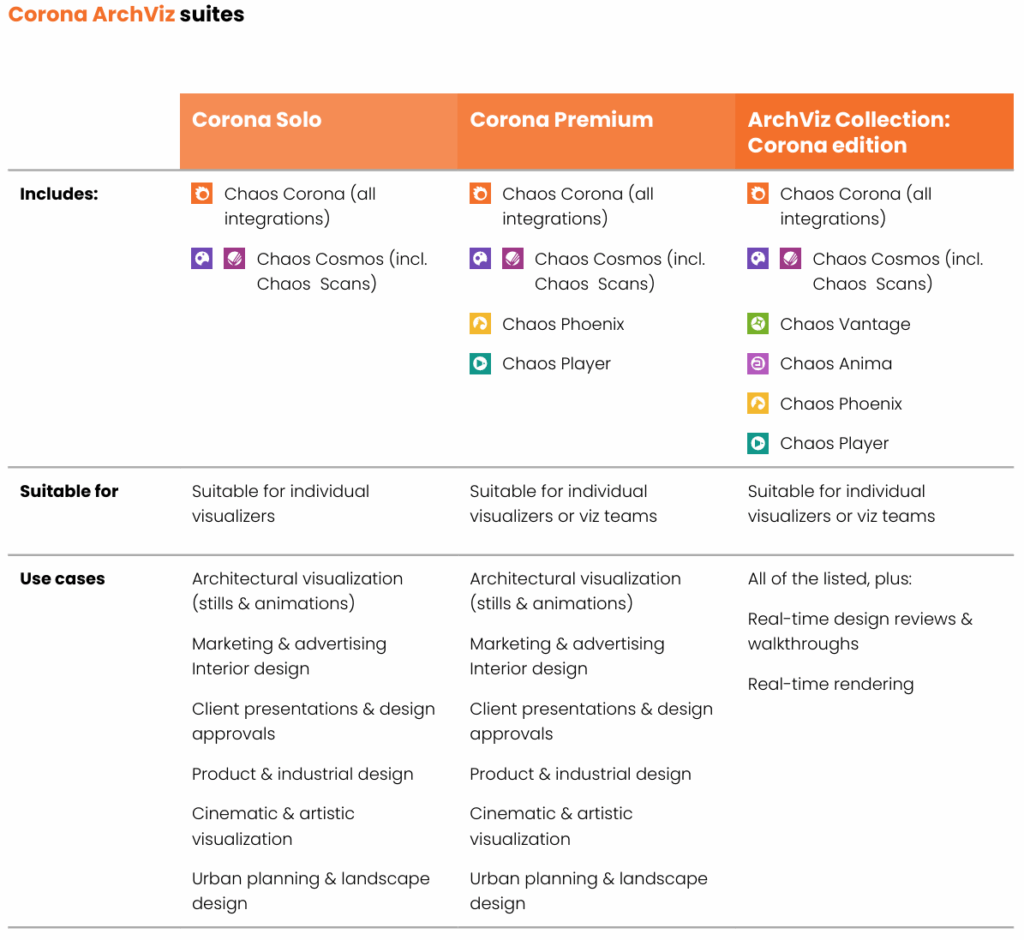
Aside from a host of new products, your favorite products are now available as part of a Collection.

Collections provide additional tools to add realism, generate design options, create early stage building performance reports and create animations for knock-out presentations. 

ENSCAPE

*Licenses are now suites. Fixed licenses are now Named Licenses, each of the suites shown above are available in Named or Floating.*

ArchViz Collection

Chaos ArchViz Suite’s are available in Vray and Corona edition.

Autodesk Revit 2026

Revit 2026 is designed to empower your team with cutting-edge tools and enhancements that drive innovation
and efficiency in your BIM projects. New features will improve your design and construction processes to meet
the demands of today’s dynamic industry.

New features in Autodesk Revit 2026

Each year Revit sets a new standard for BIM excellence, offering powerful advancements that enhance project
delivery and performance. The latest evolution has better tools to achieve greater precision, speed, and
collaborative control, ensuring you stay ahead in a competitive landscape. See below for the full list of
enhancements.

WALLS

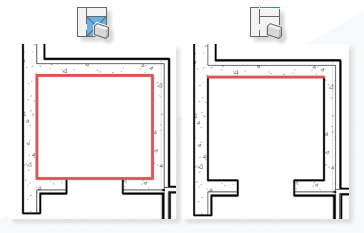
  • New Create by Room Segment allows the creation of finish layers by selecting other walls.
Two diagrams showing different methods of reinforcing a corner in construction. The left diagram highlights a square reinforcement area in red, while the right diagram shows a linear reinforcement along the corner.
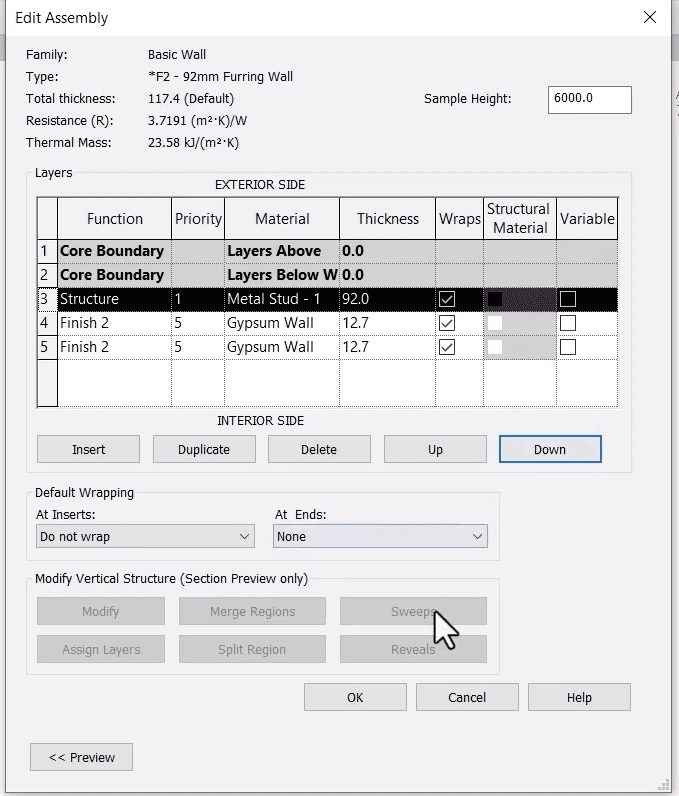
  • Core Layers are no longer required in Compound Structures and each layer has a priority function to define and improve wall joins where required.
A detailed assembly diagram of a basic wall structure, showing various layers and their properties, including thickness and thermal resistance.

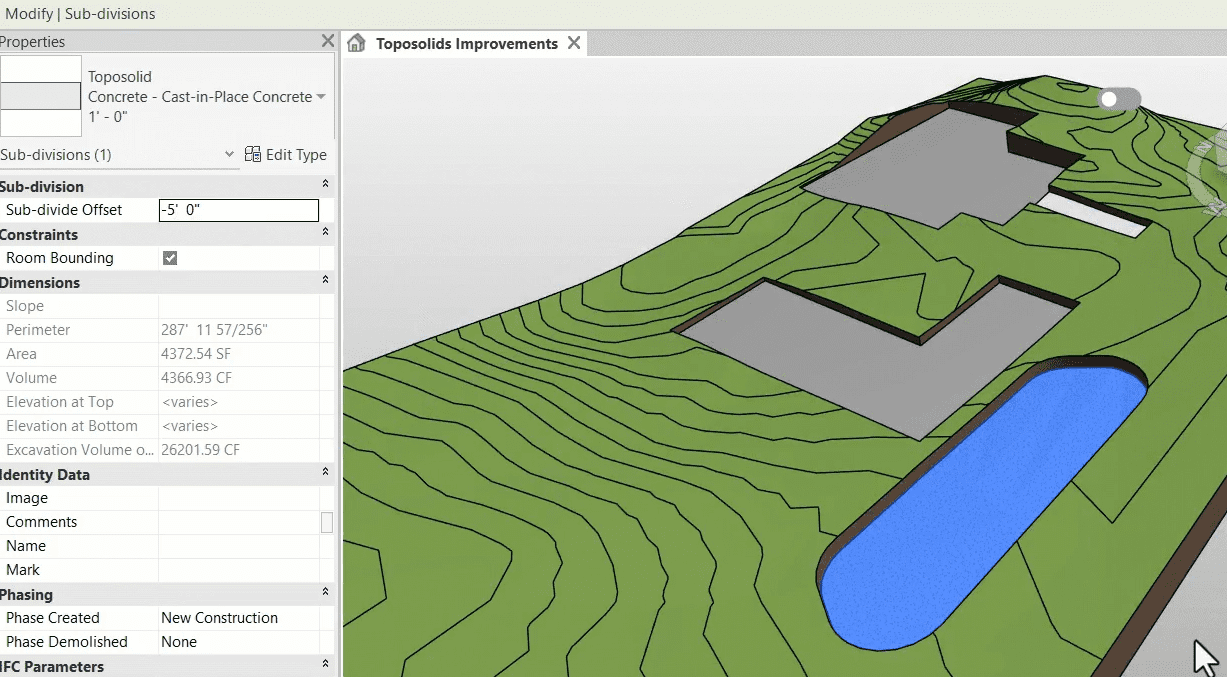
TOPOSURFACE ENHANCEMENTS:

A 3D model of a landscape with topographical lines, buildings, and a body of water, accompanied by a panel listing various properties and parameters.
  • Multiple subdivisions within the same Toposolid and set different types for each subdivision.
  • Subdivisions can now also be scheduled and edited within Visibility and Graphics.
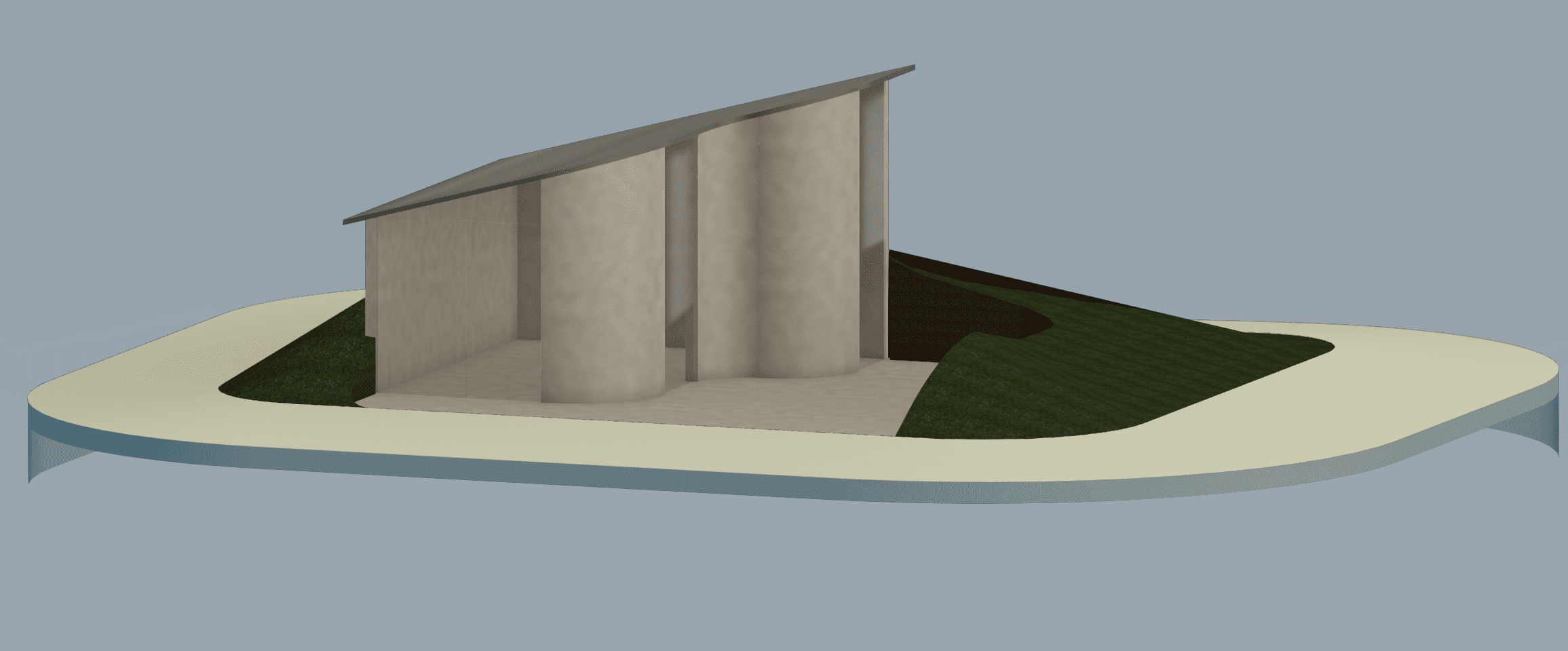
  • Toposolid Accuracy – A large criticism of the Toposolid feature was inaccuracy when compared with the
  • previous Toposurface system. This has been vastly improved to better generate accurate cut & fill volume.
  • Void Cutting improved.
  • Copy/Paste Points has been introduced to speed up modelling.
  • Maximum Toposolid Points increased from 10,000 to 20,000.

VIEW CALLOUTS, ELEVATION/SECTION MARKS AND VIEW REFERENCES:

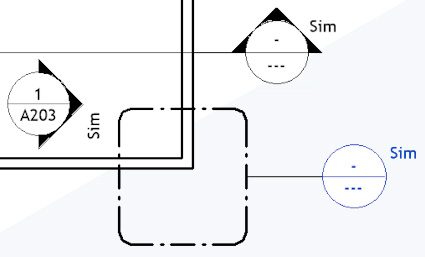
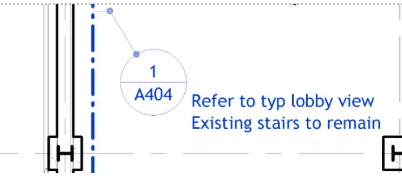
  • Instance-based Reference Labels. They still have a type-default, just use the instance parameter to define your own where necessary.
A technical drawing featuring various symbols and annotations, including circles with triangles inside, labeled "Sim" and "A203."
  • Introduction of Shared Parameters for View markers and references.
A technical drawing with annotations, including a label "A404" and text indicating existing stairs and a lobby view.
  • Global Setting for Structural Elements to Disable automatic shortening of Steel elements when auto-joining.

SHEETS

  • Additional parameters available in Schedule Sheet List properties including fields from Global Parameters and titleblocks.
  • Sheet Collections are now available as a category for Schedules, allowing for quick automation of parameter inputs based on Sheet Collection.
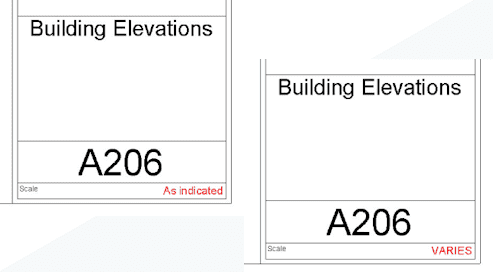
  • “As Indicated” Scale override parameter for all Titleblocks.
Two Revit sheet title blocks displaying different scale label styles – one shows "As indicated" and the other
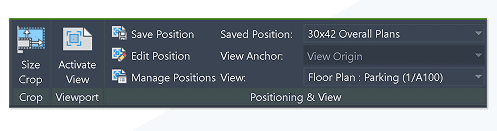
  • Savable View position to lock in place and repeat saved position throughout the Project with Automated View Placement.
Revit viewport properties panel showing crop, positioning, and saved view settings for a floor plan view.

LINK MANAGEMENT

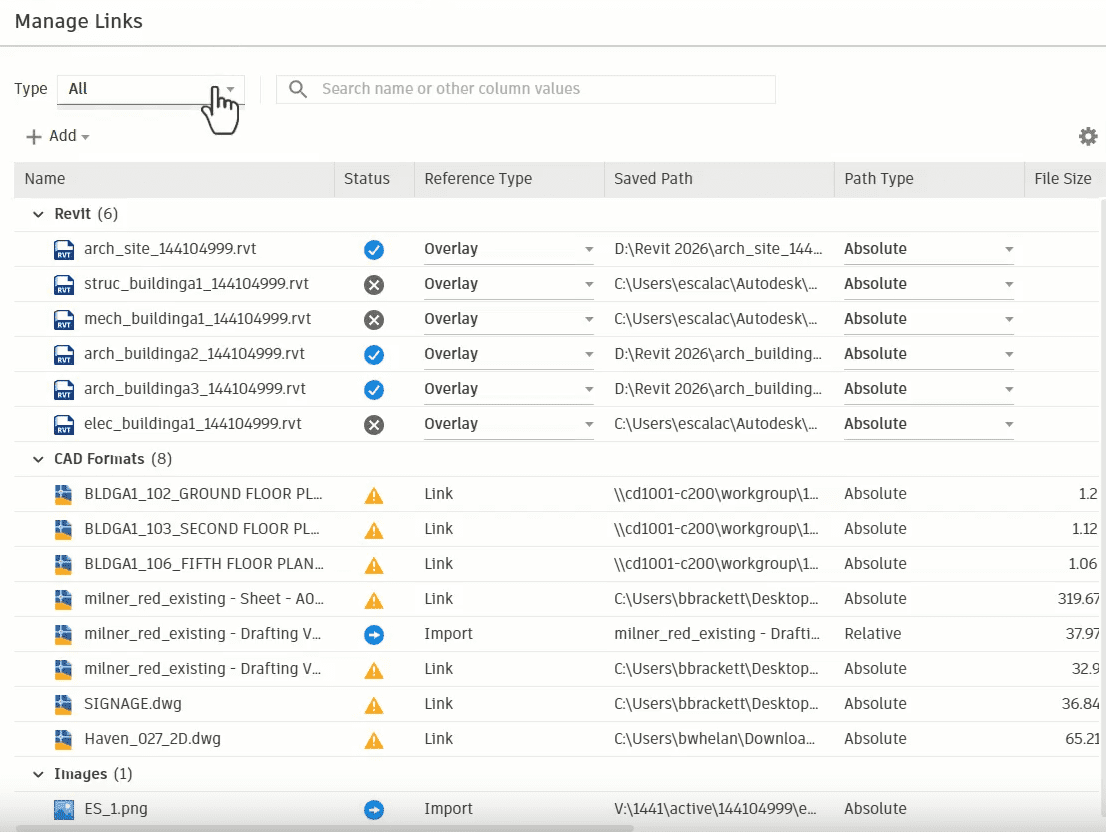
  • 2025.5 saw the overhauled Manage Links interface with Improved visibility and control of linked Models and CAD formats. You can now view imported or linked items in the same dialog.
Revit Manage Links dialog showing Revit, CAD, and image file links with status indicators and path types.
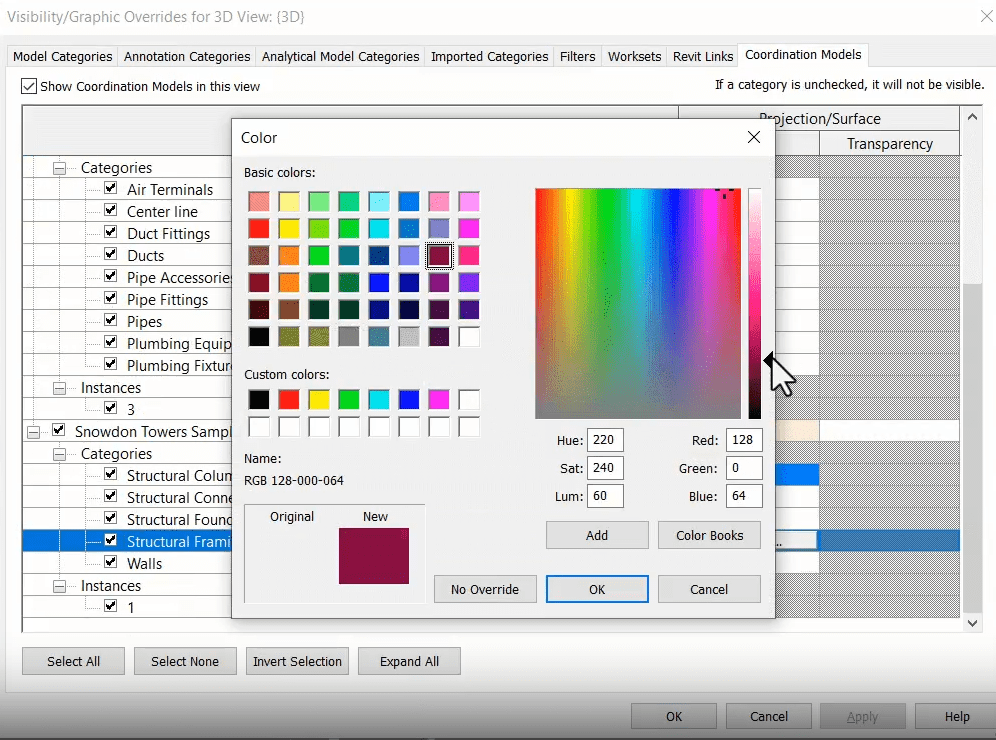
  • Coordination Model Visibility & Graphics tab, allowing for greater visual control of categories and the colour of linked elements in views.
Revit Visibility/Graphic Overrides dialog showing the color selection window for changing the appearance of structural framing elements in a 3D view.
  • More precise IFC positioning.

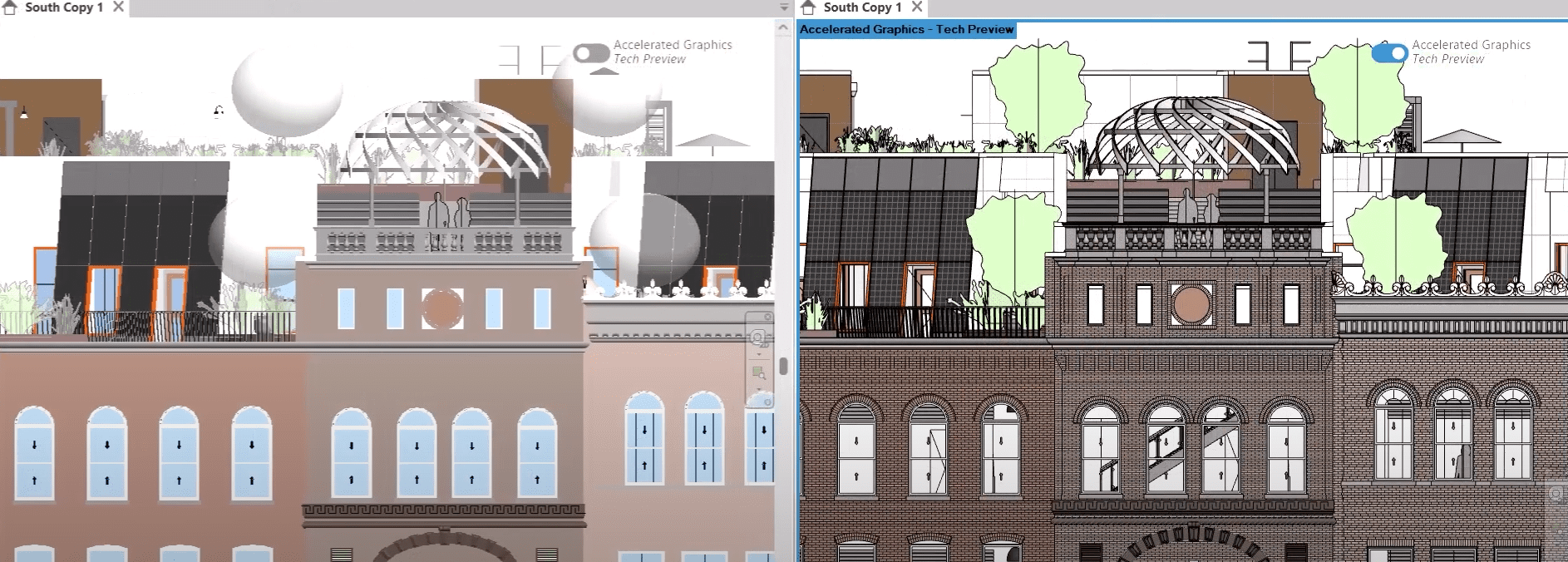
ACCELERATED REVIT GRAPHICS TECH PREVIEW

  • Enhances visual performance and responsiveness, reducing lag and improving navigation speed in 3D and 2D views.
Side-by-side comparison of Revit elevation views with and without Accelerated Graphics enabled, highlighting differences in rendering detail and clarity.

RECAP PRO MESH REVIT PLUGIN

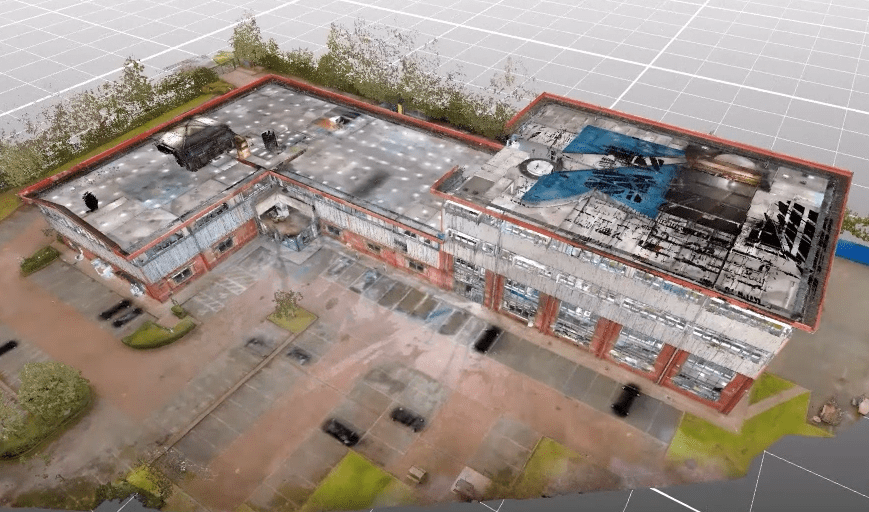
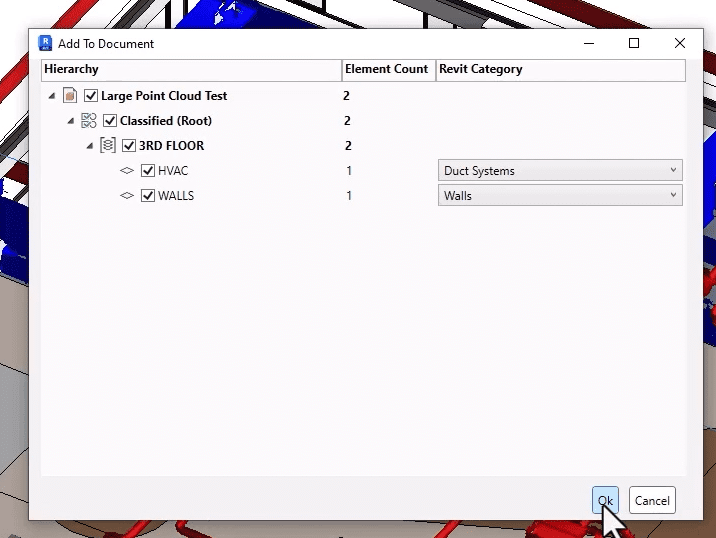
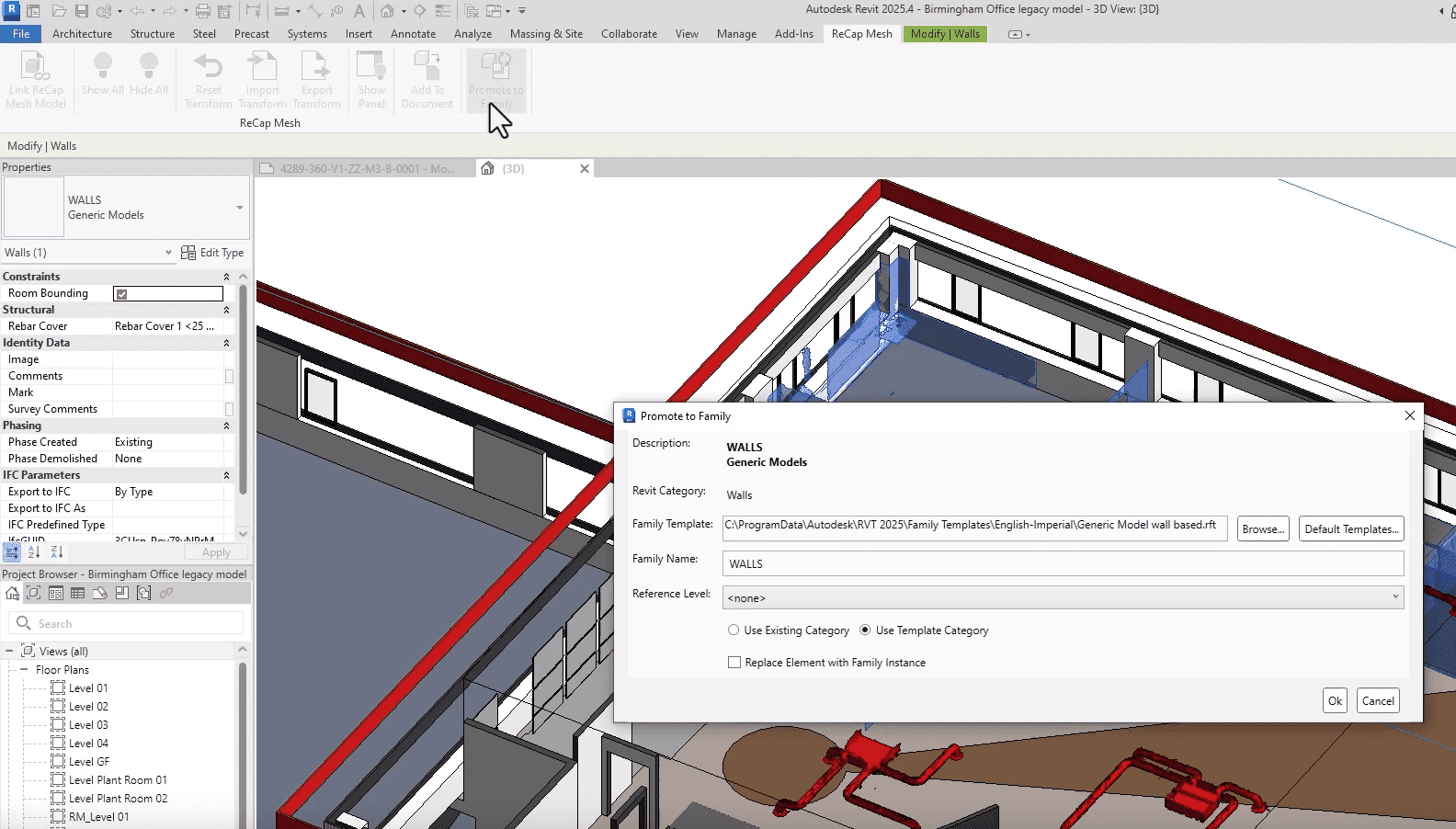
  • ReCap Pro integration allows for import and conversion of large or complex Point-Clouds into Revit. Link a mesh, define parts and convert Mesh geometry to native Revit Families.
3D point cloud model of a commercial building and its surrounding site, captured using reality capture technology.
Revit "Add to Document" dialog showing classification of point cloud data into HVAC and Wall elements with assigned Revit categories.
Revit interface showing the “Promote to Family” dialog box for a wall element converted from a ReCap mesh, with Revit category and template selection options.

INTERFACE CHANGES:

  • Many modification and placement options moved from Option Bar to Ribbon.

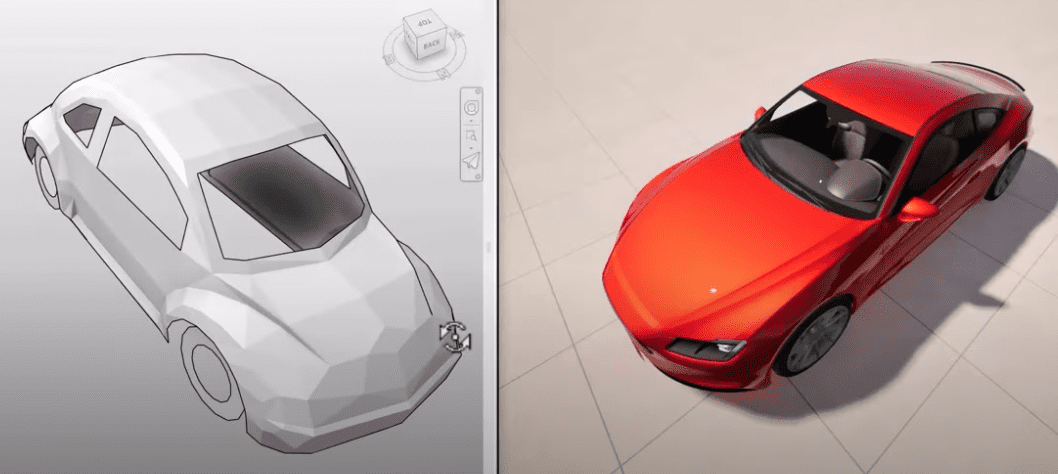
ENHANCED TWINMOTION FAMILY SUBSTITUTION

Side-by-side comparison of a low-poly car model in a modeling environment and a fully rendered, photorealistic version of the same car.

MEP IMPROVEMENTS:

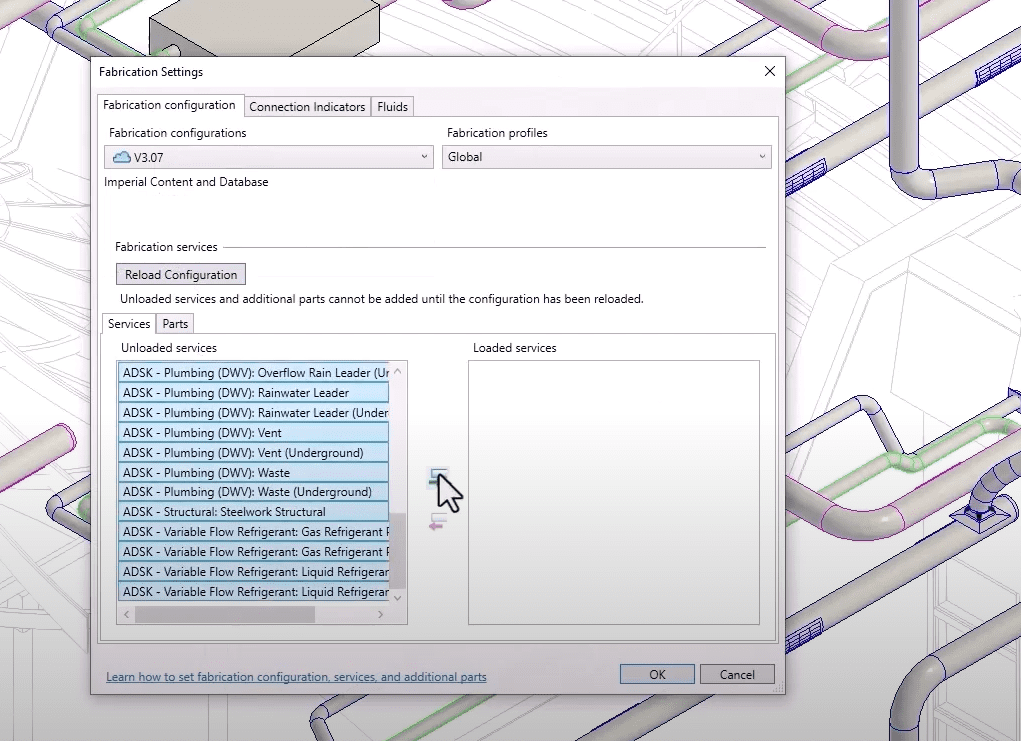
  • MEP Fabrication load times are now 70% faster and issues with step-downs have been addressed.
Revit Fabrication Settings dialog showing a list of unloaded and loaded MEP services under the "Fabrication configuration" tab.
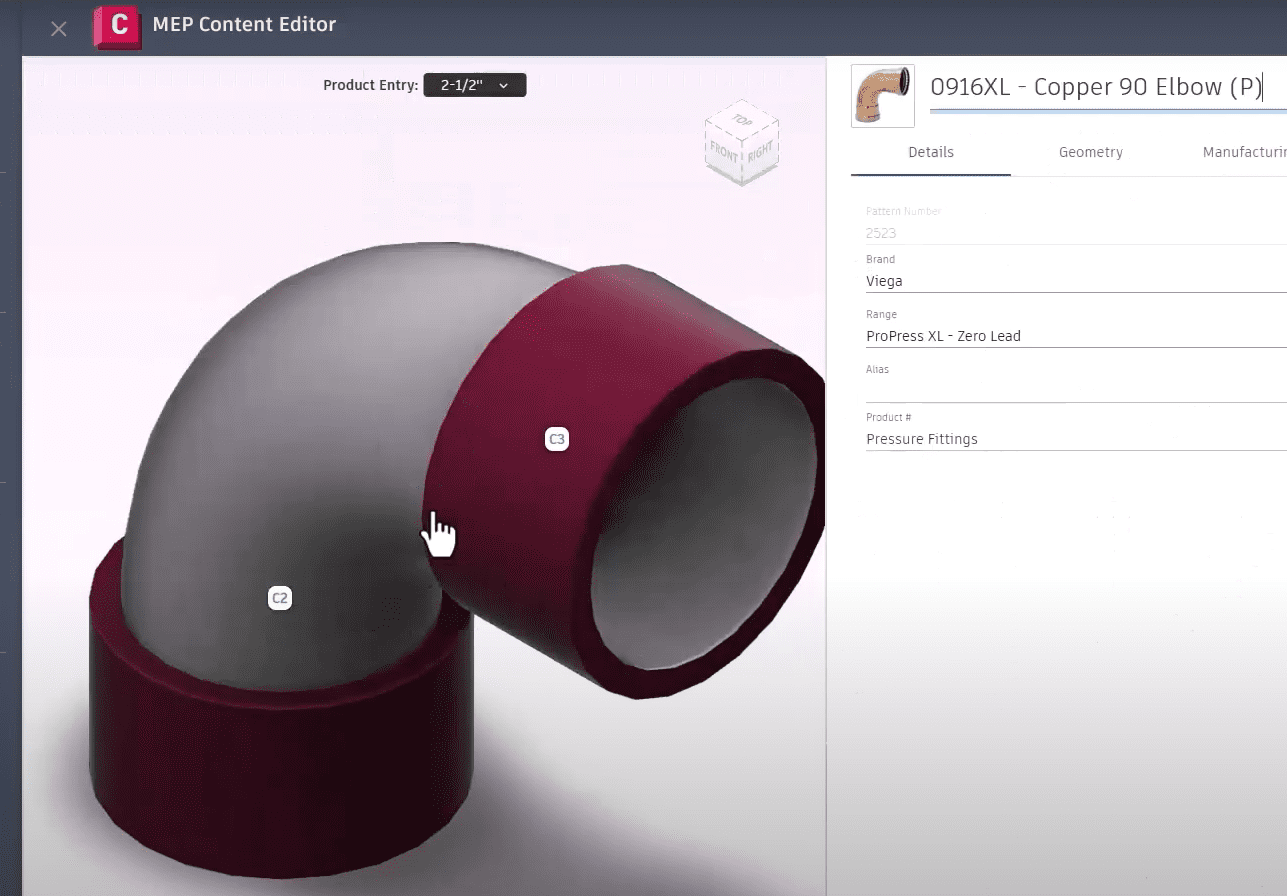
  • MEP Content Editor now permits 3D visuals of connections before loading into the project.
MEP Content Editor interface showing a 3D view of a copper 90-degree elbow fitting with editable connection points and product details. Title:
  • Globalized Electrical conductors to manage circuit wiring requirements and cable configurations.
  • Enhanced HVAC zoning and analytical model coordination.
Revit floor plan view showing assigned analytical system zones with mechanical ductwork and piping layouts overlaid.

MEP IMPROVEMENTS:

  • Easily model cranked rebar in congested areas to prevent clashes.

With every release, Revit continues to redefine what’s possible in Building Information Modeling, and this year is no exception. The latest version introduces a suite of features designed to streamline workflows, improve coordination, and deliver more accurate results faster than ever before. Whether you’re focused on design, documentation, or data-driven decision-making, these updates are built to support your evolving project needs and keep your teams aligned and productive. If you’re looking to maintain a competitive edge and elevate the quality of your project outcomes, now is the perfect time to explore what’s new. Download the latest version and experience the improvements firsthand – see the full list of enhancements here.

ENSCAPE IMPACT : Sustainable Design on Demand

Enscape Impact add-on is designed to integrate building performance analytics into design process early stages. This powerful tool empowers architects and designers to make informed decisions that enhance both the efficiency and sustainability of their projects.

Sustainability is now a key focus in architecture and design, and early energy analysis plays a vital role in creating efficient, cost-effective, and environmentally responsible buildings. By considering energy performance from the start, projects can avoid costly late-stage changes, meet regulations, and stay true to the original design vision. This approach not only streamlines the process but also delivers better outcomes for clients.

The Enscape Impact add-on brings building performance analytics into the early stages of design, giving architects and designers the insights they need to make smarter, more sustainable decisions.


Get Quote

Key Features

REAL-TIME ENERGY MODELING

Enscape Impact allows users to perform fast energy modeling simulations directly within their design environment. This feature provides immediate insights into key performance metrics, such as energy consumption and carbon emissions, enabling designers to optimize their projects from the earliest stages.

Animated Enscape Impact Design Workflow

INTEGRATED WORKFLOW

The add-on integrates with Enscape, leveraging the live workflow with popular CAD solutions like Revit, SketchUp, Archicad, Rhino, and Vectorworks. This ensures sustainability considerations are embedded into the design process without disrupting the creative workflow.

Enscape rendering of a modern building design in Enscape

MINIMAL DATA ENTRY

Users can establish a baseline analysis with just a few data points, including location and building type. This streamlined approach makes it easy to access actionable insights quickly.

VISUAL PERFORMANCE METRICS

Enscape Impact features an intuitive dashboard that displays energy performance metrics through easy-to-read charts and diagrams. This visual representation helps designers understand how their design decisions impact building performance.

ENHANCED COMMUNICATION

By providing clear and concise performance data, Enscape Impact facilitates better communication between architects, engineers, and stakeholders. This ensures that all parties are aligned on sustainability goals and design efficiency.

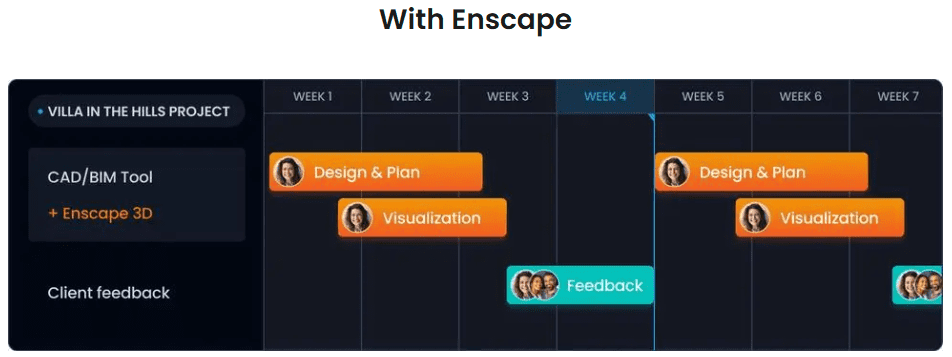
Communication Without Enscape Impact

BENEFITS OF USING ENSCAPE IMPACT

DATA-DRIVEN DECISION MAKING

With real-time energy analysis, designers can make informed decisions that improve building performance and reduce environmental impact. This leads to more sustainable and cost-effective projects.

INCREASED PRODUCTIVITY

The integration of performance analytics into the design workflow shortens the feedback loop, allowing for quicker adjustments and optimizations. This enhances overall productivity and project timelines.

IMPROVED DESIGN QUALITY

By embedding sustainability considerations into the design process, Enscape Impact helps create buildings that are not only aesthetically pleasing but also energy-efficient and environmentally friendly.

By providing real-time insights and seamless integration with existing workflows, Impact ensures that every design decision contributes to a more sustainable future.


Get Quote

*NEW RELEASE* D5 Render 2.9 – What’s New?

D5 Render is well-established as powerful 3D rendering software designed for architects, interior designers, and landscape planners. It offers a comprehensive suite of tools that streamline the visualization process, making it easier to create stunning, photorealistic renders.

See what's new in D5 Render 2.9

ADVANCED TERRAIN TOOL

Allows users to sculpt realistic landscapes directly within the software. Whether you’re designing smooth plains or rugged hills, the intuitive brush tool offers precise control over shaping and texturing. This feature is perfect for creating diverse natural environments with ease.

PHASING ANIMATION

Simplifies the creation of step-by-step visualizations, making it ideal for architectural presentations and product demonstrations. With pre-designed templates, users can quickly illustrate construction stages or installation processes without complex keyframes.

POST AI ENHANCEMENTS

Upgraded next stage for AI Enhancement, the new Post-AI tool combines advanced image processing with AI Style Transfer. This allows users to enhance lighting, materials, and character details up to 6K resolution, and transform renders into unique styles like watercolor or photorealistic effects.

RANDOM PLACEMENT

The Random Placement feature adds a touch of realism by allowing users to adjust size, rotation, and location parameters for assets. This is particularly useful for creating natural, non-repetitive layouts in scenes.

FPS BOOSTER FOR COMPLEX GEOMETRY

Optimizes performance for intricate meshes and densely populated scenes, ensuring smooth real-time interactions and rendering, even with heavy models.

ENHANCED ASSET MANAGEMENT

The new Asset Info Page makes managing assets easier by providing quick access to thumbnails, properties, and file sizes, streamlining the selection process and enhancing workflow efficiency.

D5 Render 2.9 is a significant update that brings a wealth of new tools and improvements to the table. Whether you’re an architect, designer, or visualization artist, these features are designed to enhance your workflow and help you create stunning, lifelike visuals with ease.

MORE GREAT FEATURES OF D5 RENDER

AI ENHANCEMENT

Artificial intelligence for atmospheric matching and enhancing images improving lighting, textures, and overall realism at the click of a button.

VAST ASSET LIBRARY

With over 14,000 models, materials, and particles, the asset library offers a wide range of customizable options to suit any project.

D5 SCATTER

Allows for quickly creating natural-looking environments, scattering objects like trees, rocks, and other elements randomly across a scene

ULTRA HD TEXTURE

Automatically activate Super Resolution to quadruple the perimeter of the texture and apply it to the model surface for preview. Supports high-resolution textures, making every detail in the render crisp and clear. Run an AI generated texture map to take your renders to the next level at a single click!

SEAMLESS INTEGRATION

Smooth integration with popular design software like Revit, SketchUp, 3ds Max, Rhino, Archicad, Cinema 4D, Blender, and Vectorworks.

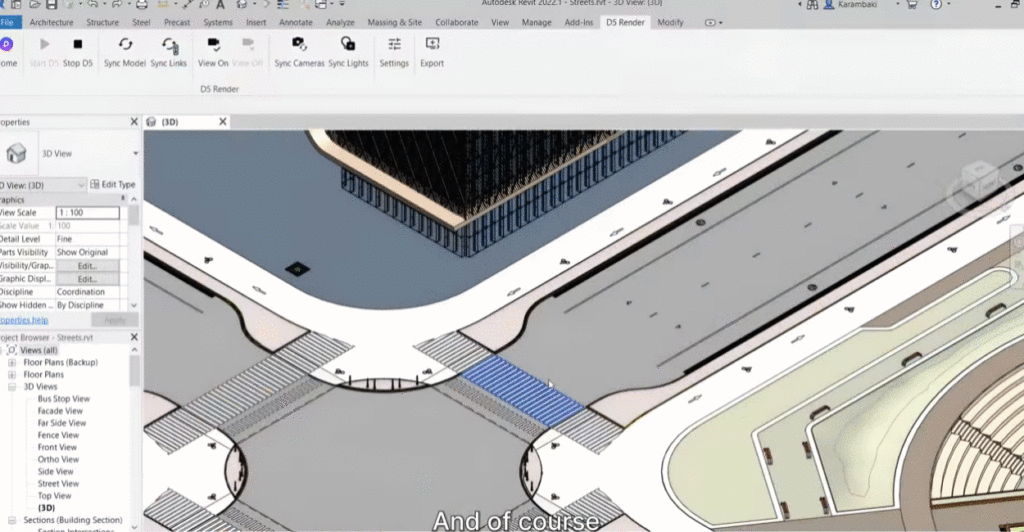
D5 LIVE SYNC WITH REVIT
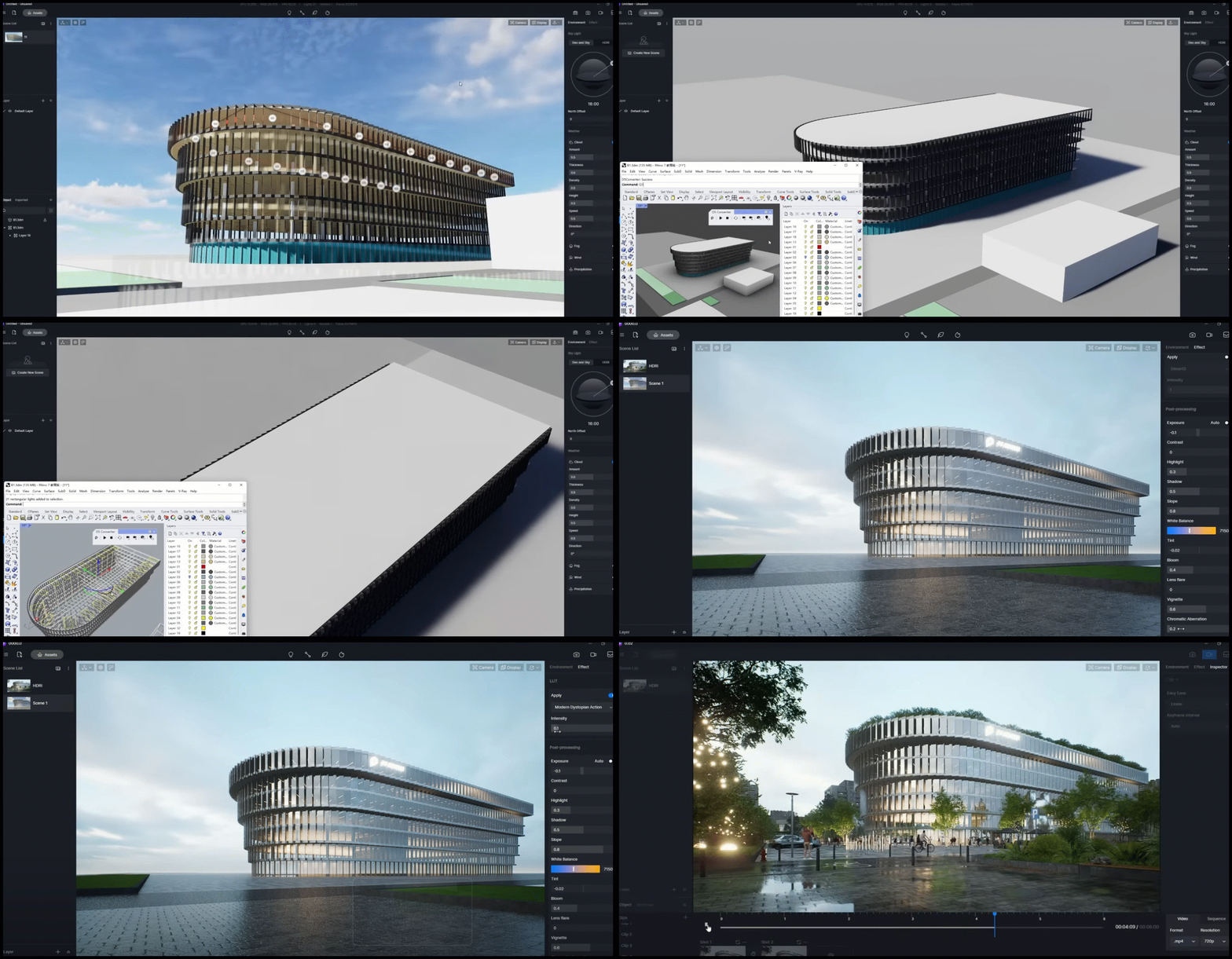
D5 LIVE SYNC WITH RHINO
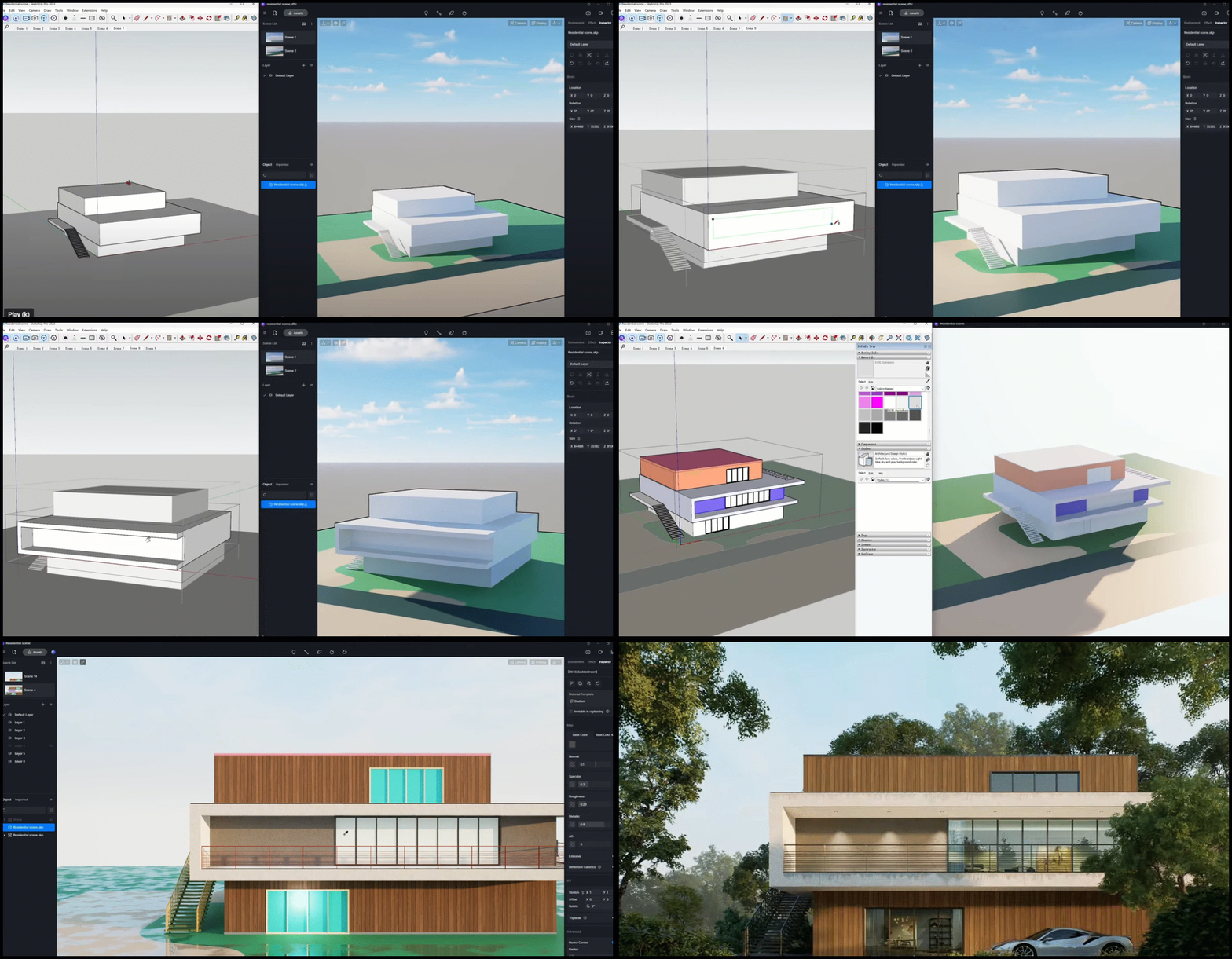
D5 LIVE SYNC WITH SKETCHUP

USER REVIEWS

Users have been quick to praise the new features in D5 Render 2.9. Here are some highlights from recent reviews:

  • “The new terrain tool is a game-changer. It makes creating realistic landscapes so much easier and more intuitive.”

  • “Phasing Animation has made my presentations so much more dynamic and engaging. It’s a fantastic addition.”

  • “Post-AI enhancements have taken my renders to the next level. The ability to add artistic styles is a huge plus.”

  • “Random Placement has saved me so much time. My scenes look more natural and less repetitive.”

  • “The FPS Booster is a lifesaver for complex projects. Real-time rendering is now smoother than ever.”

Autodesk Revit 2025.1

Time to elevate your BIM experience! Our latest update is packed with innovative features designed to boost productivity and enhance collaboration. Enjoy advanced automation tools, seamless integration, and streamlined workflows. Transform your BIM projects and achieve more in less time.

See what's new in Autodesk Revit 2025

Introducing Revit 2025! This latest release comes packed with innovative features designed to enhance your design process and boost productivity. Key highlights include the Toposolid enhancement for intuitive terrain manipulation, advanced automation tools to streamline workflows, improved collaboration capabilities, and seamless integration with other design tools. Experience the future of BIM with Revit 2025, where every feature is crafted to help you create, analyze, and visualize your projects more efficiently and accurately than ever before.

TOPOSOLID ENHANCEMENTS

Discover the groundbreaking Toposolid enhancement in Revit 2025! This feature allows intuitive and flexible manipulation of terrain surfaces, improving accuracy and efficiency in site designs. Seamlessly integrate terrain data with other project elements for a cohesive and accurate model. Experience the future of topography in Revit 2025!
Screenshot 2024-06-17 113933
  • Excavate a Toposolid with an intersecting roof, floor, Shaft or other toposolid component.
  • Host elements to excavated Toposolid surfaces
  • Create from a Mass Face
  • XYZ Snapping – If selected and the mouse hovers over a place that is not a reference object, the elevation follows the “Along surface” behaviour
  • Smooth Shading
  • Contours Display while editing
  • Suppression of folding lines while editing
  • Linked Topography improvements

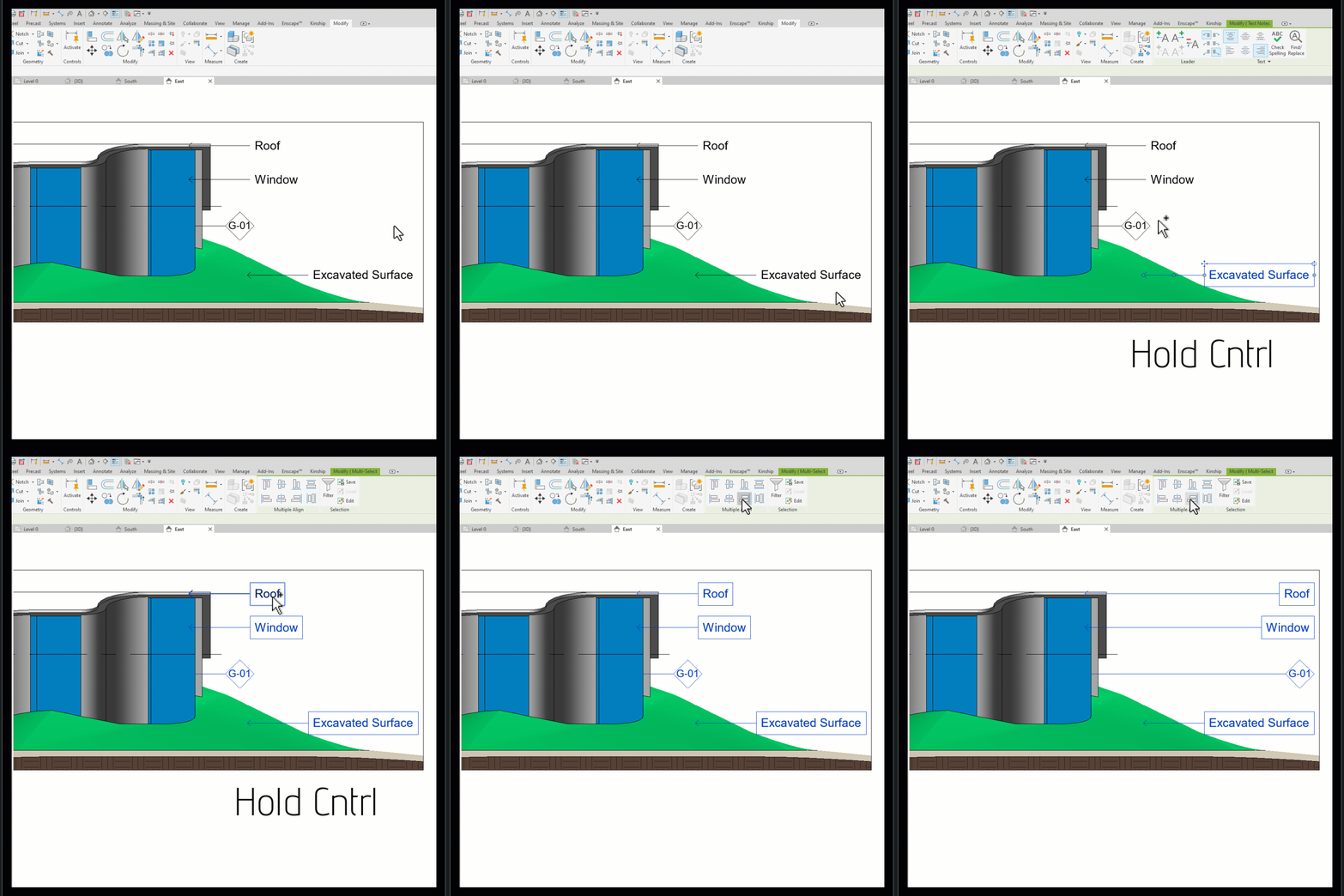
ALIGN MULTIPLE

Align and distribute multiple keynotes, text notes, and tags effortlessly with the new Multiple Align Panel in Revit 2025. This powerful tool allows you to organize your annotations with precision, ensuring a clean and professional presentation of your drawings. The Multiple Align Panel simplifies the process, saving you time and reducing the risk of errors, so you can focus on creating high-quality designs.
Multiple Align
Align and distribute multiple keynotes, text notes and tags using the new Multiple Align Panel.

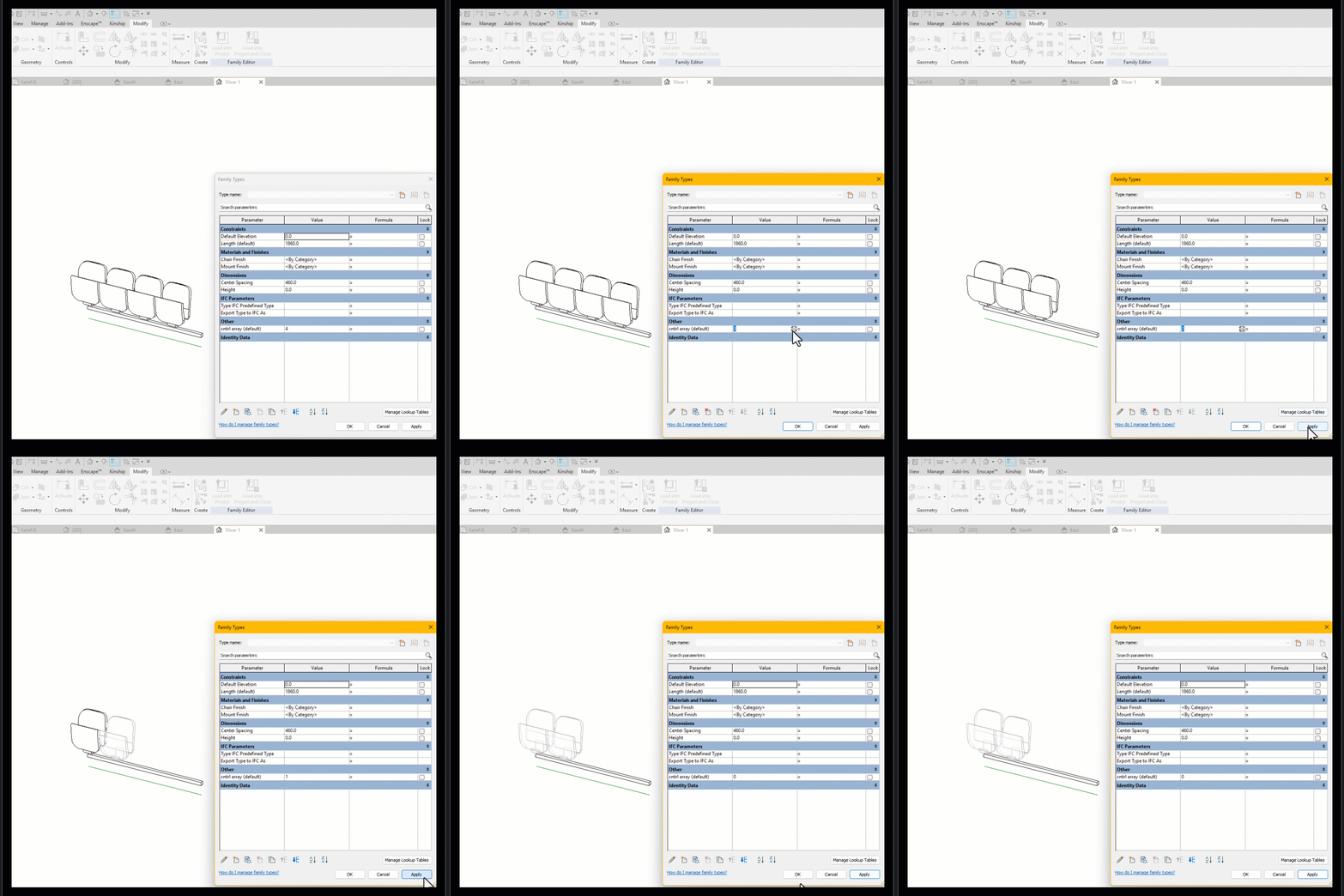
ARRAY UPDATE

Arrays
For the Modellers out there, the arrays update is a HUGE improvement. Previously, a family would break when less than two of an arrayed item are present, requiring multiple visibility options and formulas controlling them. Now Arrays are permitted to decrease to 1 or 0, streamlining family creation.

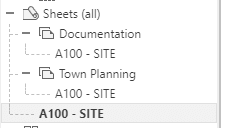
SHEET COLLECTIONS

Screenshot 2024-06-17 120741
Organize your sheets into flexible groupings, allowing duplicate sheet numbers within different collections. New collection parameters added and compatible with view types for further Grouping & Scheduling.

INTERFACE ENHANCEMENTS

Screenshot 2024-06-17 121004
  • New Home Screen – Improved ACC Navigation, view filtering, and History Data Panel.
  • Project Browser Search – Improved the ability to view all the child nodes when the parent node does not contain keywords.
  • Options Bar Removed – Properties relocated to either Properties Palette or Ribbon for enhanced efficiency.
  • Material Browser enhanced for
  1. Batch Add/Delete Materials
  2. Faster Appearance Previews

BACKGROUND PDF EXPORT

TIME

Export PDFs in the background while continuing to work on your model.

DARK THEME UPDATE

Screenshot 2024-06-17 122318

Dark theme now supports schedules and panel schedules with automatic color adjustments for better readability.

Access the new Australian Autodesk Construction Cloud!

You’ve heard about the new Autodesk Construction Cloud Server, hosted in Australia, but do you know how to access it? Do you want to know if accessing the Australian server will actually save you time?

A 3D illustration of Australia with a cloud computing symbol overlaying the map, highlighting the technological infrastructure and connectivity.

You’ve heard about the new Autodesk Construction Cloud Server, hosted in Australia, but do you know how to access it?  Do you want to know if accessing the Australian server will actually save you time?

Do you want to review the FAQ and Security.  , Read on!

First, Who can Access the server, and how?

BIM Collaborate Pro

If you have BIM Collaborate Pro, you will be using Workshared Cloud models, with multiple people accessing the Revit model, potentially from different locations.  

DOCS

If you have AEC Collections, BUT NO BIM Collaborate Pro subscription, you will be using Revit Cloud models, with a single person accessing the Revit model.  

But the good news is, you can create an Autodesk Construction Cloud Site for your company, on the Australian or US Server. 

The Downsides

If you already have Autodesk Construction Cloud on the US Server, you can transfer your existing project files to your Australian Server, but not your projects.  This means, if you need to maintain previous file versions, current issues or folder permissions, you will want to keep the project on the US Server, for now.   Bridging does not currently support different regions  

To learn more about Migrating Files using the Autodesk Replication Tool (ART) click the link below.

While your US Autodesk Construction Cloud > Home > Projects, will list your projects in BIM 360 and ACC, you will not see your projects hosted on the Australian Server, and vice versa.  Essentially this is not such a bad thing, if the reason you want to use the Australian server is for Data Sovereignty purposes.  

Review the Regional Data Storage FAQ

Projects listed on US server Site include BIM 360 projects and other companies projects, but not projects on the Australian Site.

Projects listed on Australian server Site only include projects on the Australian Server

Access the Autodesk Construction Cloud Australian Site

Once you are ready to create your new site, got to the Autodesk Manage portal > All Products and Services, here is a link.

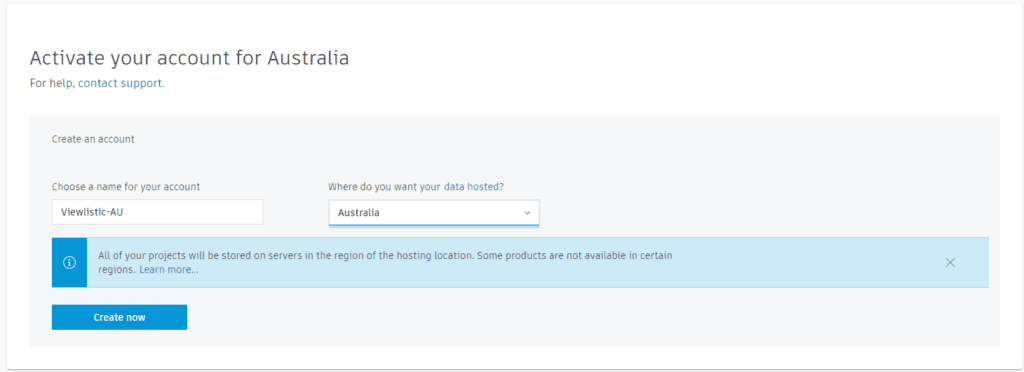
Then click Access, for either DOCS for AEC, or BIM Collaborate Pro.  In the following Window, choose a name for your account, and select Australia, for Where do you want you data hosted.

  1. Important Note, you will need to be an account admin.
  2. After you have created your site, follow the link in the welcome  email.
  3. We included AU as a suffix to our Australian Site, so as to easily identify it.
  4. Here is the address of the AU Site:  https://acc.apac.autodesk.com/projects 

The Speed Test

Finally, we simply uploaded (Collaborate in the Cloud) the same modestly sized, 128Mb Revit project, to both the US Site and to the New Australian Autodesk Construction Cloud Site.  

Upload times

US Site:  3 minutes 53 seconds

AUS Site:  2 minutes 37 seconds

Time Saved:  1 minute 16 Seconds

If you save 1/3 of the time you spend synchronising, over a year this is going to be a significant saving.

Need more information?

Architextures : Unleashing Creativity!

Architextures is more than just a texture library; it’s a comprehensive solution aimed at boosting creativity, improving efficiency, and fostering collaboration within the design process. A must-have in the toolkit of every architect and designer.

Unlocking Design Potential with Architextures

In the realm of architectural and design projects, the quest for photo-realism and precise material depiction is ever-present. This journey, however, often encounters a roadblock: the acquisition of high-quality textures. Whether it’s the cost, time, or effort involved, the hurdle of finding or creating the right textures can significantly impede creativity.

Enter Architextures – a cutting-edge solution designed to seamlessly integrate into the workflows of architects and designers. With its robust features, Architextures stands out as an indispensable tool for the modern design professional.
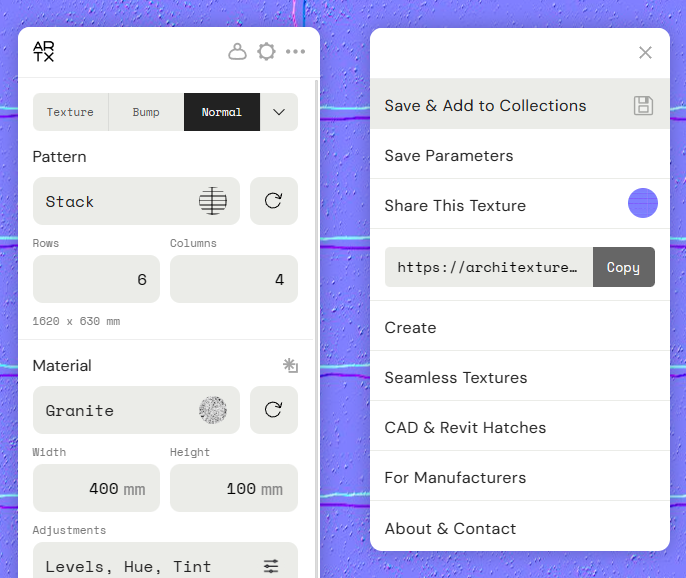
Architextures web app allows designers to create custom materials compatible with CAD/BIM software and download their design as a seamless texture, bump map or hatch.

Key Feature 1:

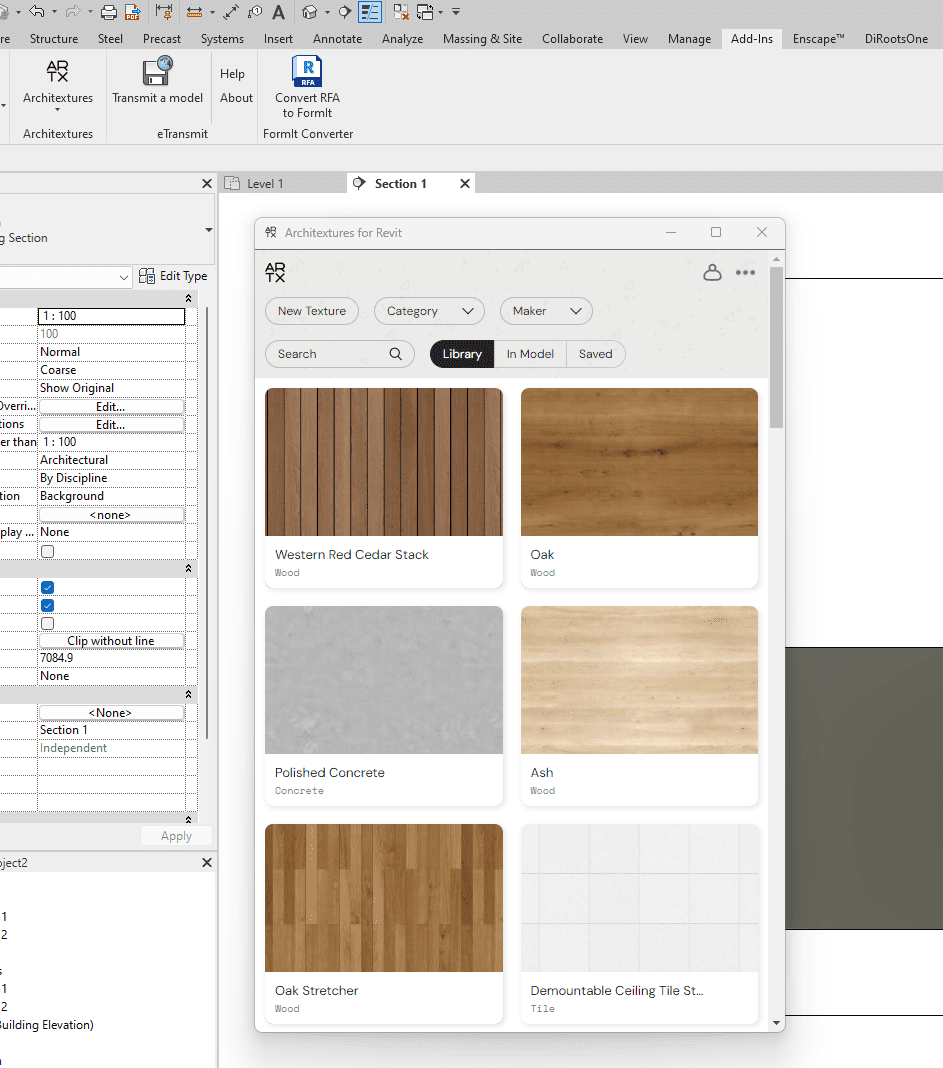
Revit and SketchUp Integration: Effortlessly apply textures and 2D hatches directly onto your models, ensuring a smooth blend with your existing workflow.
Screenshot of the Architextures interface integrated within Revit software, showing a selection of materials including wood and concrete textures.

Key Feature 2:

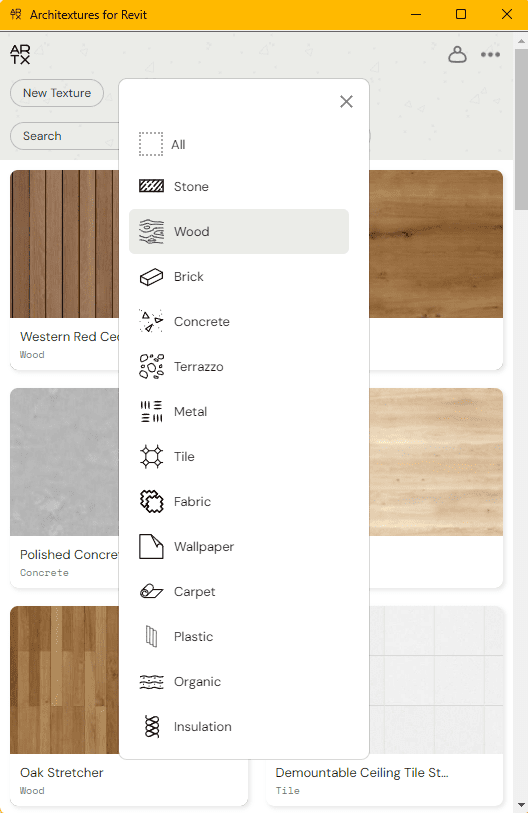
Extensive Texture Library: Gain instant access to a vast collection of ready-to-use, high-quality textures that will elevate your designs.
User interface of Architextures for Revit displaying a selection of materials categorized by type, such as Wood, Stone, and Concrete.
Extensive Texture Library: Gain instant access to a vast collection of ready-to-use, high-quality textures that will elevate your designs.

Key Feature 3:

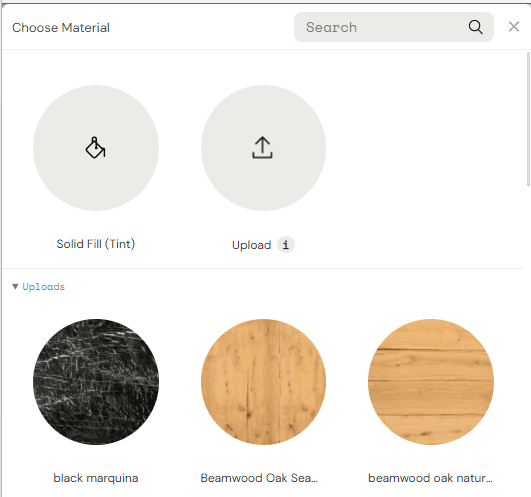
Custom Textures: Upload your own images to create unique textures, adding a personal touch to your projects.
Material selection interface showing options for Solid Fill (Tint), Upload function, and custom uploaded materials like black marquina and two shades of beamwood oak.
Custom Textures: Upload your own images to create unique textures, adding a personal touch to your projects.

Key Feature 4:

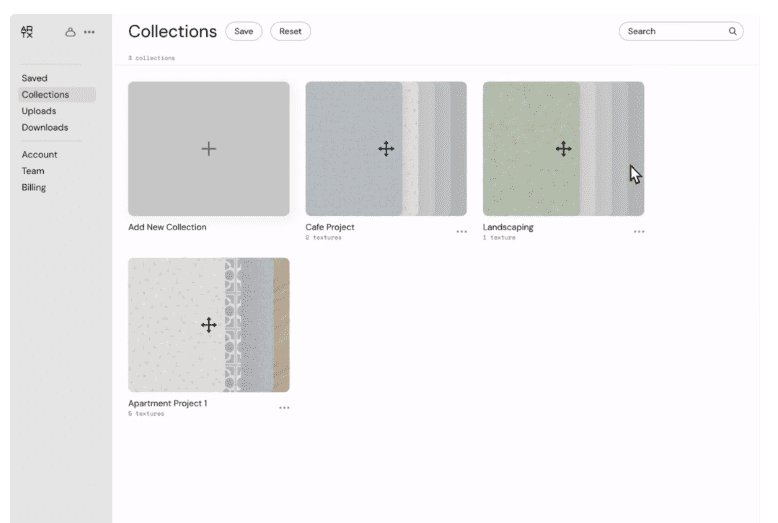
Team Collaboration: Build and share a texture library with your team, enhancing collaboration and ensuring consistency across projects.
A detailed view of the texture customization panel in Architextures with options for texture type, pattern layout, material properties, and sharing features.
Interface of Architextures showing a 'Collections' page with options to create new collections and previews of existing projects like 'Cafe Project' and 'Apartment Project 1'.
Team Collaboration: Build and share a texture library with your team, enhancing collaboration and ensuring consistency across projects.

Key Feature 5:

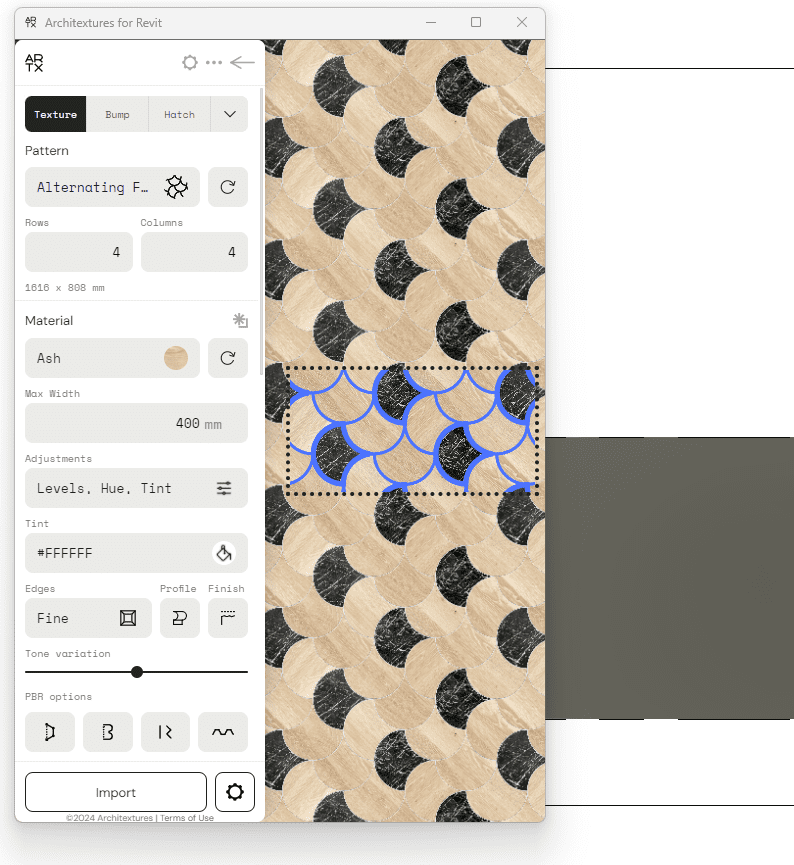
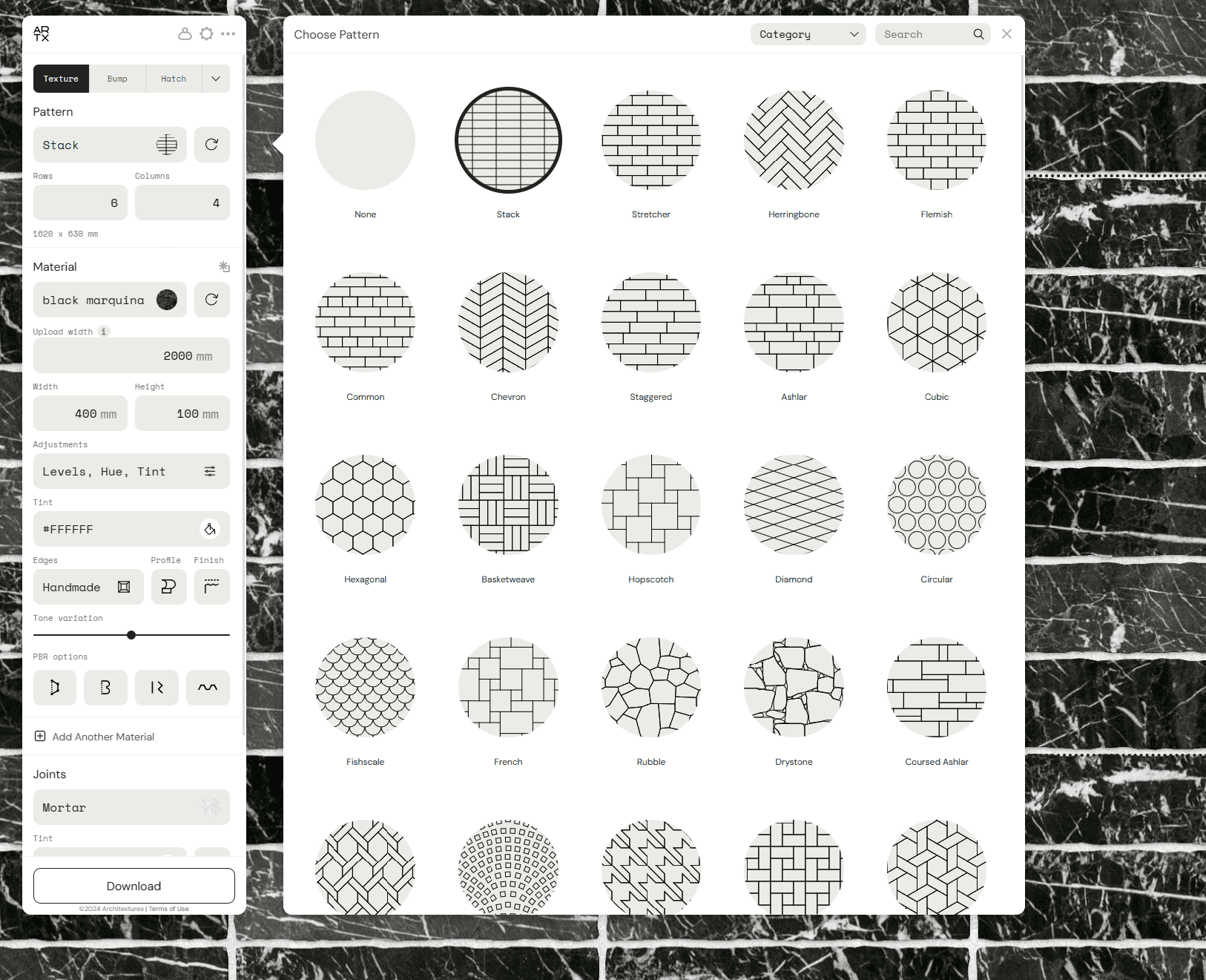
Dynamic Tools: Transform images into tiles, paving, and more with a single click. Automatically generate essential maps like hatches, bump maps, and normal maps for any uploaded texture. Additionally, adjust finishes, edges, profiles, and add multiple materials to a pattern with ease.
The interface of Architextures in Revit showing an alternating fish scale pattern of ash and black marble textures with editing tools for customization.
Interface showcasing a selection of masonry patterns available in Architextures against a background of black marquina marble texture.
Resize or adjust finishes, edges and profiles and Add multiple materials to a pattern
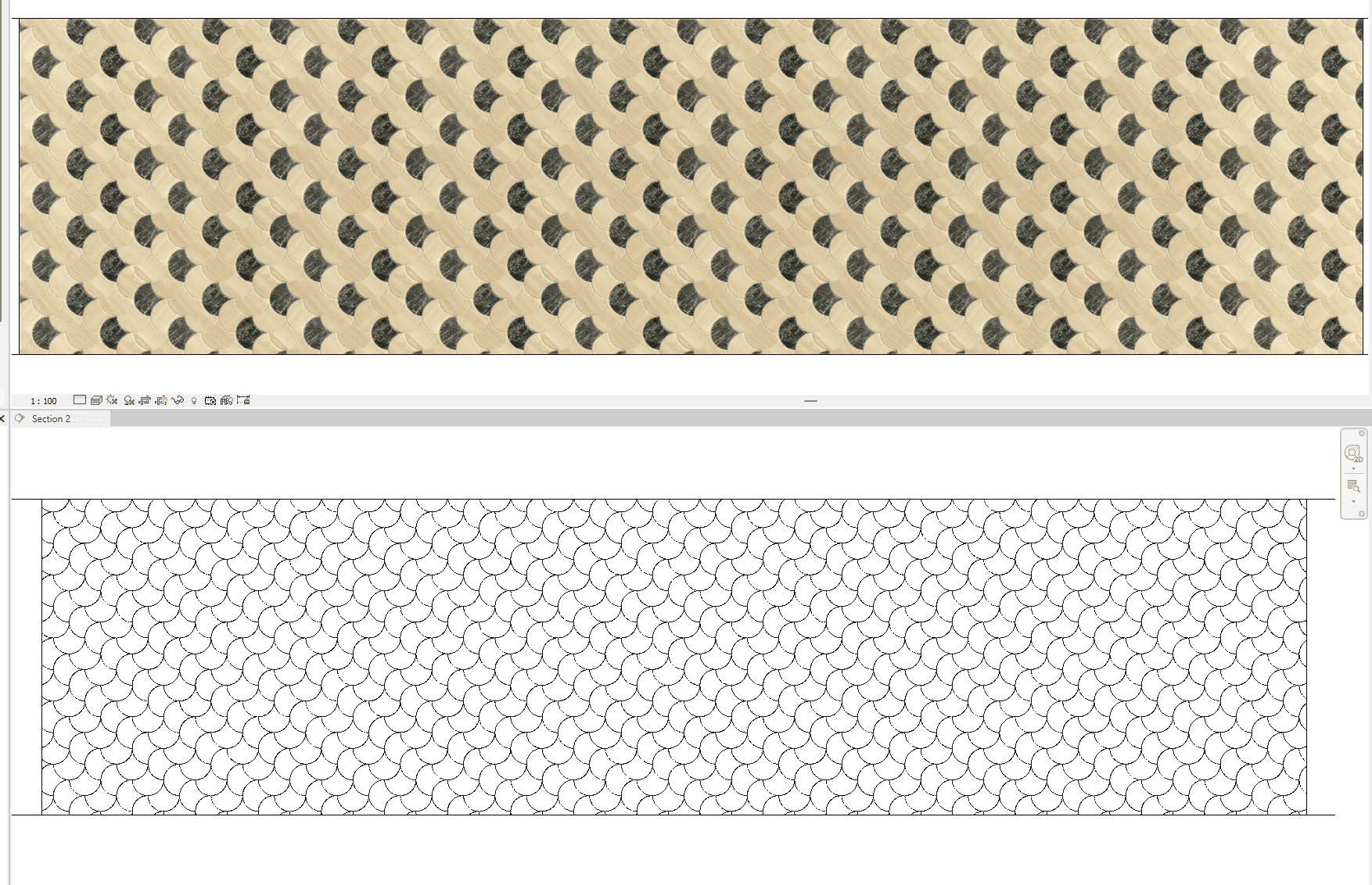
Comparison of a colorful fish scale texture pattern above and its corresponding black and white hatch pattern below in a design software interface.
Hatch automatically generates for patterned textures.

Architextures is more than just a texture library

Architextures is more than just a texture library; it’s a comprehensive solution aimed at boosting creativity, improving efficiency, and fostering collaboration within the design process. With Architextures, designers are equipped to unlock their full potential, making it a must-have in the toolkit of every architect and designer.

Navisworks: Revolutionizing Quantity Surveyors’ World!

Autodesk Navisworks’ Quantification Tool is a multifaceted addition to the quantity surveyor’s toolkit. While it demands a bit of tech-savvy and investment, the rewards in precision, efficiency, and collaboration are well worth it.

Introduction

Welcome, Quantity Surveyors! Today, we’re exploring the world of Autodesk Navisworks, focusing on its Quantification Tool. We’ll also highlight three YouTube tutorials that can turn you from a novice into a ninja.

Pro: Precision Meets 3D

Navisworks’ Quantification Tool is like having x-ray vision for measurements. You can measure quantities directly from 3D models, making the days of puzzling over 2D plans feel as outdated as using a sundial. 

Navisworks Training: Custom Catalog & Visual Takeoff Check for Quantity Surveyors


Con: The Tech Hurdle

Embracing Navisworks might feel like learning to drive a spaceship when you’re used to a bicycle. It’s a shift, especially for those cozy with traditional methods. But don’t fret, “A Really Simple Quantification Setup in Navisworks” is here to make this transition smoother than your morning coffee.


A Really Simple Quantification Setup in Navisworks


Pro: Clash Detection – Your Project’s Sixth Sense

Navisworks’ clash detection is like having a sixth sense for potential design conflicts. Imagine it as a friendly ghost whispering in your ear, alerting you to any design missteps before they become real headaches. This foresight is invaluable, saving time and preventing costly reworks.

Con: The Need for Speed (and Space)

This tool is a bit of a diva when it comes to system requirements. If your computer is still living in the dial-up era, you might find Navisworks more sluggish than a Monday morning. Consider this a nudge to embrace the future with a hardware upgrade.

Pro: Collaboration Made Easy

Collaboration is a smooth dance rather than a clumsy tug-of-war. It allows multiple stakeholders to contribute and review in a shared digital space. “Navisworks – Essential Skills for Quantity Surveyors” can be your guide to mastering this dance.


Navisworks - Essential Skills for Quantity Surveyors"


Conclusion: A Tool of Many Talents

Autodesk Navisworks’ Quantification Tool is a multifaceted addition to the quantity surveyor’s toolkit. While it demands a bit of tech-savvy and investment, the rewards in precision, efficiency, and collaboration are well worth it. With the right approach and resources like the mentioned YouTube videos, you’ll soon be navigating this software like a pro. Happy quantifying! 

CHANGE YOUR BUSINESS IN 2 MINUTES

“We understand that the one tool isn’t right for everybody, and it’s really important to keep abreast of all of the new technologies in the new software, that can help businesses work as efficiently as they possibly can and give them insight to their projects and staff skills.”

Guy Smithers (Director – Viewlistic)

The Architecture and Construction Industry: A Balancing Act

The architecture and construction (AEC) industry is a complex and ever-changing landscape. Architects and construction professionals are constantly juggling a variety of challenges, including:

  • Personnel: Finding and retaining qualified employees is a major challenge for many AEC firms. The industry is facing a shortage of skilled workers, and the competition for talent is fierce.
  • New and changing skillsets: Technology is rapidly transforming the AEC industry, and professionals need to be able to adapt to new skills and technologies in order to stay ahead of the curve.
  • Financial: AEC projects can be very expensive, and managing costs effectively is critical. Firms also need to be able to deal with unexpected financial challenges, such as material shortages or delays.
  • Infrastructure: AEC firms rely on a variety of infrastructure, both internal and cloud-based. Ensuring that this infrastructure is reliable and secure is essential for smooth operations.
  • Hardware and software: AEC firms use a variety of hardware and software to design, build, and manage projects. Keeping this technology up-to-date and secure can be costly and time-consuming.
  • Client expectations: Clients expect AEC firms to deliver high-quality projects on time and within budget. Meeting these expectations can be challenging, especially in complex and demanding projects.
  • Competition: The AEC industry is highly competitive. Firms need to be able to differentiate themselves from their competitors and offer clients a unique value proposition.
  • The future of the AEC industry: The AEC industry is being shaped by a number of emerging trends, such as sustainability, digitalization, and automation. Firms need to be able to adapt to these trends in order to remain competitive and successful.

Why You Need a Discovery Session

A discovery session is a great way to learn more about the challenges facing your AEC firm and to develop a plan to address them. During a discovery session, you will have the opportunity to discuss your specific needs and goals with an experienced consultant. The consultant will then work with you to develop a customized plan that will help you achieve your objectives.

Conclusion

The AEC industry is a complex and challenging one, but it is also an exciting and rewarding one. By understanding the challenges facing the industry and by developing a plan to address them, AEC firms can position themselves for success.

"Talking with clients about the tools that they're using in their workflows, we always look at the best tool for them. We understand that the one tool isn't right for everybody, and it's really important to keep abreast of all of the new technologies in the new software, that can help businesses work as efficiently as they possibly can and give them insight to their projects and staff skills."

Watch Guy Smithers (Director – Viewlistic), Joe Keogh (Director – Viewlistic), and Nick Lukas (Director – Architecton) reveal some of the challenges facing the architecture and construction industry below.

Still struggling with multiple Revit files?

RTV Drawing Manager for Autodesk Revit is a tool designed to manage and streamline workflows, particularly when working with multiple Revit files in a project. This can save significant amounts of time and reduce manual work in various aspects of a project.

Maximize Your Revit Efficiency with RTV Drawing Manager!

Hello, Viewlistic readers! If you’re knee-deep in Autodesk Revit projects, we’ve got some exciting news for you. Let’s dive right in.

What’s RTV Drawing Manager?
It’s like a Swiss Army Knife for your Revit projects! Imagine all your tedious tasks being handled smoothly in the background.

Here’s How It Can Revolutionize Your Workflow:

  • 📘 One-Stop Dashboard: See all your drawings in one place. No more hopping between files!
  • 🖨️ Click & Print: Batch print sets of drawings. Say goodbye to manual print jobs.
  • 🚀 Auto-Pilot Mode: Auto numbering, auto revisions, and even auto naming/exporting. Yep, it’s that smart!
  • 🔄 Stay Synced: Keeping data consistent across projects? Consider it done.
  • 💡 Design Focus: Spend less time managing and more time creating.

In short, RTV Drawing Manager takes the heavy lifting out of Revit projects. It’s a game-changer for any Revit enthusiast. So, why wait? Dive in and let tech do the work! (Details below)

Happy designing,
The Viewlistic Team

RTV Drawing Manager for Autodesk Revit is a tool designed to manage and streamline workflows, particularly when working with multiple Revit files in a project. This can save significant amounts of time and reduce manual work in various aspects of a project. Here are some ways in which RTV Drawing Manager can save you time:

  1. Centralized Management: The Drawing Manager offers a consolidated interface where you can see, review, and manage all your drawings from various Revit files. Instead of opening each file individually, you can streamline actions across multiple files.

  2.  

  3. Batch Printing: With RTV Drawing Manager, you can batch print sets of drawings from multiple Revit files. This reduces the need to open each file and print them individually.

  4.  

  5. Automated Sheet Numbering: Instead of manually renumbering sheets, RTV Drawing Manager can automatically renumber sheets for you based on criteria you set. This is especially useful for larger projects with many sheets.

  6.  

  7. Revision Management: The tool helps in automating and tracking revisions across multiple drawings. This means no more manually tracking which drawings have been revised or needing to cross-check various revision numbers across files.

  8.  

  9. Document Transmittal: RTV Drawing Manager can automatically generate document transmittals, saving you the time of creating these manually.

  10.  

  11. Sheet Issue Records: The tool can create and manage a record of sheets that have been issued. This is essential for tracking and project management.

  12.  

  13. Sheet and Project Data Synchronization: Instead of manually updating sheet or project data across multiple files, RTV Drawing Manager can synchronize this data for you.

  14.  

  15. Automatic Naming and Exporting: RTV Drawing Manager can automate the naming and exporting of files, which can be a massive time-saver when dealing with numerous files or versions.

  16.  

  17. Issue and Mark-up Management: The Drawing Manager also provides tools for issue and mark-up management, centralizing the feedback and corrections process, and ensuring you don’t overlook any notes or changes.

  18.  

  19. Template Management: For those frequently starting new projects or needing consistent sheet setups, RTV Drawing Manager provides template management. This ensures that every project starts with the same settings, sheets, and setups, reducing the manual setup time for each new project.

  20.  

  21. User-friendly Interface: Its intuitive interface reduces the learning curve and makes it easy for users to access and utilize its features.

  22.  

  23. Integration with Revit: Being directly integrated with Revit means there’s no need for complex export or import processes. This tight integration ensures consistency and efficiency.

  24.  

In essence, RTV Drawing Manager takes many of the manual, time-consuming tasks related to managing multiple drawings in Revit and automates or streamlines them. The cumulative time savings across a project can be significant, allowing teams to focus more on design and problem-solving rather than administrative tasks.

Autodesk Revit: Content Creation Essential Tips

Mastering the process of Revit Family content creation is essential for success in the AEC and BIM industries. By following these 12 essential tips, you can significantly improve your content creation workflow and boost the overall efficiency of your team. Stay ahead of the curve and consistently deliver high-quality content with these best practices.

12 Essential Tips to Enhance Your Revit Family Content Creation Workflow

Revit content creation has become essential to the AEC and BIM team. Mastering the process of creating efficient and effective Revit Family content is crucial for the success of any project. In this blog post, we will explore 12 essential tips to support the Revit Family Content Creation Workflow.

Essential Tips 1, 2, 3

TIP 1: The Importance of Planning Before Modeling Your Content

Before diving into content creation, take the time to plan your project. Define clear objectives, identify necessary Revit Families, and establish a suitable naming convention. Proper planning helps to avoid duplicated efforts and ensures consistency across your team.

TIP 2: Always Review the Location of the Origin Point

Be mindful of the Origin Point when creating or modifying Revit Family content. Ensuring that the Origin Point is in the correct location will help maintain consistency in your project and make it easier to insert the content into the model.

TIP 3: Relocating the Origin Point – A Fix for Families

If you discover that a family’s Origin Point is not properly located, take the time to relocate it. This fix will improve the family’s usability and prevent potential issues when placing it in your project.

Essential Tips 4, 5, 6

TIP 4: The Importance of Using the Correct Family Category

Using the appropriate Family Category is crucial for creating efficient Revit content. Selecting the correct category ensures that your content behaves as intended within the model, improving overall project functionality.

TIP 5: How to Change a Generic Family Category to a Different Family Category

To change a family’s category, open the Family Editor, navigate to the ‘Family Category and Parameters’ dialog box, and select the desired category from the list. Click ‘OK’ to apply the change, and don’t forget to save the family file.

TIP 6: Practice Consistent Naming Conventions

Consistency is key when naming Revit Family content. Adopt a clear and systematic naming convention for your files to facilitate easy identification, organization, and retrieval of content.

Essential Tips 7, 8, 9

TIP 7: Creating a Visual Revit Family Content Grid Catalogue for Quick, Easy Access

Organize your Revit Families in a visual grid catalogue for quick access and improved efficiency. This allows your team to locate and utilize the necessary content faster, reducing time spent searching and improving overall productivity.

TIP 8: Not Strictly a Content Creation Tip, but Hey! Still Need to Know About Solar Study

While not directly related to content creation, understanding the Solar Study feature can be useful for Revit Family design. Solar Study allows you to analyze the impact of sunlight on your design, helping you create content that better integrates with the building’s environmental performance.

TIP 9: The Close Inactive Views Button to Help Speed Up Your Workflow

Speed up your workflow by using the ‘Close Inactive Views’ button in Revit. This feature will close all non-active views, helping to optimize your project file’s performance and keep your workspace clutter-free.

Essential Tips 10, 11, 12

TIP 10: Reference Planes, Parameters, and Dimensions

Master the use of reference planes, parameters, and dimensions when creating Revit Family content. These tools help you create accurate, flexible, and adaptive content, ultimately improving the efficiency of your design process.

TIP 11: Flexing the Model Thing

Regularly ‘flex’ your Revit Family content by adjusting parameters and dimensions to ensure the family behaves as intended. This process helps to identify and resolve any issues that may arise in various configurations, ensuring that your content is reliable and efficient.

TIP 12: What are Cuttable and Non-Cuttable Categories?

Understanding the difference between cuttable and non-cuttable categories is essential for creating efficient Revit Family content. Cuttable categories are those that can be sectioned, while non-cuttable categories cannot. Be mindful of this distinction when designing your content to ensure it behaves as intended in your project.


Mastering the process of Revit Family content creation is essential for success in the AEC and BIM industries. By following these 12 essential tips, you can significantly improve your content creation workflow and boost the overall efficiency of your team. Stay ahead of the curve and consistently deliver high-quality content with these best practices.

Like to know more?

Streamline BIM Project Management

With a cloud-based solution like BIM Collab Pro, you’ll never have to worry about version control again. It’s like magic! And no more trying to remember which local drive or server you saved the latest version of the project to.

Are you tired of handling your Autodesk Revit designs using traditional methods that involve local servers and hard drives? Using a cloud-based tool like BIM Collab Pro can be a game-changer! Moving your data to the cloud frees you from manual data merging and version control hassles, while also enabling your team members to collaborate on the same project regardless of their geographical location. Furthermore, your data is safe and protected with BIM Collab Pro. By shifting to a cloud-based solution, you can save a considerable amount on server upgrades and maintenance costs. You only pay for what you use! With BIM Collab Pro, you can say goodbye to version control and file sharing issues that lead to wasted time and effort, and increase your team’s efficiency and productivity. Remember to secure your files with timely backups to avoid data loss. Try BIM Collab Pro and experience the benefits of a cloud-based solution today!

Managing Versions on BIM Collab Pro

Comparing Versions: 3 Ways

Better Markup Tools in BIM Collab Pro

These Markup tools provide a quick and efficient way to communicate design intent, coordinate changes, and track project progress. Whether you’re an architect, engineer, contractor, or owner, the benefits of these tools are clear: they streamline your workflow, reduce errors and rework, and ultimately help you deliver projects faster and with greater accuracy.

Autodesk BIM Collab Pro has a set of Markup tools that will change the way teams collaborate on BIM projects. These tools allow for easier and a direct way to mark up 2D and 3D models with annotations, measurements, and comments, without the need for any additional external software.

The Markup tools provide a quick and efficient way to communicate design intent, coordinate changes, and track project progress. Whether you’re an architect, engineer, contractor, or owner, the benefits of these tools are clear.

The Markup tools make it easier to collaborate with team members, without the need to switch between multiple software applications.

Overall, Autodesk BIM Collab Pro’s Markup tools provide a significant benefit to project teams, enabling them to streamline collaboration, enhance communication, and increase accuracy. By using these tools, teams can ensure that everyone is working towards the same goals, reducing the potential for delays or errors, and ultimately delivering projects faster and with greater accuracy.

In conclusion, if you’re looking to enhance your collaboration and communication on BIM projects, Autodesk BIM Collab Pro’s Markup tools provide an efficient, effective, and user-friendly way to do so. Give them a try and experience the power of streamlined collaboration firsthand!

Twinmotion 2023.1.2 in Revit

there are a few steps to get up and running with Twinmotion in Revit, but we believe it is absolutely worth it.

Twinmotion 2023.1.2 in Revit 2023.1.1

As you have likely heard, Autodesk announced at AU 2022, that Twinmotion is now shipping with Revit 2023.1

As Epic Games partner, Australia’s leading Reseller of Twinmotion, and active member of the Beta advisory team, we are able to provide advice, training and support on using Twinmotion in Revit.

This article is simply intended to help you access Twinmotion in Revit 2023.1 

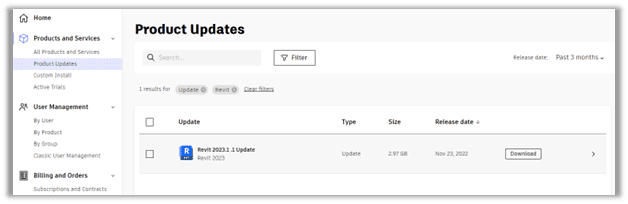
Autodesk Manage Portal, Product Updates, Revi 2023.1.1

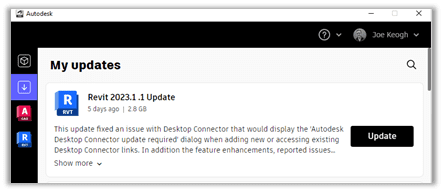
If you already have it installed you can get the Revit 2023.1.1 update, released last week, from the Autodesk Manage Portal, or the Desktop App.

Using the Filter in Product Updates page makes it easier to find. 

At this point you might want to search, download and install Twinmotion too!

First of all, you will need to have Revit 2023.1.1 installed.  If installing from the Autodesk Desktop App, you can install with updates.  


Product Updates in the Autodesk Desktop App

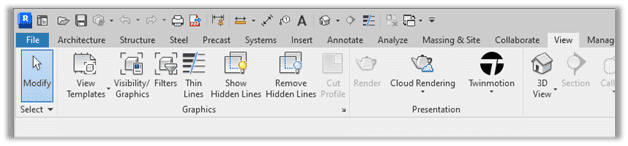
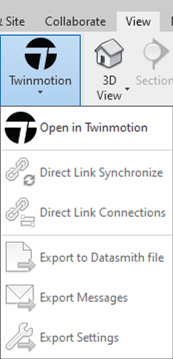
Once updated, Twinmotion in Revit is accessed from the View Tab, on the Presentation Panel.

Twinmotion menu on the Revit 2023.1 View Tab

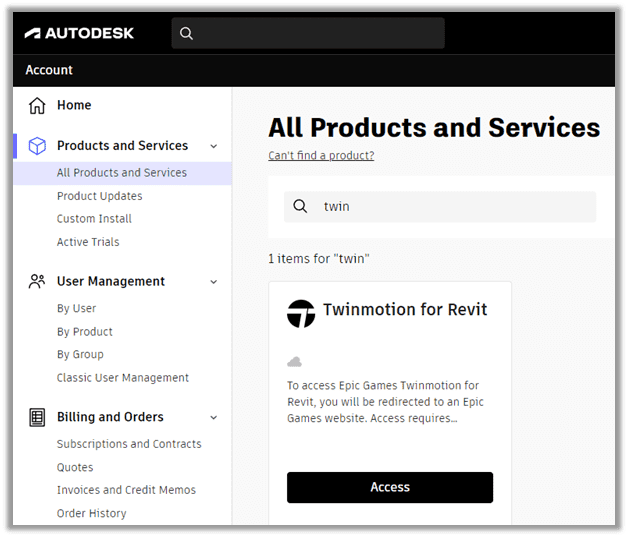
If you don’t already have a version of Twinmotion installed, by clicking on the Twinmotion Menu and selecting Open in Twinmotion, you will be prompted to download it from your Autodesk Manage Portal.  

I used the Search function in the Autodesk Manage Portal

Twinmotion Menu on the Revit View Tab
Access the Twinmotion Download from the Autodesk Manage Portal

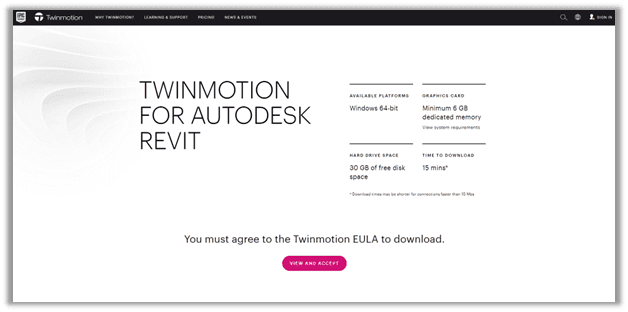
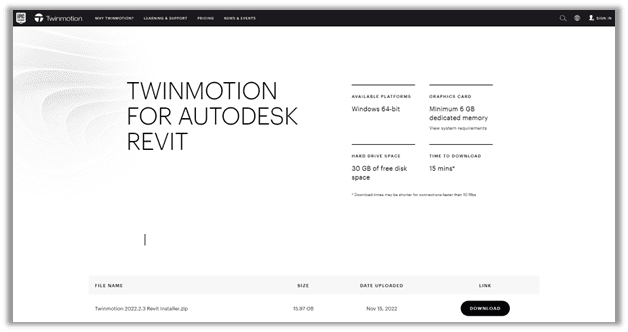
Clicking Access on Twinmotion will take you to the Epic Games Twinmotion Page, where you will need to View and Accept the End User License Agreement (EULA), before being able to Download and Run the Twinmotion installer.

You will also need a supported version of Datasmith Exporter for Revit. 

Here is a link to Download Now

A couple of things you should be aware of:


To Run Twinmotion, you’re going to need at least 30 GB of Free Disk Space.  In this case, I strongly recommend you take that as meaning you will need 100GB of free disk space before installing, because Revit needs 30-50GB free disk space to run efficiently, the TM download size is 16GB.

You are going to need a decent Graphics Card (GPU).  we recommend as minimum, the NVIDIA RTX 3070 with 8GB Dedicated memory.  We find these are a great card for Revit and have been recommending this as standard for as long as they have been available, we run RTX 3080’s on our laptops, and they run Revit and TM beautifully.

Hit us up if you want to know more about running Twinmotion in Revit.

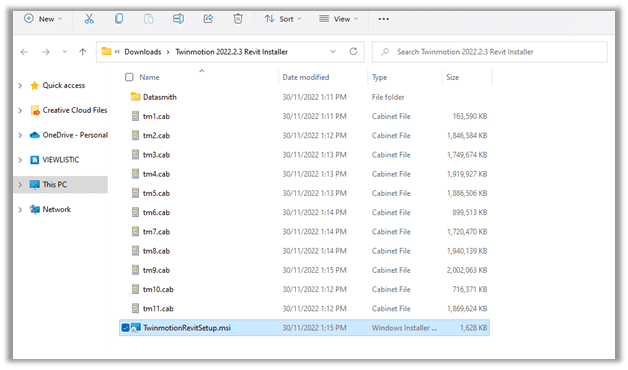
Once downloaded, extract the contents of the ZIP file to your desired folder.

Run the TwinmotionRevitSetup.msi installer.

Run the Datasmith Exporter for Revit MSI file downloaded earlier, or click  below and run it now.

Download Now

We hope you enjoy using Twinmotion in Revit as much as we do.  And don’t forget to ask us if you have any questions or need any help getting amazing results out of Twinmotion in Revit.


How to Survive Supply Chain Shortage

More than ever Architectural Practices have to consider supply chain shortages in skills and materials. This impact is enormous when viewed in the light of planning issues, extended time frames and costs overruns.

Building in a Post-COVID World: Adapting to Material and Skill Shortages

The COVID-19 pandemic has had a ripple effect on industries worldwide, and the architecture, engineering, and construction (AEC) industry is no exception. One of the biggest challenges we’re facing is a shortage of skilled workers and materials. This can be a real headache for architects who have designed their projects around specific products or skill sets.

Imagine this: you’ve meticulously planned and documented your project, only to find that the materials or expertise you need are suddenly unavailable. This can lead to delays, cost overruns, and a whole lot of frustration. It’s like ordering a gourmet pizza and getting a plain cheese one instead.

One of the tricky issues that can arise is a change in wall thickness. This might not sound like a big deal, but it can actually affect the overall size of your building. That means you might have to go back to the drawing board to make sure your design still complies with planning regulations.

So, what’s the solution? We believe it’s all about planning for the unexpected. When designing a building, it’s important to consider the possibility that certain materials or skills might not be available when construction time comes. One way to do this is to create “flex zones” in your design. For example, you could allow for external “wall zones” that can accommodate changes in wall thickness without affecting the overall layout of your building.

By thinking ahead and planning for flexibility, we can minimize the impact of these shortages and keep our projects on track. After all, in a world where change is the only constant, adaptability is the key to success.

HOW TO SURVIVE SUPPLY CHAIN SHORTAGE

More than ever in our architectural practice, we have to consider the issue of supply chain shortages both in skills and materials. The impact is enormous when considering planning issues, extended time frames and financial costs

ACTUALLY STARTING PLANNING

Joe Keogh, Director of Viewlistic, on the importance of planning and anticipating changes in your Revit project, but also for supply chain shortages becoming a real and frequent occurrence.

WHAT YOU CAN DO

Revit & Supply Chain Shortage, what you can do about it. Advice from Nathan Fenn Design Technology Specialist

REVISION TRACKING WITH BIM COLLAB PRO

Did you know you can track revisions in BIM Collab Pro? And retrieve previous versions. Nathan Fenn explains.

BIM Collaborate Pro for Model Coordination

Model Coordination is a topic that keeps coming back to haunt us. Since the Pandemic and with the requirement to work off-site, many of our clients has turned to BIM Collaborate Pro (previously BIM 360) as the method for project file storage and sharing. But did you know you can do so much more.

VIDEO CONTENT:

PART 1: OVERVIEW OF MODEL COORDINATION

  1. COLLABORATION AND COORDINATION THE CURRENT REALITY
  2. AEC DESIGN REVIEW: BIM COLLARORATE PRO SPECIFICALLY IN DESIGN REVIEW WORKFLOW

PART 2: THOUGHTS ON MODEL COORDINATION

  1. CDE (COMMON DATA ENVIRONMENT) YOUR BUSINESS BEYOND CLOUD STORAGE AND HOW BIM COLLABRATE PRO TAKES YOU  THERE
  2. WHY STILL USE NAVISWORKS? HAS BIM COLLABORATE PRO NEW TOOL SETS REPLACED NAVISWORKS? EXPLORE DIFFERENCE BETWEEN THE TWO
  3. BIM COLLABORATE PRO: ISSUE TRACKING TO REVIT AND NAVISWORKS, EXPLORING NEW TOOL SETS

Collaboration

Design Review

Common Data Environment

Navisworks

New Toolset

Discovery Session – Nuts & Bolts

“we quickly realized that one day we would have to move into the big space, so the discovery session for us was a way of streamlining that process and making it simple and as efficient as possible. ”

Nick Lukas (Director – Architecton)

"Talking with clients about the tools that they're using in their workflows, we always look at the best tool for them. We understand that the one tool isn't right for everybody, ..."


Unveiling the Essentials: A Glimpse into Our Discovery Session

Embark on a journey to optimize your workflow and design technology needs with our insightful discovery session. Through a three-phase approach, we’ll delve into your aspirations, identify areas for improvement, and craft a roadmap tailored to your business goals.

Phase 1: Uncovering Your Aspirations

We begin by understanding your aspirations, the driving force behind your business objectives. This deep dive into your vision allows us to align our efforts with your desired outcomes.

Phase 2: Assessing Your Workflows

Next, we meticulously examine your existing workflows and processes, identifying strengths to leverage and areas ripe for enhancement. This comprehensive assessment ensures that we capture every aspect of your operations.

Phase 3: Charting Your Roadmap to Success

Armed with insights from the previous phases, we meticulously craft a roadmap that blends your unique needs with our AEC industry expertise. This roadmap serves as a guide to propel your business forward, addressing key aspects such as workflows, content, templates, infrastructure, hardware, software, and skills training.

Phase 4: Implementing Your Personalized Strategy

In the final phase, we collaborate closely with you to review and implement the roadmap. Your involvement is paramount as we translate the roadmap into tangible actions, ensuring a seamless and successful execution.

Embrace Clarity and Embark on a Path of Progress

Our discovery session is designed to provide clarity and direction, empowering you to optimize your workflow and design technology needs. Through a collaborative approach, we’ll guide you towards achieving your business aspirations.


Also watch out for Part 1 of Reasons Why You Need Discovery

Digging deeper into the delivery session with Nick Lukas (Director – Architecton), Guy Smithers (Director – Viewlistic) and Joe Keogh (Director – Viewlistic)

Moving to Revit? Creating Content

“So content creation is tackled right at the start before we start any training of anyone working in Revit. We try to develop as much of your standard content. That you’re going to need for every project right at the start. ”

Joe Keogh | Director Viewlistic

What about Revit Content?

Once you have made that decision to move from AutoCAD to Revit, the logical next step or question is what about Revit Content.

This is an important issue because having good reliable content is one of the key factors that will impact on productivity. By this we mean the amount of time you save having Revit content at hand.

Our video below will highlight how Viewlistic and Detail Studio work together to tackle the issue of Revit content and Revit Content Creation. Looking at Revit Families and Revit Templates, which contains your documentation standards (unique to each practice).

If you are still considering the move from AutoCAD to Revit, check out our video, also with Detail Studio on their experience of the move. Link here.
If you have made the move and are in the middle of that transition and want tyo know more about how you management and distribute your Revit Content Library, we highly recommend Kinship. Link here.
"Obviously moving to Revit was quite cost prohibitive as a a small to medium sized firm, but we certainly assess the value, in that we had previously tried to in-house move to Revit unsuccessfully, the upscaling and training in staff was was paramount for us to do it properly. "

AutoCAD to Revit Content Creation: How did Design Studio tackle Content Creation in Revit

AutoCAD to Revit isn’t that hard

“We felt the need to move to Revit
It’s almost become industry standard as well. We didn’t want to be left behind, we’re always trying to be proactive and forward thinking. ”

Matt Martin | Director Detail Studio

AutoCAD to Revit isn't that hard when you have a guiding hand.

If you have ever considered taking that step from working in 2D in AutoCAD to 3D Modeling in Revit. Check out our story below. 

Matt Martin (Director) and Lauren Rollinson (Architect)of Detail Studio Adelaide, generously let you in on their move from AutoCAD to Revit .  You will hear sound advice to consider when you decide to take that journey. Not a decision to be taken lightly, but one you will make.

Joe Keogh, our Design Technology Leader, Director is there to give a guiding hand. 

We hope this will help you start thinking and asking some important questions before you make that move.

Also watch out for Part 2 of AutoCAD to Revit: about Content Creation.

"Obviously moving to Revit was quite cost prohibitive as a a small to medium sized firm, but we certainly assess the value, in that we had previously tried to in-house move to Revit unsuccessfully, the upscaling and training in staff was was paramount for us to do it properly. "

AutoCAD to Revit isn’t that hard

Revit Content – Finding the needle in the haystack with Kinship

There are some things you wish you could do quickly and without too much strain. Our video blog examines the difference between working with Revit without Kinship alongside using Kinship for searching and placing Revit Families. 

Finding and placing Revit Content with speed and ease

Kinship is a cloud based Revit Content Management system available since 2008. Over this time Kinship have accumulated a raft of features which are essential before Covid19 lockdowns  and the assent of the  work from home culture (WFH).

The ability to  access Revit content in multiple locations; version control for your team and studio i.e. curating the most up to date version of the Revit Family Library ;  using Collections to manage IP in joint venture projects, just to name a few.

There are some things you wish you could do quickly and without too much strain. Our video blog examines the difference between working with Revit without Kinship alongside using Kinship for searching and placing Revit Families. 

Our simple test shows the speed and ease in placing a dryer family. This can apply whether your library is located in a local server, Dropbox or Google Drive. 

Read more about Kinship here

Manage Multiple Revit Files

Drawing Manager from RTV Tools may take away some of your pain.

RTV Tools is best known for its RTV Exporter for dealing with weekly document deliverables, allowing your to save presets for Sheets so it becomes a one button exercise (after your visual check). There are many other hidden gems in this Revit Plugin. 

If you have worked long enough on any project with Revit as your main modelling tool, there will be times when you wished some of these mind numbing tasks would just go away. Don’t you wish you could manage all your drawing sheets, your revisions, and transmittals in one place?

Drawing Manager from RTV Tools may take away some of your pain.

RTV Tools is best known for its RTV Exporter for dealing with weekly document deliverables, allowing your to save presets for Sheets so it becomes a one button exercise (after your visual check). There are many other hidden gems in this Revit Plugin. 

RTV Tools Drawing Manager can help streamline managing multiple Revit project files in one location. 

At it’s core is an SQL Database which adds a layer of “protection?” to the Revit database. You will need to Sync with the Revit Project file to commit changes made in Drawing Manager. Which is not a bad thing, allowing for some flexibility for reversing unintentional mistakes.

The other neat tools includes: Long complex numbering systems (which are unavoidable for infrastructure projects, health projects and defense projects..) Revision requirements for construction (with history reports) and Transmittals (that lets you work with complex numbering systems. To name a few.  If you find this is the space you are in why not have a chat with us.

Wish I could do that!
Manage multiple Revit files in one place.

A Simple Tool for Managing Revit Content

Your Revit families have multiplied at an alarming rate.

Naming conventions have gone out the window.

And versions – which one is the latest, and where is it!?

Can Kinship Revit Content Management System get you out of this mess?

How did you get here?

You are on your way. You have been using Revit for a while now, or you have just changed over. You have a great team.

So what’s happened to your Revit families?

Revit out of the box has a “contained” Libraries folder – an acceptable naming convention. 

But now, with no fanfare, your Revit families have multiplied at an alarming rate; you have the standard out of the box library, you now have it on your team’s local drives, in project folders on the server, and yes, let’s not forget… in the cloud too. 

Naming conventions have gone out the window. 

And versions – which one is the latest, and where is it!? 

How did families from one project suddenly appear in a different project with the naming structure from the other project?

What a mess!

Now here comes the studio manager, a new project, a joint venture project, you need to protect your IP. Can you share families limited to the joint venture project?

How do you manage this!

Viewlistic has experience with several Revit Family Content solutions. We find Kinship to be a valuable addition to the range of Cloud based Revit content management tools currently available.

Let us look at the issues we are trying to solve:

  1. Revit content in different locations
  2. Able to identify Families visually and quickly
  3. Naming conventions
  4. Versioning and quality control (which one is the updated version)
  5. The use of non approved Families
  6. Project Teams
  7. Joint ventures working with other studios

Taking a sneak peek at Kinship

Kinship is cloud-based Revit Family Content Management Solution. 

It has two components – cloud-based Web interface and a Revit Plugin which lives in the add-ins Ribbon.

There are 2 types of user accounts – Administrator and User.

The library has an approved section and an unapproved section. Users can only see families in the approved section, which allows for an audited and curated library.

The search button looks at your current opened model, the curated “approved” Library, and finally any collections and other registered projects. You get a thumbnail view of what you are searching for.

The Library is where you monitor consistent naming convention, versioning and health of the Family.

You can make unlimited Lists which works as a filter.

Joint Venture projects and privacy

One of the shiny features of Kinship is the ability to create collections (another way of viewing your Library), specifically assigned to projects with privacy settings.

This is a great way to give limited access to your Revit Family Content Library for team members of a joint venture project, for example.

What about Revit Project Health?

Kinship also includes analytics on your Revit Families and Project Health:

Revit Families Health

Control Site Data with RECAP PRO

Our video blog looks at pointclouds for existing conditions and context survey. We look at some of the benefits in using pointclouds as part of your workflow.

The good (comforting?) news is that your AEC Collection includes RECAP PRO.

More and more we find ourselves working on projects where the fees are tight and the time frame for completing tasks shorter. So any tool that comes along and offers some modicum of hope is gladly received.  Hello Recap Pro!

Our video blog looks at pointclouds for existing conditions and context survey. We look at some of the benefits of using pointclouds as part of your workflow.

The good (comforting?) news is that your AEC Collection includes RECAP PRO. 

RECAP PRO has a number of functionalities that will help in the use of pointclouds. 

Asides from the ability to stitch together multiple scan files, multiple drone photograghs; RECAP PRO can be used to reduce the points per inch of your scan file, thus reducing file size and making it manageable for use in your work flow.

Or contact Guy Smithers, Joe Keogh or John Young at Viewlistic.com.au

We are happy to help.


AEC Collection: Control your Site Data with RECAP PRO

We look at the benefits of using pointclouds for existing conditions modelling. With RECAP PRO as part of your AEC Collection, it would be a missed opportunity not to use it as part of your workflow.

For more on RECAP PRO 2022 visit the following site: Introducing ReCap Pro 2022 – ReCap Blog (autodesk.com)

Revit Survey Levels: 4 easy steps

Moving from Autocad to Revit, this and the previous tutorial (Survey Files in Revit in 4 easy steps) is for you.

Survey Levels in Revit in 4 easy steps.

If you are moving from Autocad to Revit, this is for you. (refer previous tutorial Survey Files in Revit in 4 easy steps)

This is the second of a series of tutorials to help you setup your Revit Projects quickly and painlessly; allowing you to work (or display) between Project Levels and Survey Levels.

During Sketch Design phase, detail or feature survey information are seldom available. In this phase we work with project based (Revit Terminology) levels. The numbers are smaller and easier to comprehend.

Come Design Development phase, we receive more detail survey information. We now have Planning requirements. In this phase we set up levels in Revit to show survey levels, while retaining project levels.

Learn to set up levels, using the Relocate Project tool in the Manage tab. 

If you need further explanation about the above method, please do not hesitate to contact us.

Survey Levels in Revit in 4 easy steps.

An easy way to set up Survey Levels in Revit without compromising Project Base Levels.

Survey Setup: 4 easy steps

This method will be handy for medium to smaller practices where you don’t have a BIM Manager or Design Technology Lead to rely on.

Finally a Survey Setup in Revit in 4 easy steps.

This is the first of a series of tutorials to help you setup your Revit Projects quickly and painlessly. You do not have to modify the Survey files but you do need to check the units used by your Survey. The units tend to be in meters but it’s good to check. The other issue is deciding on where the project origin point is. You may have already selected a point in your Project. But if you haven’t we recommend using the bottom left hand corner of your site, this is a good practice for the benefit of your team member who will be using Dynamo (for now) for any programming done to your project. That is any coordinates they work  with will have positive numbers (don’t think it’s critical but certainly will make it easier).

This method will be handy for medium to smaller practices where you don’t have a BIM Manager or Design Technology Lead to rely on.

The final result is a Revit Project File with Shared Coordinates with the Survey File. This is also a Mapping Grid coordinate. Which will help when working with Point Cloud surveys or updates to feature survey files.

If you are unclear about any of the steps mentioned in the Video, please do not hesitate to contact us.

Survey Setup in Revit in 4 easy steps.

No modification to Survey files from Surveyor required. The final result is a Revit Project File with Shared Coordinates with the Survey File. This is also a Mapping Grid coordinate, which has big implications down the track.

Architectural Workflow with Civil 3D

Reasons for this:

Civil 3D has better tools for generating Roads and Footpaths.

The roads and footpaths are better integrated into the surface model.

Autodesk Civil 3D

In our last video on the AEC collection, we spotlighted six out of 17 software packages, highlighting Revit, Civil 3D, AutoCad, Infraworks, Navisworks Manage, and Recap Pro.

Consider adopting this workflow:

Start with Infraworks for the contextual model, move to Civil 3D for site works, and then use Revit Architecture, Structural, and MEP for building the model. You then integrate these into Navisworks for review. Building contractors employ this method for construction and model reviews as part of the BIM workflow.

For a more hands-on connection between the building and site models, Civil 3D manages the site model right from the start. This allows you to engage with a Points Database or Survey file. With Autodesk’s BIM 360, your workflow simplifies with fewer steps.

Civil 3D can generate your surface model, which you can then link to Revit using the ‘import toposurface’ option from the import files ribbon. A tool for managing shared coordinates between the two programs also exists, typically overseen by Design Technology or BIM managers for project and site setups.

For roads and footpaths, create a line in Revit to mark the location and scope, export it to Civil 3D for generation, and then reintegrate it into Revit.

Why do this?

Civil 3D offers superior tools for creating roads and footpaths, integrating them more seamlessly into the surface model. Revit lacks a comprehensive set of tools for topography modeling, particularly for neatly crafting roads and paths.

Amid the construction industry’s high-pressure environment, we constantly seek more streamlined methods.

To explore this method, ensure you have:

  • The AEC Collection,
  • A BIM 360 account (trial available),
  • The Autodesk Desktop Connector (complimentary from Autodesk) to bridge Revit and Civil 3D.

We suggest studying Eric Chappell’s Autodesk Civil 3D 2021 Essentials on LinkedIn Learning for a deeper dive.

For more inquiries, don’t hesitate to contact us.

Architectural Workflow with Civil 3D

A look at how Civil 3D can be part of your Architectural workflow. Architects need the modelled context for their buildings. Often Civil engineers and landscape architects only provide 2D context. Architects then must model this data themselves. Civil 3D will make modelling this context so much easier and with AEC Collections those tools are included. 

AEC Collection: Not just Revit & AutoCAD

Aimed at the Architecture Engineering and Construction (AEC) industry, this collection includes 17 programs, an interesting array of tools to support the current crop of  practices adapt to emerging modes of digital delivery.

Lately Autodesk is encouraging existing and new users of Revit and AutoCAD to  subscribe or upgrade to their flagship  AEC Collection. Aimed at the Architecture Engineering and Construction (AEC) industry, this collection includes 17 programs, an interesting array of tools to support the current crop of  practices adapt to emerging modes of digital delivery. The major ones (asides from Revit and AutoCAD) include Civil 3D, InfraWorks, Recap Pro, Navisworks, 3ds Max, Formit Pro.

This first video attempts to look at 6 of the 17 programs, giving a small glimpse into their uses.

A goal of Autodesk is to help their customers move from traditional project delivery to the emerging digital delivery workflows, what we call BIM (Building Information Modeling). A big part of Autodesk’s Future of Making Things roadmap.

In our subsequent video we will be discussing what the other 11 programs can help you with these workflows.


AEC Collection: It’s not just Revit & AutoCAD

For those who purchased the AEC Collection and are not clear about what’s included, this is a brief introduction to 6 of the 17 programs  in the collection.

Revit and Sketchup with Twinmotion

Most design studios with a moderately large team will use multiple platforms to meet project deadlines.
SketchUp and Autodesk Revit is one such combination.

Most design studios with a moderately large team will use multiple platforms to meet project deadlines.
SketchUp and Autodesk Revit is one such combination.
Using Twinmotion as their visualization platform, multiple models are combined to create amazing renders, animations and Virtual Reality (VR) experiences.

We have prepared 3 short Tutorials showing how to work with Sketchup and Revit, in Twinmotion.
We review issues when linking multiple files into Twinmotion.
There are two ways of linking Sketchup files to Twinmotion
And two ways to link Revit Model files to Twinmotion.

Understanding how this works may save time spent on rework.

NOTE: Twinmotion can only “Directlink” from one platform (current version)

If the main “Directlink” model is Revit, Sketchup models must be imported (Twinmotion Import Sketchup Models directly)

If the main “Directlink” model is Sketchup, then the Revit Model will be exported (from the Twinmotion tool ribbon in Revit) as an FBX model and imported into Twinmotion.

In the third video we show what happens to Linked and imported Sketchup and Revit files in Revit Project file and how these models behave when linked into Twinmotion.

Understanding Internal Origin locations of each platform will help speed up reloading different design options and design location adjustments.

The other issue covered is the level of the terrain model in Twinmotion. The Sketchup and Revit internal origins are coincident. The Twinmotion terrain is slightly lower, select the terrain model and adjust.

It’s a lot of fun working in Twinmotion. Hope all this helps.

PART 1: Sketchup with Twinmotion: Linking Sketchup files to Twinmotion

The two ways of linking Sketchup files to Twinmotion. 1. Directlink Method 2. Importing Method Two tips: Origins and Adjusting Terrain Levels 

PART 2: Revit with Twinmotion: Linking Revit files to Twinmotion

The two ways of linking Revit files to Twinmotion. 1. Directlink Method 2. Export FBX and Import Method Two tips: Origins and Adjusting Terrain Levels

PART 3: Revit, Sketchup with Twinmotion: Issues to Anticipate

Issues to Anticipate 1. Linked Revit Files 2. Linked Sketchup Files in Revit 3. Imported Sketchup Files in Revit 

Transition to Named Users

Making the move from Autodesk Network Licences to Named-User.

We take you through the steps, from trade-in, to analysing how often users are accessing their software.

Network License Trade-in Offer

From August 7 2021, Autodesk are no longer renewing Multi-user Subscriptions. 
From May 7 2021, Autodesk are no longer renewing Network Maintenance licenses.
 

Key Points

  • Trade-in one multi-user subscription or network maintenance seat for two standard subscriptions, for one named user each, at a similar price you’re paying today for your existing seat or subscription.
  • For example, if you have 20 multi-user subscriptions, you can trade them in for 40 Single-user subscriptions at a similar price to what you’re paying today.
  • Then, renew at an ongoing discount to 2028*.
  • At time of trade-in or later, choose to upgrade to a Premium plan for more advanced features, such as single sign-on and detailed user reporting.
 
We strongly recommend discussing your Trade-in options with us, to ensure you get the best value for money.
 
How to transition your licenses to Named Users

Step 1. Create new users in the Autodesk Manage Portal

  1. Sign in to your account at manage.autodesk.com and click User Management > By User in the left navigation menu.
  2. Click the Invite Users button. If your users are organized by team, select the appropriate team from the drop-down list. 
  3. Select Invite Multiple
  4. Copy / Paste the user’s first and last name and email address from Outlook 
  5. Click Send Invite. 

Step 2. Import Bulk Users

  1. Prepare a CSV file listing the users you want to import.
    • Add a single row for each user.
    • Add three columns – First name, Last name, and Email address.
    • You can add up to 5,000 users.
    • Users that already exist in your team are ignored.
    1. Sign in to your account at manage.autodesk.com and click User Management > By User in the left menu.
    2. Click the Invite Users button. If your users are organized by team, select one from the drop-down list. 
    3. Select the Import tab and click Upload CSV file. You can continue working while the file is uploading. A notification displays when the import is complete. 
    4. When the upload is complete, click Continue. 
    The user’s status displays as pending until they accept the invitation. They will not have access to any products or services until you assign them.

Step 3. Assign Users, By Product

  1. Select a product to view details.
  2. Click Assign users.
  3. Enter the user’s email address and:
  4. Click Assign, to assign all product items, or
  5. Click Customize to select individual items.
Note: If the user does not accept within 7 days, you’ll need to resend the invitation.

Step 4. Assign Products, By User

  1. Sign in to your account at manage.autodesk.com and click User Management > By User.
  2. Select a user to view products that can be assigned to them.
  3. Select a product.
    • To assign all the product’s items, click Assign.
    • To customize which product items to assign, click the arrow next to Assign. Select the applicable items and click Save changes.
    The user will receive an email notifying them that they can download and install the products and services from their account.

Step 5. Switch Products from Network to “Sign In”

  1. Start your Autodesk software.
  2. At the upper-right, click the triangle next to the username.
  3. Select Manage Licenses.
  4. In the License Manager dialog box, select Manage License Type. The Let’s Get Started screen appears.
  5. Choose “Sign In” and enter your Autodesk Account email and Password.

Step 6. Configure your Autodesk license usage across a network

System administrators can update all devices for all users with an automated tool that changes the license type for 2017 and newer products. To run the tool, users must be able to connect to the corporate network.

Download the Guide here.
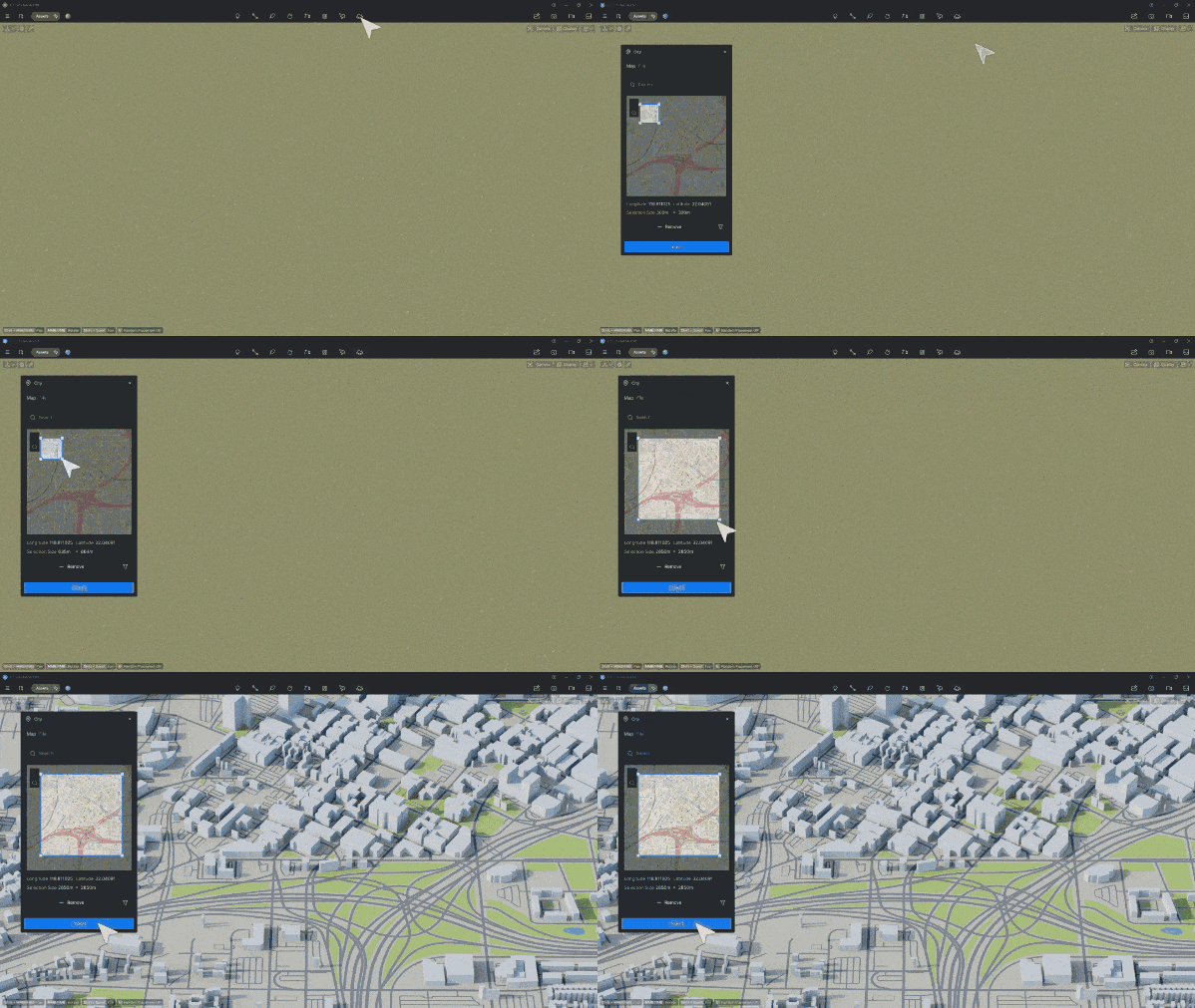
Here’s a bonus video on accessing User Analysis in your Autodesk Manage Portal:

Autodesk Disclaimer:

*Actual pricing may vary due to the impacts of currency fluctuations. Pricing commitments apply only to seats moved to subscription from maintenance pursuant to the Move to Subscription offer. This price commitment is subject to product and/or offering availability and does not apply to new subscriptions purchased by customer; switched subscriptions (i.e., permitted switches from a subscription for one product to a subscription for another product), or substitute or successor subscription products. 

Autodesk User Management “Improvements”

Autodesk have heard your feedback and are introducing some changes to Autodesk Account user management to improve your experience.

We have all endured the trial and error process when software companies introduce major changes. The Autodesk Manage Portal is no exception. Hopefully these new changes will solve a lot of confusion though.

  1. Easier invite:

Instead of a fixed text box that requires additional manual effort, they’re providing new invite options to make it easier for us to invite users:

  • Invite one user at a time
  • Invite multiple users at once
  • Autodesk have fallen into line with other software providers, so you can now copy and paste your invite list directly from Outlook or Gmail.

This a great time saver and works toward more predictable behaviours.

Coming soon:
  • Bulk import: Upload a .csv file to add a large number of users at once.
  • Import to assign: Upload a .csv file to add and assign a large number of users at once to a specific product.

Hopefully there won’t be too much trial and error in the process of getting this right.

2. New assign button

To prevent accidental assigning, they have updated the assign capability from a check mark to a clearly labelled button! This change will also make it easier to see which products have already been assigned to the user. I’m yet to see if this is an improvement or simply adding clicks to a seemingly very simple process.

3. Confirmation before changes to product access are made

Products with additional cloud services and add-ons, such as rendering, can be turned on or off for individual users. To prevent errors, they have added a confirmation screen that allows you to save or cancel your changes.

4. Update to look and feel

Autodesk are retiring card view and providing user management in list view, just like it was before they made the change… because apparently you can easily search and sort your users and products. they have also updated the general look and feel of user management to make it more like it was before they updated it previously. 

Check out the roadmap to see what other updates are coming soon!

BIM 360 Design vs BIM 360 Teams

Confused about BIM 360 Design? We shed some light on what’s included and what you should be using.

On April 9 2018 the very popular Collaboration for Revit (C4R) cloud work sharing platform was re-branded as BIM 360 Design, and was quickly followed by a chorus of confusion and questions…

  • Why change?
  • Can I still use C4R?
  • What’s the difference?

In this post I want to answer those questions and more, and for some of you introduce the features that sets BIM 360 Design up as a powerful design collaboration platform and document management tool in the cloud.

But first, what do you get with your BIM 360 Design Subscription?

For those of us already using C4R and Teams, the good news is we can continue to use them. C4R has been repackaged and rebranded as BIM 360 Design, and as a current subscriber, you can continue to use your Collaboration for Revit and BIM 360 Team subscription for as long as you subscribe. As your project team expands, you can add new subscriptions of BIM 360 Design and assign them to new members who need access through Revit.

In addition to the legacy C4R + Teams access, you also receive Design Collaboration (Next-Gen BIM 360 module) connecting Revit projects to the cloud, and BIM 360 Docs for Document Management.

Both BIM 360 Teams and Docs synchronise to your local hard drive through the BIM 360 Desktop Connector, however BIM 360 Team does not connect to the new BIM 360 platform.BIM 360 Design Next Gen Platform featured

Project members who are not using Revit, but need access to BIM 360 Teams, can continue to use and renew existing subscriptions to BIM 360 Teams, however NEW Team members will require a new subscription to BIM 360 Docs. The BIM 360 Docs subscription includes access to both BIM 360 Docs and Teams.

So why have Autodesk changed the name?

Let me assure you, this is much more than a name change, while with C4R and BIM 360 Teams there was a disconnect between the two platforms, BIM 360 Docs is accessed directly from Revit, so unlike C4R & Teams, you will see the folder structures in Docs from Revit.

The new (Next-gen) BIM 360 platform is fully integrated, BIM 360 Docs supports controlled data and document management from design through construction and offers similar functionality to BIM 360 Team but with greater file- and folder-based access and permission controls and unlimited storage.

What’s BIM 360 Design?

BIM 360 Design offers design collaboration, and data management solutions for project delivery, built on the new BIM 360 platform.

Similar to Collaboration for Revit and BIM 360 Team, with BIM 360 Design you can:

  • Co-author multi-discipline Revit models
  • Access data management and collaboration functionality like 2D & 3D viewer
  • Use markup tools
  • accessible via web, phone, and tablet.

With BIM 360 Design’s new BIM 360 platform you can also use features like (not available with C4R and BIM 360 Team):

  • Access controls by user, role, or company
  • File and folder-based permissions
  • Issue management
  • Tracking and deliverable coordination
  • Change visualization, and
  • Unlimited storage

Is it time to change to the new BIM 360 Design?

Until now we have been advising clients to hold off on moving live projects to the Next-gen BIM 360 platform. There were some features that were not quite ready, and as with anything, there is a learning curve associated with the move.


Now however, we are confident that BIM 360 Design has matured sufficiently to warrant the move! the benefits of BIM 360 Design certainly outweigh the functionality of BIM 360 Teams. 

For advice on setting up and accessing your BIM 360 Design hub, get in touch with Viewlistic and we will walk you through the process.

Office 365 and BIM 360 Docs

Two powerful cloud platforms working seamlessly together

Autodesk has now made it possible to edit Office 365 documents such as Word, Excel and PowerPoint directly in BIM 360. Version history and all other benefits of BIM 360 and Office 365 are honoured when editing documents in BIM 360. Meaning your team will always know which is the current schedule or document.
 
To view a document from BIM 360, simply click on it.
 
To edit the documentopened in BIM 360, click edit in browser.
 
Once you are finished click Return, to return to BIM 360 and your version will be updated. documents auto-save while editing.

Viewlistic welcomes Guy Smithers

Viewlistic is pleased to announce the appointment of Guy Smithers as Director and Managing Partner.

From a 32 year career history in architecture, Guy brings hands-on experience in operational management and efficiencies, business strategy and cultivating relationships. Together with Joe Keogh , Guy will further strengthen our in-house expertise and create opportunities to expand our service offering.

Viewlistic’s leadership team bring extensive experience in the architectural industry. With this, we are quick to understand industry challenges, and bring relevant perspective and understanding to best support our clients.

Guy commented: “I’m particularly glad to be joining Viewlistic because, having been a client of theirs since the beginning, I know I’m joining a company that prioritizes their clients, has a culture of innovation and a reputation of excellence – and it’s great to be a part of that.”

Viewlistic remains dedicated to great service and further opportunities for collaboration and innovation with our clients. Thank you for your support as we continue to grow our business.

VR For Architecture

Presenting architectural projects in virtual reality.

Virtual reality (VR), Augmented Reality (AR) and Mixed Reality (MR) are hot topics in Architecture, Engineering and Construction today.

Many design studios around the globe are experimenting with virtual reality solutions, while the innovative and savvy companies have well and truly embraced VR into their daily workflows and are reaping the rewards of these evolving technologies.

VR, for architecture provides an entirely new perspective, one that can only be understood once experienced firsthand. As early adopters of VR technology for Architecture, we were rolling out systems to design studio’s, while most of the leading solutions today, were still only in BETA. We remain enthralled by the ever-changing capabilities and developments in VR, AR and MR, and know too well, that we are now only scratching the surface in theses and other emerging media.


Virtual Reality (VR) in Design Workflows

The greatest value of VR is realized when designers and design teams embrace VR to frequently test and review their designs.

When done in a 1:1 immersive environment. The rewards for all involved in the process are astronomical. We see, as you might expect, graduates and younger designers, pick up VR and run with it every day. Let’s face it no matter how many Dimensions you are Building into your Information Model, until you engage with it in VR, you are still experiencing 2 Dimensions, either on a flat screen or on paper.

Viewlistic customize training courses, workshops and demonstrations to educate, inspire and guide you through the many options and complexities of working with virtual reality in the architectural, engineering and construction space.

Although many design organisations appreciate the benefits of VR, the justification to invest in it can sometimes be difficult due to many contributing factors. Our Virtual Reality on Demand service provides you with the tools and knowledge to guide you through the experience of VR in your own business.


“With the right VR Hardware and Software, you actually experience the true proportion and scale.”
 

VR Software


With VR now available to all, 3D game engines offer a powerful, low-cost (and sometimes free) alternative for architectural VR. Innovative and forward-thinking VR developers, like IrisVR and Enscape however, take even this specialized workflow out of the equation for architects, freeing valuable time and resources for more important tasks, while still giving you the ability to interact in immersive design reviews, and client presentations. IrisVR goes one giant leap further, delivering Multi-user Meetings for Prospect. Prospect allows up to up to 12 individuals to meet in VR from any location, communicate and collaborate on design review and coordination within the design model.


Iris Prospect

IrisVR Prospect for Architects

IrisVR’s Prospect offers an impressive and ever-expanding set of tools for interrogating Design Models in VR. In addition to the Multi-user meeting capabilities, Prospect allows you to mark-up, place dimensions and take screen shots to refer to later. There is also the ability to automatically remove co-planar errors in the model, removing the annoying shimmer effect. 

However, one of my favourite features of Prospect is the scale Model. Upon exporting the model directly from Revit, you are presented with a fully interactive scale model. You can cut sections, change the scale and orientation, then when you’re ready teleport into any area of the building.


Enscape and VR

Enscape VR, real time visualisation

Enscape is a real-time visualization tool designed to work specifically with Revit. The software can be used on a standard display or in VR for high quality rendered environments. Enscape’s still and animated render outputs are simply brilliant, and their VR capabilities are improving with every update.


Autodesk

Autodesk Stingray offers a live link to Autodesk 3ds Max, which is great for design viz specialists familiar with the 3D modelling, rendering and animation software. However, Autodesk makes VR technology accessible to architects and other users of Revit with a push button Revit to VR application called Revit LIVE.
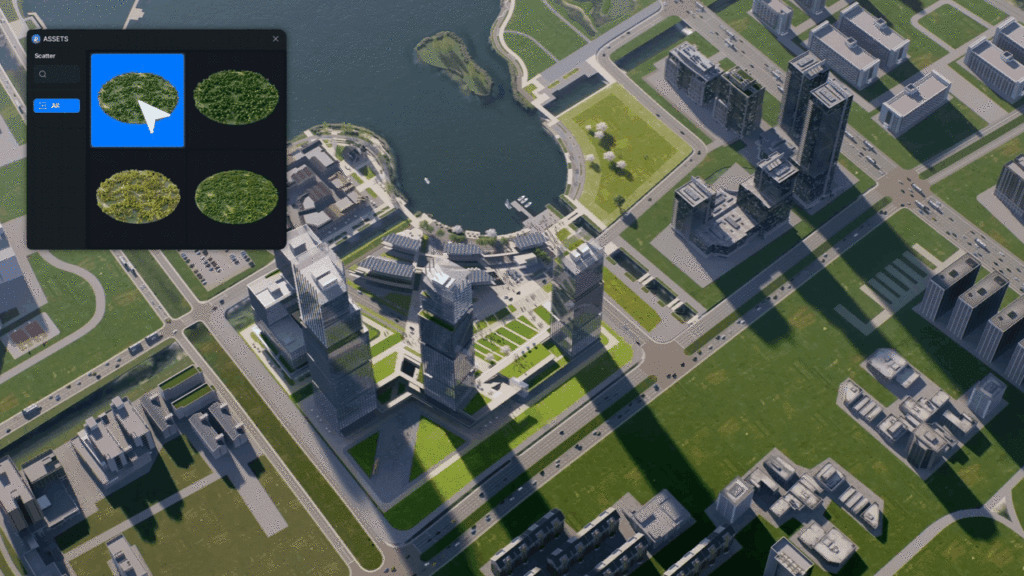
 

VR Hardware

Choosing the right Hardware can be tricky. Viewlistic supply a range of up to the minute solutions, whether you are getting started or looking to enhance your VR capabilities.

Viewlistic recommends the HTC Vive as the best in class VR headset for architecture. There are alternatives, and we are happy to work with all of them, however from bitter and sometimes nauseating experience, HTC Vive stands out as the most immersive, reliable and highest quality headset available today.


The HTC Vive does demand a relatively high Frame Rate (fps) delivered to each eye. Actually a minimum of 90fps per eye. Coupling the Vive with HP Omen and powered by Nvidia GPU delivers everything you need. If you need further details on a complete set-up, get in touch.
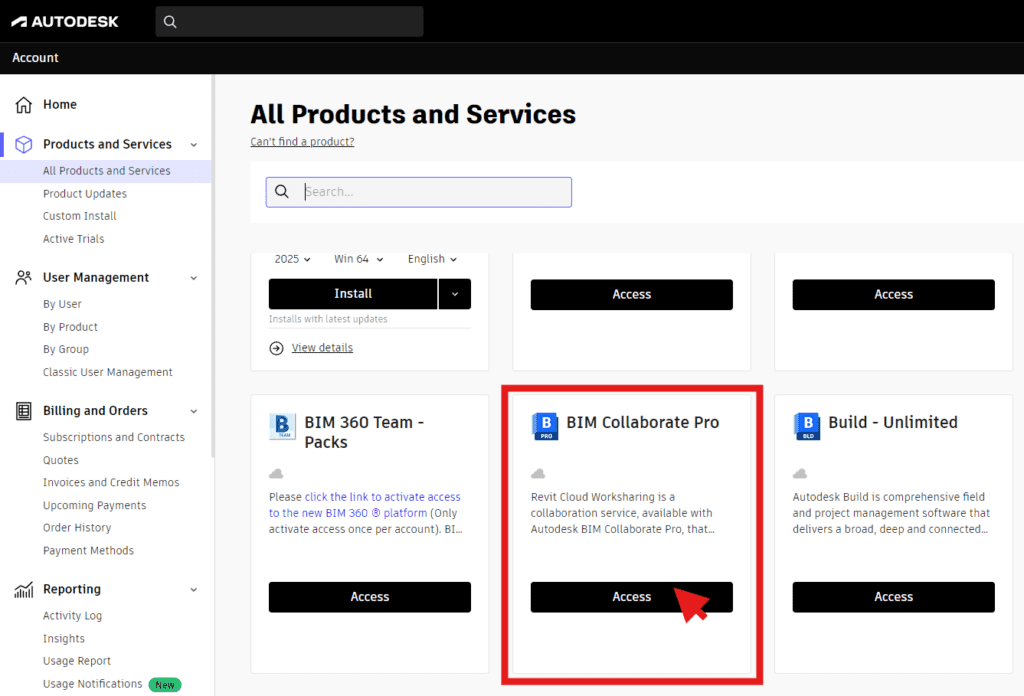
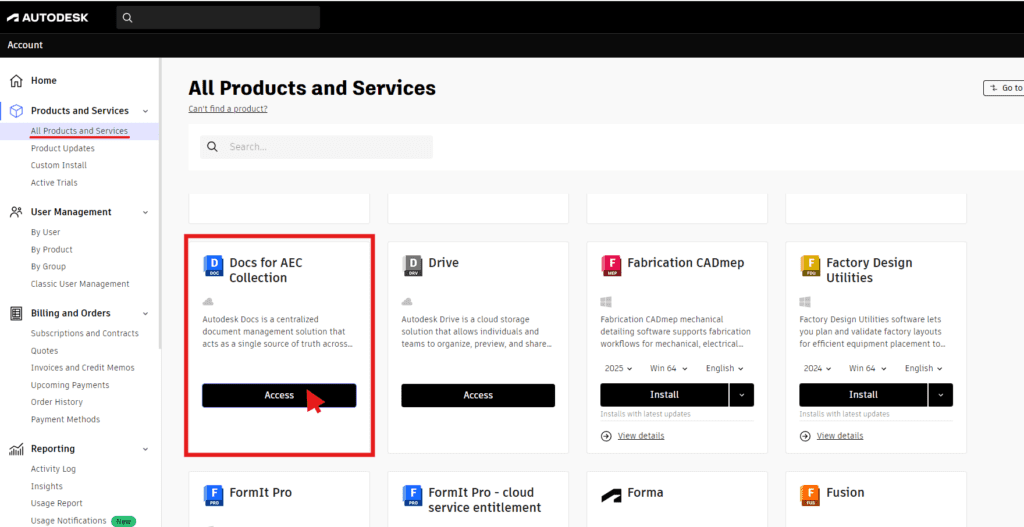
 

Revit 2019: What’s New

Like a box of goodies delivered right to your PC. This year doesn’t fail to impress, with some of our favourite pet hates being at the very least tempered…

This is my first pass at what’s new under the hood in Revit 2019, and I have to say I like what I see!

Over the coming weeks I will delve more deeply into these and other features you really need to know.

3d software with multiple view

Multimonitor support and tabbed views

 
Improve working space by organizing and arranging views using tabbed documents that can be docked, tiled, and viewed on multiple monitors.


Finally, you can stretch your Revit interface across both screens, with out having to constantly adjust each individual view, or annoy the daylights out of your BIM Manager… Great for the Rhino users!


filters for 3D design

Filters Just Got Real!

“OR” condition in filters!!

The potential impacts of this one will be felt far and wide, now with the ability to create view filters with multiple rules and nested sets with combination of AND and OR conditions.


levels in 3D views

Levels in 3D views

This functionality was always part of Vasari and then Conceptual Massing, leaving many pondering why…?
Either way, now you can understand and manipulate important datum heights in your project in 3D views.


3d software for uncropped perspective views

Uncropped perspective views

It’s a beautiful thing! Work in full-screen uncropped perspective view.

Move around the view freely with navigation commands such as Zoom, Pan, and Orbit…


3d software for 3d pattern design

Double-fill patterns Double-fill patterns

Go Revit, Go Revit, Go Revit!! After many years of building hatch patterns in third party apps to compensate for this short-coming, you’ll have to excuse my excitement…

Double-fill patterns!!

But wait, there’s more…

Double Fill Patterns in Cut! OR Surface!

Go Revit, Go Revit, Go Revit


custom steel connection design

Custom steel connections

For those of us using apps like Enscape and Iris Prospect, this is going to revolutionise our experience of steel connections. With an entire new tab dedicated to Enhanced detailed steel modeling, the ability to create your own steel connections with dedicated tools is sure to be a massive improvement. I can’t wait to see what people do with this.


3d software for engineering documentation for steel

Engineering documentation for steel

Create accurate engineering documentation for structural steel, including details with steel connections.


3d software for rebar shape design

Free-form rebar shape matching

Use Revit to match existing rebar shape families or create new rebar shape families based on free-form bar geometry.


3d design data storage

Autodesk Drive

Securely store, preview, and share your 2D and 3D design data using data storage designed for individuals and small teams.
 
 
revit precast girder slabs automation

Precast girder slabs automation

Perform segmentation; add reinforcement according to predefined rules; generate shop drawings; and run CAM Export.


revit complex piping network design

Complex piping networks

Improved pressure drop analysis for complex networks, supporting primary/secondary separation for hydronic systems.


Keep an eye on our blogs for further investigations into these and more tools.